
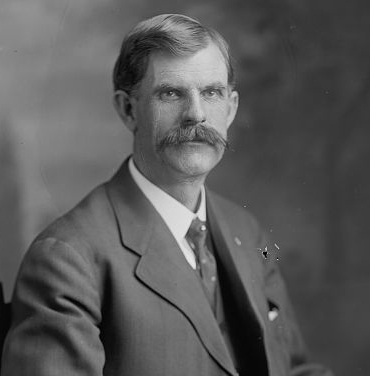
Historical · U.S. House · Kentucky · District 7
James Cantrill
Former U.S. Representative · Kentucky District 7 · 1909–1925 · Democratic
James Cantrill represented Kentucky's District 7 in the United States House of Representatives (1909–1925) for the Democratic party. The page below collects sourced biographical facts, term history, committee roles, and provenance for Cantrill.
Bioguide ID: C000126
Key facts
- Full name
- James Cantrill
- State
- Kentucky
- District
- District 7
- Party
- Democratic
- House service
- 1909–1925
- First House term
- 1909
- Status
- Left office
- Current term ends
- —
- Born
- 1870
- Bioguide ID
- C000126
- Committee assignments
- —
- Dataset version
- 1.20260606
Biographical narrative
1,112 words · sourced from the Wikipedia REST extract
James Cantrill was a prominent political figure in Kentucky during the early 20th century, serving as a U.S. Representative for the state's 7th congressional district. A member of the Democratic Party, Cantrill's political career spanned over two decades, during which he was elected to eight consecutive terms in the House of Representatives. His tenure was marked by a commitment to agricultural issues and the interests of farmers, reflecting his background and the needs of his constituents. Cantrill's life was dedicated to public service, culminating in his candidacy for the governorship of Kentucky before his untimely death in 1923.
Early life and career
James Campbell Cantrill was born on July 9, 1870, in Georgetown, Kentucky, to parents Jennie Moore and James Edward Campbell. His early education took place in local common schools, where he laid the foundation for his future pursuits. Cantrill furthered his education at Georgetown College in Kentucky and later attended the University of Virginia in Charlottesville. This academic background provided him with the knowledge and skills that would serve him well in his later political career.
After completing his education, Cantrill engaged in agricultural pursuits, which was a common occupation in Kentucky at the time. His involvement in agriculture not only connected him to the land but also to the community of farmers who would later become a significant part of his political base. Cantrill's understanding of agricultural issues would shape his legislative priorities and his advocacy for the farming community throughout his political career.
Cantrill's political involvement began in earnest in the mid-1890s. In 1895, he took on a leadership role as the chairman of the Scott County Democratic Committee, where he began to establish his presence in local politics. His commitment to public service was further demonstrated when he was elected to the Kentucky House of Representatives in 1897, a position he held again in 1899. These early experiences in state politics helped him build a network and gain valuable insights into the legislative process.
Following his service in the state house, Cantrill advanced to the Kentucky State Senate, where he served from 1902 to 1906. During this time, he continued to advocate for the interests of his constituents, particularly in relation to agricultural policies. Although he was nominated for Congress in 1904, he declined the opportunity at that time, choosing instead to focus on his state-level responsibilities. Nevertheless, he remained active in the Democratic Party, serving as a delegate to the Democratic National Convention in the same year.
In 1908, Cantrill was elected president of the American Society of Equity for Kentucky, an organization that represented farmers' interests. This role further solidified his reputation as a champion for agricultural issues and set the stage for his future political endeavors.
House tenure
James Cantrill's congressional career began when he was elected as a Democrat to the Sixty-first Congress, with his first term commencing on March 4, 1909. He would go on to serve in the House for a total of eight consecutive terms, reflecting a strong electoral support base in Kentucky's 7th congressional district. His tenure in the House lasted until his death on March 3, 1925, marking a significant period of influence in Kentucky politics.
Throughout his time in Congress, Cantrill was known for his dedication to the needs of his constituents, particularly those in the agricultural sector. His legislative focus often revolved around issues that directly affected farmers and rural communities. Cantrill's commitment to these issues was evident in his leadership role as chairman of the Committee on Industrial Arts and Expositions during the Sixty-fourth and Sixty-fifth Congresses. In this capacity, he worked to promote the interests of American industries and the agricultural community, advocating for policies that would benefit both sectors.
Cantrill's long tenure in the House allowed him to develop relationships with other lawmakers and gain experience in navigating the complexities of federal legislation. His ability to work across party lines and build coalitions was instrumental in advancing the interests of his constituents. As a member of Congress, he participated in various debates and discussions that shaped national policy, particularly in areas related to agriculture, trade, and economic development.
Despite his focus on agricultural issues, Cantrill's legislative agenda was not limited to this area alone. He engaged with a wide range of topics that were relevant to his constituents and the nation as a whole. His ability to address diverse issues contributed to his reputation as a dedicated public servant who was committed to the welfare of his district.
Legislative focus and committees
Throughout his congressional career, James Cantrill maintained a strong focus on agricultural issues, reflecting his background and the needs of his constituents. His leadership role as chairman of the Committee on Industrial Arts and Expositions allowed him to influence legislation that impacted both the agricultural sector and American industries more broadly. This position enabled him to advocate for policies that supported economic growth and development, particularly in rural areas.
Cantrill's commitment to agriculture was not only a personal interest but also a reflection of the demographic and economic realities of Kentucky during his time in office. The state was predominantly rural, with a significant portion of its economy reliant on farming and related industries. As a result, Cantrill's legislative efforts often centered on issues such as agricultural subsidies, trade policies affecting farmers, and initiatives aimed at improving rural infrastructure.
In addition to his work on agricultural issues, Cantrill was involved in various legislative initiatives that addressed the broader economic landscape of the United States. His ability to engage with a wide range of topics allowed him to be an effective advocate for his constituents, ensuring that their concerns were represented in national discussions.
Cantrill's dedication to public service extended beyond his legislative duties. He was actively involved in his community and maintained strong connections with his constituents throughout his career. His commitment to understanding the needs of the people he represented was a hallmark of his approach to governance.
In conclusion, James Cantrill's life and career were characterized by a deep commitment to public service and the interests of his constituents. His tenure as a U.S. Representative for Kentucky's 7th congressional district was marked by a focus on agricultural issues and a dedication to improving the lives of those in his community. Cantrill's legacy continues to be remembered in the context of Kentucky's political history, particularly for his contributions to the agricultural sector and his efforts to advocate for the needs of rural communities. His unexpected death in 1923 while campaigning for the governorship of Kentucky cut short a significant political career, but his impact on the state and its people remains a notable part of his story.
Notable legislation
Sponsored and co-sponsored legislation for James Cantrill is pending operator curation. The biographical narrative above carries the same provenance trail until per-bill rows are written.
Sources
- [1]https://en.wikipedia.org/wiki/J._Campbell_CantrillWikipedia · retrieved 2026-06-06
Notable quotes
Sourced quotes for James Cantrill are pending operator curation. Narrative-scope provenance remains attached below.
Sources
- [1]https://en.wikipedia.org/wiki/J._Campbell_CantrillWikipedia · retrieved 2026-06-06
Key positions
Curated policy positions for James Cantrill are pending operator review. The biographical narrative above carries the same provenance trail until per-topic positions are written.
Sources
- [1]https://en.wikipedia.org/wiki/J._Campbell_CantrillWikipedia · retrieved 2026-06-06
Terms served
- 1909–1911U.S. House · Term 1 · Democratic
- 1911–1913U.S. House · Term 2 · Democratic
- 1913–1915U.S. House · Term 3 · Democratic
- 1915–1917U.S. House · Term 4 · Democratic
- 1917–1919U.S. House · Term 5 · Democratic
- 1919–1921U.S. House · Term 6 · Democratic
- 1921–1923U.S. House · Term 7 · Democratic
- 1923–1925U.S. House · Term 8 · Democratic
Sources & provenance
Every attributable claim above carries a per-section [N] marker that resolves to the corresponding URL below. Each entry records the upstream provider, the canonical URL, and the timestamp at which the source was retrieved by the ingest pipeline.
Key facts
- https://bioguide.congress.gov/search/bio/C000126bioguide · retrieved 2026-06-06
- https://www.govtrack.us/congress/members/402277govtrack · retrieved 2026-06-06
Biographical narrative
- https://en.wikipedia.org/wiki/J._Campbell_Cantrillwikipedia · retrieved 2026-06-06
Find your representative
Every U.S. state elects representatives by district. Browse Kentucky’s delegation, the full former-representative roster, or explore the role and term length.
Related on The Candidate
- Preceded by William KimballEarlier holder of the Kentucky District 7 House seat · Democratic.Open
- Succeeded by Robert BlackburnLater holder of the Kentucky District 7 House seat · Republican.Open
- Andrew BooneFormer U.S. Representative · Kentucky District 1 · DemocraticOpen
- Carroll Hubbard Jr.Former U.S. Representative · Kentucky District 1 · DemocraticOpen
- Charles WheelerFormer U.S. Representative · Kentucky District 1 · DemocraticOpen
- Chittenden LyonFormer U.S. Representative · Kentucky District 1 · JacksonOpen