
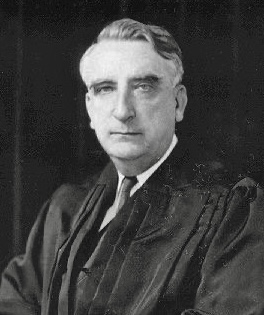
Historical · U.S. House · Kentucky · District 8
Frederick Vinson
Former U.S. Representative · Kentucky District 8 · 1923–1939 · Democratic
Frederick Vinson represented Kentucky's District 8 in the United States House of Representatives (1923–1939) for the Democratic party. The page below collects sourced biographical facts, term history, committee roles, and provenance for Vinson.
Bioguide ID: V000106
Key facts
- Full name
- Frederick Vinson
- State
- Kentucky
- District
- District 8
- Party
- Democratic
- House service
- 1923–1939
- First House term
- 1923
- Status
- Left office
- Current term ends
- —
- Born
- 1890
- Bioguide ID
- V000106
- Committee assignments
- —
- Dataset version
- 1.20260605
Biographical narrative
887 words · sourced from the Wikipedia REST extract
Frederick Vinson was a prominent American attorney and politician who served as a U.S. Representative for Kentucky's 8th congressional district from 1924 to 1928 and again from 1930 to 1938. A member of the Democratic Party, Vinson's political career spanned several decades, during which he held various significant roles in the U.S. government, including serving as the Chief Justice of the United States from 1946 until his death in 1953. His contributions to American law and governance reflect a deep engagement with the political landscape of his time.
Early life and career
Frederick Moore Vinson was born on January 22, 1890, in Louisa, Kentucky. He grew up in a household where his father served as the Lawrence County jailer, which provided him with unique insights into the justice system from a young age. This early exposure to law and order influenced his later career choices. Vinson worked various odd jobs throughout his childhood and completed his education at Kentucky Normal School in 1909. He subsequently attended Centre College, where he graduated at the top of his class with a Bachelor of Arts degree. During his time at Centre, he was involved in the Phi Delta Theta fraternity, which helped him build a network of contacts.
After completing his undergraduate studies, Vinson pursued a legal education at the now-defunct College of Law, earning a Bachelor of Laws degree. He began his legal career in private practice in Louisa and quickly became involved in local politics, serving as the City Attorney of Louisa. His commitment to public service was evident during World War I, where he actively supported the war effort through speeches promoting bond drives and Red Cross initiatives. Although he faced initial rejections for military service due to being underweight, he ultimately enlisted and completed basic training before the war concluded.
Following his military service, Vinson returned to Kentucky and was elected as the Commonwealth's Attorney for the Thirty-Second Judicial District. His legal and political career continued to flourish, leading to his eventual election to the U.S. House of Representatives.
House tenure
Vinson's congressional career began in 1924 when he won a special election to fill the vacancy left by William J. Fields, who resigned to become the Governor of Kentucky. As a Democrat, Vinson was elected to represent Kentucky's 8th congressional district and was subsequently re-elected for two additional terms. However, his tenure faced a setback in 1928 when he lost his seat, a defeat attributed to his refusal to distance his campaign from Alfred E. Smith's presidential campaign.
Despite this setback, Vinson made a political comeback in 1930, regaining his congressional seat and serving until 1937. During his time in Congress, he developed a close friendship with Missouri Senator Harry S. Truman, which would have lasting implications for both men. Vinson became a trusted advisor and confidant to Truman, engaging in discussions that would influence national policy and politics.
In 1930, Vinson relocated his law practice from Louisa to Ashland, Kentucky, where he sought to strengthen his political connections and build a network of supporters. His return to Congress in 1931 coincided with a period of significant change in American politics, as President Franklin D. Roosevelt's New Deal policies were being implemented. Vinson emerged as a strong supporter of these initiatives, aligning himself with Roosevelt's vision for economic recovery and reform.
Legislative focus and committees
During his time in the House of Representatives, Vinson was involved in various legislative efforts that reflected the priorities of the Democratic Party and the New Deal agenda. His work in Congress was characterized by a focus on economic issues, social welfare, and infrastructure development, aligning with the broader goals of the Roosevelt administration. Vinson's legislative efforts were informed by his legal background and his understanding of the complexities of governance, allowing him to navigate the challenges of the era effectively.
Vinson's close relationship with President Roosevelt and later with President Truman positioned him as a key figure in the Democratic Party during a transformative period in American history. His advocacy for New Deal policies demonstrated his commitment to addressing the economic hardships faced by many Americans during the Great Depression. Vinson's legislative focus included support for programs aimed at job creation, financial reform, and social safety nets, which were essential components of the New Deal framework.
In addition to his legislative work, Vinson's role in Congress allowed him to participate in various committees that shaped national policy. His experience and insights contributed to discussions on critical issues, including economic stabilization and recovery efforts. His tenure in the House laid the groundwork for his later appointments in the judicial and executive branches of the government.
Vinson's congressional career came to an end in 1937 when he was nominated by President Roosevelt to serve as an Associate Justice on the United States Court of Appeals for the District of Columbia Circuit. This appointment marked a significant transition in his career, leading him to play a vital role in shaping American jurisprudence in the years that followed.
Frederick Vinson's legacy is marked by his extensive contributions to American law and governance, reflecting a career dedicated to public service and the pursuit of justice. His journey from a small-town attorney to a prominent national figure illustrates the impact of dedicated individuals in shaping the political landscape of the United States.
Notable legislation
Sponsored and co-sponsored legislation for Frederick Vinson is pending operator curation. The biographical narrative above carries the same provenance trail until per-bill rows are written.
Sources
- [1]https://en.wikipedia.org/wiki/Fred_M._VinsonWikipedia · retrieved 2026-06-05
Notable quotes
Sourced quotes for Frederick Vinson are pending operator curation. Narrative-scope provenance remains attached below.
Sources
- [1]https://en.wikipedia.org/wiki/Fred_M._VinsonWikipedia · retrieved 2026-06-05
Key positions
Curated policy positions for Frederick Vinson are pending operator review. The biographical narrative above carries the same provenance trail until per-topic positions are written.
Sources
- [1]https://en.wikipedia.org/wiki/Fred_M._VinsonWikipedia · retrieved 2026-06-05
Terms served
- 1923–1925U.S. House · Term 1 · Democratic
- 1925–1927U.S. House · Term 2 · Democratic
- 1927–1929U.S. House · Term 3 · Democratic
- 1931–1933U.S. House · Term 4 · Democratic
- 1933–1935U.S. House · Term 5 · Democratic
- 1935–1937U.S. House · Term 6 · Democratic
- 1937–1939U.S. House · Term 7 · Democratic
Sources & provenance
Every attributable claim above carries a per-section [N] marker that resolves to the corresponding URL below. Each entry records the upstream provider, the canonical URL, and the timestamp at which the source was retrieved by the ingest pipeline.
Key facts
- https://bioguide.congress.gov/search/bio/V000106bioguide · retrieved 2026-06-05
- https://www.govtrack.us/congress/members/411161govtrack · retrieved 2026-06-05
Biographical narrative
- https://en.wikipedia.org/wiki/Fred_M._Vinsonwikipedia · retrieved 2026-06-05
Find your representative
Every U.S. state elects representatives by district. Browse Kentucky’s delegation, the full former-representative roster, or explore the role and term length.
Related on The Candidate
- Preceded by King SwopeEarlier holder of the Kentucky District 8 House seat · Republican.Open
- Succeeded by James GoldenLater holder of the Kentucky District 8 House seat · Republican.Open
- Andrew BooneFormer U.S. Representative · Kentucky District 1 · DemocraticOpen
- Carroll Hubbard Jr.Former U.S. Representative · Kentucky District 1 · DemocraticOpen
- Charles WheelerFormer U.S. Representative · Kentucky District 1 · DemocraticOpen
- Chittenden LyonFormer U.S. Representative · Kentucky District 1 · JacksonOpen