
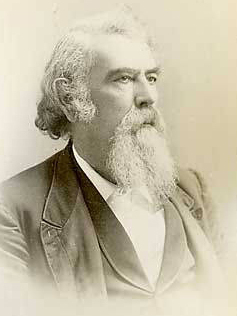
Historical · U.S. House · Kentucky · District 9
Laban Moore
Former U.S. Representative · Kentucky District 9 · 1859–1861 · Ind. Republican-Democrat
Laban Moore represented Kentucky's District 9 in the United States House of Representatives (1859–1861) for the Ind. Republican-Democrat party. The page below collects sourced biographical facts, term history, committee roles, and provenance for Moore.
Bioguide ID: M000907
Key facts
- Full name
- Laban Moore
- State
- Kentucky
- District
- District 9
- Party
- Ind. Republican-Democrat
- House service
- 1859–1861
- First House term
- 1859
- Status
- Left office
- Current term ends
- —
- Born
- 1829
- Bioguide ID
- M000907
- Committee assignments
- —
- Dataset version
- 1.20260606
Biographical narrative
847 words · sourced from the Wikipedia REST extract
Laban Moore was a notable figure in American politics during the mid-19th century, serving as a U.S. Representative from Kentucky's 9th congressional district. His political career was marked by his affiliation with the Opposition Party, a coalition that emerged in response to the political climate of the time, particularly surrounding issues such as slavery and the impending Civil War. Moore's tenure in the House of Representatives spanned from 1859 to 1861, during which he contributed to the legislative discourse of a nation on the brink of conflict. Following his congressional service, he transitioned into military leadership and later returned to local politics, reflecting the multifaceted nature of his career.
Early life and career
Laban Theodore Moore was born on January 13, 1829, in Wayne County, Virginia, which is now part of West Virginia. His early life was spent in proximity to Louisa, Kentucky, where he would later establish his professional career. Moore pursued higher education at Marshall Academy, which is now known as Marshall University, located in Virginia. He furthered his studies at Marietta College in Ohio, where he completed his undergraduate education. Following his academic pursuits, he attended Transylvania Law College in Lexington, Kentucky, a well-regarded institution for legal studies at the time.
After being admitted to the bar in 1849, Moore began his legal practice in Louisa, Kentucky. His initial foray into politics came in 1857 when he ran for a seat in the Kentucky State House of Representatives. However, this attempt was unsuccessful, marking a challenging start to his political ambitions. Despite this setback, Moore remained active in his community and continued to build his legal career, laying the groundwork for his future political endeavors.
House tenure
Moore's political career gained momentum when he was elected as a candidate from the Opposition Party to the Thirty-sixth Congress, which convened on March 4, 1859. The Opposition Party was a temporary coalition of various factions, including former Whigs and anti-slavery Democrats, which sought to address the divisive issues of the time, particularly the question of slavery and its expansion into new territories. Moore's election to Congress came at a critical juncture in American history, as tensions were escalating between Northern and Southern states.
During his time in the House of Representatives, which lasted until March 3, 1861, Moore participated in legislative discussions that were increasingly focused on the looming Civil War. His tenure coincided with significant national debates over issues such as states' rights and federal authority, as well as the moral and political implications of slavery. However, Moore did not seek renomination in 1860, concluding his congressional career after a single term.
Following his departure from Congress, Moore's commitment to public service continued as he enlisted in the military during the Civil War. He played a significant role in the formation of the 14th Kentucky Infantry, a regiment that would serve in various capacities throughout the conflict. On November 19, 1861, he was elected as colonel of the regiment, reflecting his leadership capabilities and dedication to the Union cause. However, he resigned from this military position on January 1, 1862, and subsequently returned to Catlettsburg, Kentucky, where he resumed his law practice.
Legislative focus and committees
While specific details regarding the committees on which Moore served during his congressional term are not documented, it is known that his legislative focus would have been influenced by the pressing issues of his time. As a member of the Opposition Party, he likely engaged in discussions surrounding the sectional conflicts that were defining American politics in the late 1850s. The debates over slavery, the rights of states versus the federal government, and the future of the Union were central to the legislative agenda during this period.
Moore's political alignment shifted after the Civil War, as he transitioned from the Opposition Party to the Democratic Party. This change reflected the broader political realignments occurring in the United States during the Reconstruction era. In 1881, he was elected to the Kentucky Senate, representing the 32nd district, which included Boyd, Elliott, Greenup, and Lawrence Counties. His tenure in the state senate lasted until 1885, during which he would have contributed to state-level legislation and governance.
In addition to his legislative roles, Moore participated in the Kentucky State Constitutional Convention from 1890 to 1891. This convention was significant as it aimed to address various issues related to the state's governance and legal framework. Moore's involvement in this convention underscored his ongoing commitment to public service and his interest in shaping the laws and policies that would govern Kentucky.
Laban Moore's life came to an end on November 9, 1892, in Catlettsburg, Kentucky. He was interred at Ashland Cemetery in Ashland, Kentucky, leaving behind a legacy as a public servant who navigated the complexities of a nation undergoing profound transformation. His career, marked by a blend of legal practice, military service, and political involvement, reflects the multifaceted nature of American public life in the 19th century. Moore's contributions, both in Congress and in state politics, illustrate the evolving landscape of American governance during a pivotal era in the nation's history.
Notable legislation
Sponsored and co-sponsored legislation for Laban Moore is pending operator curation. The biographical narrative above carries the same provenance trail until per-bill rows are written.
Sources
- [1]https://en.wikipedia.org/wiki/Laban_T._MooreWikipedia · retrieved 2026-06-06
Notable quotes
Sourced quotes for Laban Moore are pending operator curation. Narrative-scope provenance remains attached below.
Sources
- [1]https://en.wikipedia.org/wiki/Laban_T._MooreWikipedia · retrieved 2026-06-06
Key positions
Curated policy positions for Laban Moore are pending operator review. The biographical narrative above carries the same provenance trail until per-topic positions are written.
Sources
- [1]https://en.wikipedia.org/wiki/Laban_T._MooreWikipedia · retrieved 2026-06-06
Terms served
- 1859–1861U.S. House · Term 1 · Ind. Republican-Democrat
Sources & provenance
Every attributable claim above carries a per-section [N] marker that resolves to the corresponding URL below. Each entry records the upstream provider, the canonical URL, and the timestamp at which the source was retrieved by the ingest pipeline.
Key facts
- https://bioguide.congress.gov/search/bio/M000907bioguide · retrieved 2026-06-06
- https://www.govtrack.us/congress/members/407879govtrack · retrieved 2026-06-06
Biographical narrative
- https://en.wikipedia.org/wiki/Laban_T._Moorewikipedia · retrieved 2026-06-06
Find your representative
Every U.S. state elects representatives by district. Browse Kentucky’s delegation, the full former-representative roster, or explore the role and term length.
Related on The Candidate
- Preceded by John MasonEarlier holder of the Kentucky District 9 House seat · Democratic.Open
- Succeeded by William WadsworthLater holder of the Kentucky District 9 House seat · Republican.Open
- Andrew BooneFormer U.S. Representative · Kentucky District 1 · DemocraticOpen
- Carroll Hubbard Jr.Former U.S. Representative · Kentucky District 1 · DemocraticOpen
- Charles WheelerFormer U.S. Representative · Kentucky District 1 · DemocraticOpen
- Chittenden LyonFormer U.S. Representative · Kentucky District 1 · JacksonOpen