
Historical · U.S. House · Massachusetts · District 1
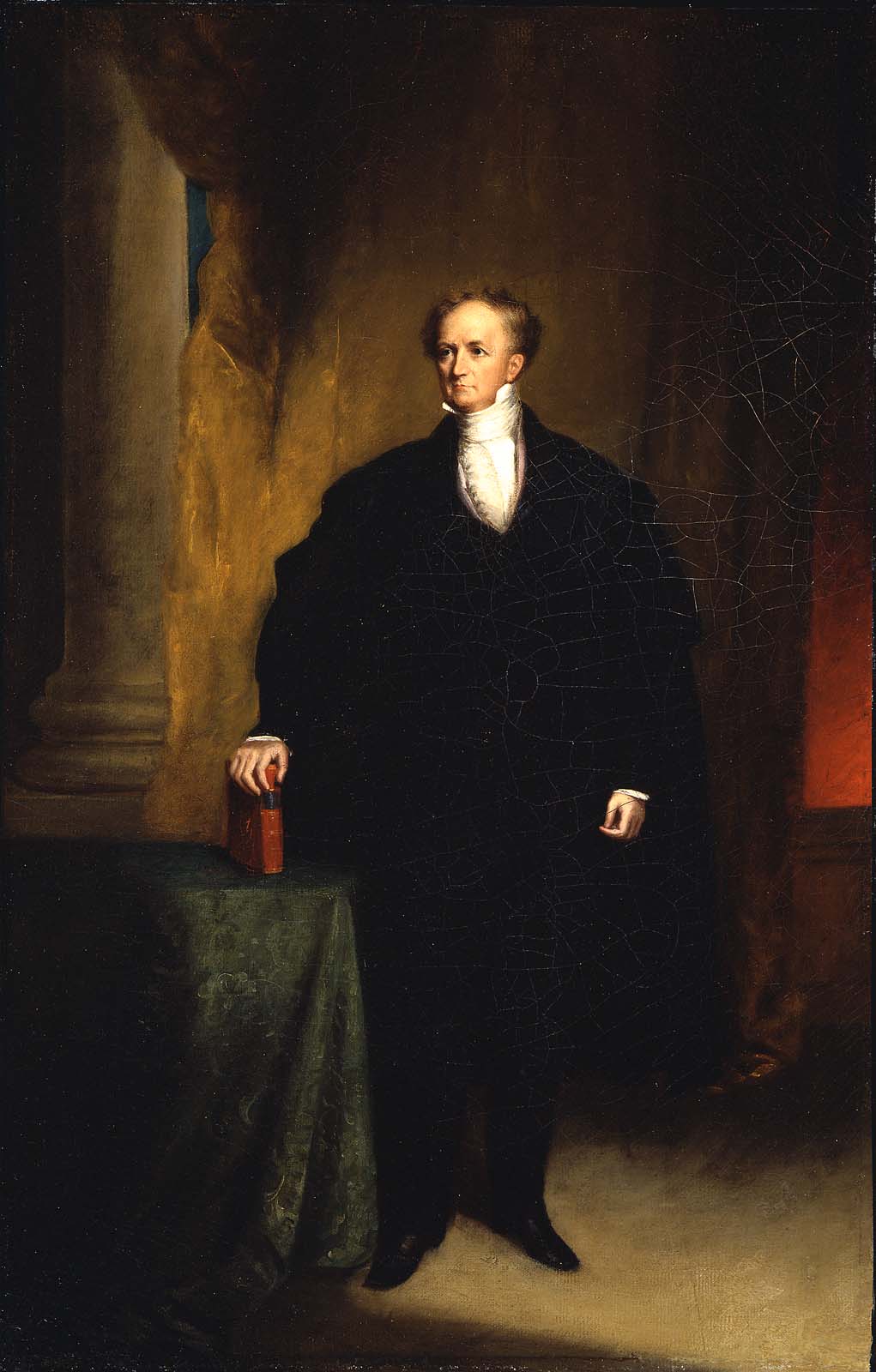
Abbott Lawrence
Former U.S. Representative · Massachusetts District 1 · 1835–1841 · Whig
Abbott Lawrence represented Massachusetts's District 1 in the United States House of Representatives (1835–1841) for the Whig party. The page below collects sourced biographical facts, term history, committee roles, and provenance for Lawrence.
Bioguide ID: L000130
Key facts
- Full name
- Abbott Lawrence
- State
- Massachusetts
- District
- District 1
- Party
- Whig
- House service
- 1835–1841
- First House term
- 1835
- Status
- Left office
- Current term ends
- —
- Born
- 1792
- Bioguide ID
- L000130
- Committee assignments
- —
- Dataset version
- 1.20260606
Biographical narrative
966 words · sourced from the Wikipedia REST extract
Abbott Lawrence was a prominent American businessman and politician who served as a U.S. Representative for Massachusetts's 1st congressional district during the 19th century. A member of the Whig Party, he played a significant role in the early industrialization of New England and was influential in both business and political spheres. His tenure in the House of Representatives spanned two terms, during which he was involved in various legislative efforts and public initiatives. Beyond his political career, Lawrence was known for his philanthropic activities and contributions to education and the arts.
Early life and career
Abbott Lawrence was born on December 16, 1792, in Groton, Massachusetts. He was the son of Samuel Lawrence, an officer in the American Revolutionary War. Growing up in a family that valued education and public service, Abbott attended Groton Academy, which is now known as the Lawrence Academy. He graduated from the academy in 1808 and began his professional journey as an apprentice in his brother Amos's mercantile business.
After completing his apprenticeship in 1814, Abbott and Amos Lawrence formed a partnership that specialized in importing goods from Britain and China. This partnership, initially named A. & A. Lawrence, later evolved into A. & A. Lawrence and Co. The firm became one of the most successful wholesale mercantile houses in the United States, thriving even during the challenging economic conditions of the War of 1812. The Lawrences were instrumental in establishing the cotton textile industry in New England, particularly through their support of financially troubled mills in Lowell, Massachusetts, in 1830.
As the business grew, Abbott Lawrence took on more responsibilities, especially after Amos retired in 1831 due to health issues. Abbott became the head of the firm and continued to expand its influence in the textile sector. In the mid-1840s, he played a pivotal role in the establishment of the city of Lawrence, Massachusetts, which was named in his honor. He served as a director of the Essex Company, which managed the water power necessary for the city's industrial operations, and later became president of the Atlantic Cotton Mills and Pacific Mill.
In addition to his business endeavors, Lawrence was an active public figure in the 1820s. He was a strong advocate for railroad construction, believing it would benefit the economy. His political involvement deepened as he became a vocal supporter of protectionist policies and represented Massachusetts at the Harrisburg protectionist convention in 1827. His growing influence within the Whig Party set the stage for his future political career.
House tenure
Abbott Lawrence's political career began when he was elected to the U.S. House of Representatives as a member of the Whig Party. He served his first term in the 24th Congress, beginning in 1835. During this initial term, he focused on issues pertinent to his constituents and the broader economic landscape of the nation. Although he did not seek re-election in 1836, he returned to Congress in 1838, serving in the 26th Congress.
Throughout his time in the House, Lawrence was known for his active engagement in legislative matters. He was involved in various initiatives that aligned with the interests of his party and constituents. In 1840, he played a significant role in the successful presidential campaign of William Henry Harrison, further solidifying his standing within the Whig Party. His political career in the House concluded on March 3, 1841, marking the end of his two terms in Congress.
Following his tenure in the House, Lawrence continued to be involved in public service. In 1842, he was appointed as a commissioner to resolve the Northeastern Boundary Dispute between Canada and the United States, showcasing his ongoing commitment to addressing critical national issues. His political activities did not cease after leaving Congress; he remained active in various political campaigns and was a presidential elector in 1844, supporting the campaign of Henry Clay.
Legislative focus and committees
During his time in the House of Representatives, Abbott Lawrence's legislative focus reflected his background in business and his commitment to economic development. He was particularly concerned with issues related to trade, industry, and infrastructure, advocating for policies that would support the growth of the American economy. His experience as a businessman informed his approach to legislation, as he understood the challenges and opportunities facing the burgeoning industrial sector.
Lawrence's involvement in the Whig Party positioned him as a key figure in the political landscape of his time. He was known for his protectionist views, which aimed to safeguard American industries from foreign competition. This perspective was particularly relevant during a period of significant economic change in the United States, as the nation was transitioning from an agrarian economy to one increasingly dominated by industrial production.
In addition to his legislative work, Lawrence was recognized for his contributions to various civic and cultural initiatives. He was a member of the American Antiquarian Society, elected in 1846, and became a Fellow of the American Academy of Arts and Sciences in 1847. His engagement with these organizations underscored his commitment to intellectual and cultural advancement.
After his congressional career, Lawrence was appointed as the minister to Great Britain, where he was involved in diplomatic negotiations, including the Clayton–Bulwer Treaty. His decision to reject a cabinet position offered by President Zachary Taylor in favor of this diplomatic role illustrated his continued influence and involvement in national affairs.
Abbott Lawrence's legacy extends beyond his political and business achievements. He was known for his philanthropic efforts, contributing to various educational and cultural institutions, including the Lawrence Scientific School at Harvard College. His commitment to public service and community development left a lasting impact on the regions he served and the industries he helped to establish. Lawrence passed away on August 18, 1855, in Boston, Massachusetts, leaving behind a multifaceted legacy as a businessman, politician, and philanthropist.
Notable legislation
Sponsored and co-sponsored legislation for Abbott Lawrence is pending operator curation. The biographical narrative above carries the same provenance trail until per-bill rows are written.
Sources
- [1]https://en.wikipedia.org/wiki/Abbott_LawrenceWikipedia · retrieved 2026-06-06
Notable quotes
Sourced quotes for Abbott Lawrence are pending operator curation. Narrative-scope provenance remains attached below.
Sources
- [1]https://en.wikipedia.org/wiki/Abbott_LawrenceWikipedia · retrieved 2026-06-06
Key positions
Curated policy positions for Abbott Lawrence are pending operator review. The biographical narrative above carries the same provenance trail until per-topic positions are written.
Sources
- [1]https://en.wikipedia.org/wiki/Abbott_LawrenceWikipedia · retrieved 2026-06-06
Terms served
- 1835–1837U.S. House · Term 1 · Whig
- 1839–1841U.S. House · Term 2 · Whig
Sources & provenance
Every attributable claim above carries a per-section [N] marker that resolves to the corresponding URL below. Each entry records the upstream provider, the canonical URL, and the timestamp at which the source was retrieved by the ingest pipeline.
Key facts
- https://bioguide.congress.gov/search/bio/L000130bioguide · retrieved 2026-06-06
- https://www.govtrack.us/congress/members/406635govtrack · retrieved 2026-06-06
Biographical narrative
- https://en.wikipedia.org/wiki/Abbott_Lawrencewikipedia · retrieved 2026-06-06
Find your representative
Every U.S. state elects representatives by district. Browse Massachusetts’s delegation, the full former-representative roster, or explore the role and term length.
Related on The Candidate
- Preceded by Benjamin GorhamEarlier holder of the Massachusetts District 1 House seat · Anti Jacksonian.Open
- Succeeded by Samuel EliotLater holder of the Massachusetts District 1 House seat · Whig.Open
- Allen TreadwayFormer U.S. Representative · Massachusetts District 1 · RepublicanOpen
- Artemas Ward Jr.Former U.S. Representative · Massachusetts District 1 · FederalistOpen
- Ashley WrightFormer U.S. Representative · Massachusetts District 1 · RepublicanOpen
- Representatives from MassachusettsEvery former U.S. Representative who has represented Massachusetts.Open