
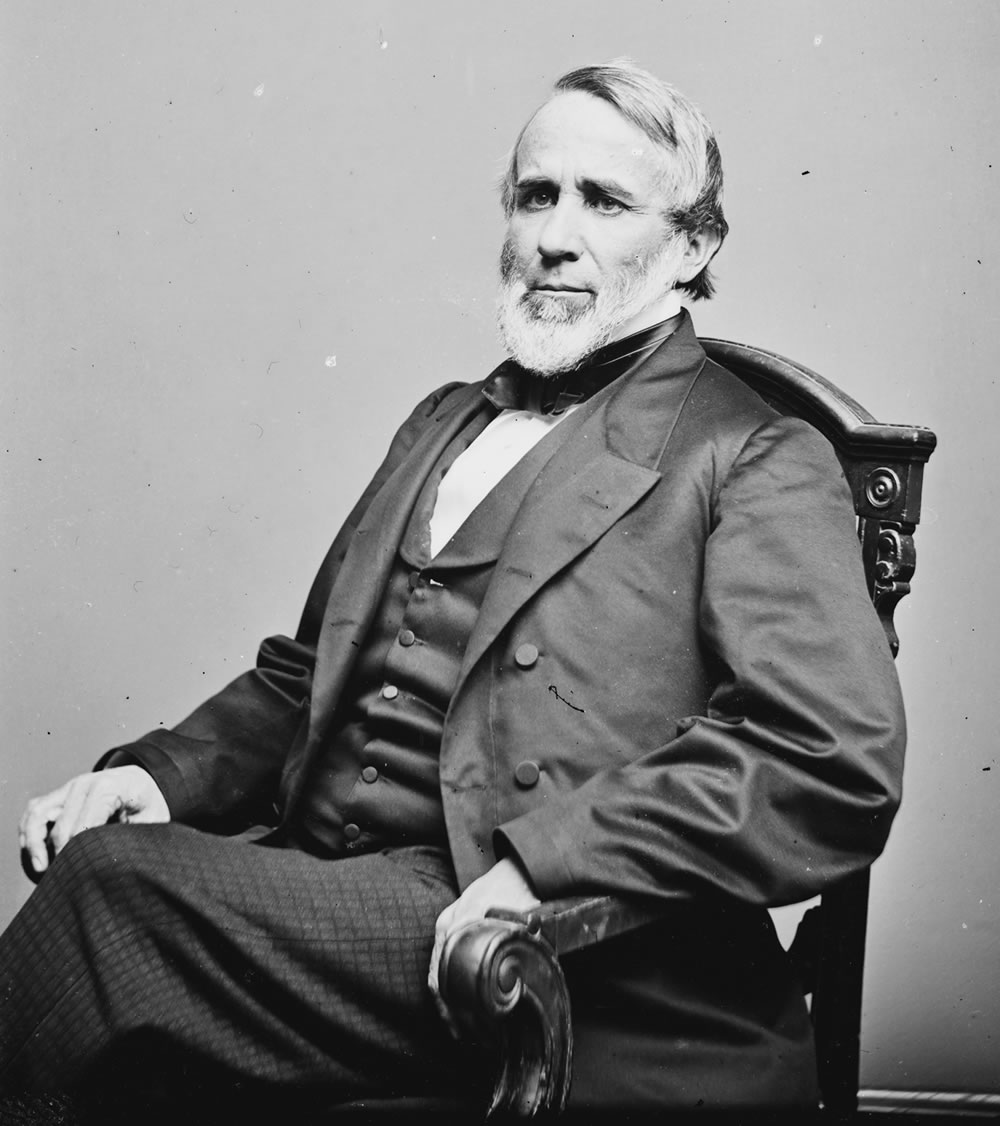
Historical · U.S. House · Maryland · District 1
John Crisfield
Former U.S. Representative · Maryland District 1 · 1847–1863 · Unionist
John Crisfield represented Maryland's District 1 in the United States House of Representatives (1847–1863) for the Unionist party. The page below collects sourced biographical facts, term history, committee roles, and provenance for Crisfield.
Bioguide ID: C000907
Key facts
- Full name
- John Crisfield
- State
- Maryland
- District
- District 1
- Party
- Unionist
- House service
- 1847–1863
- First House term
- 1847
- Status
- Left office
- Current term ends
- —
- Born
- 1806
- Bioguide ID
- C000907
- Committee assignments
- —
- Dataset version
- 1.20260606
Biographical narrative
1,049 words · sourced from the Wikipedia REST extract
John Crisfield was a U.S. Representative from Maryland, serving in the House of Representatives during two separate terms. A member of the Unionist Party, he represented the sixth congressional district from 1847 to 1849 and the first congressional district from 1861 to 1863. Crisfield was notable for his strong support of the Union during the American Civil War, opposing Maryland's secession, while simultaneously advocating for the institution of slavery. His legacy includes the founding of the city of Crisfield, Maryland, which bears his name.
Early life and career
John Crisfield was born on November 8, 1806, near Galena, Maryland, in Kent County, located on the Eastern Shore of the state. He was the son of Arthur Crisfield, who passed away when John was just 16 years old. Following his father's death, Crisfield pursued an education at Washington College in Chestertown, Maryland. His legal career began after he studied law and worked at a law firm run by his cousin and brother-in-law, Henry Page. He was admitted to the bar in 1830 and initially commenced his legal practice in Indiana. However, he soon returned to Maryland, where he established his own law office in Princess Anne in 1832.
Crisfield's political career began in earnest when he entered the Maryland House of Delegates in 1836. During this time, he was an ardent supporter of the Whig Party, aligning himself with prominent figures such as Henry Clay and Daniel Webster during their presidential campaigns. In 1840, he became the editor and owner of the Somerset Herald, a newspaper that supported William Henry Harrison's presidential bid. His political involvement continued to grow, and he was elected to the Thirtieth Congress, where he served the sixth congressional district of Maryland from March 4, 1847, until March 3, 1849. During his first term in Congress, Crisfield opposed the Mexican-American War and advocated for the expansion of slavery into new territories. After completing his first term, he chose not to seek re-election in 1849.
Following his initial congressional service, Crisfield participated as a delegate in the Maryland State constitutional convention from 1850 to 1851, where he unsuccessfully opposed the election of judges. As the Whig Party began to dissolve, Crisfield opted not to join the emerging American Party. He later ran for a judgeship in the Queen Anne district but was narrowly defeated by a candidate from the American Party. Although he began voting with the Democratic Party, he never formally affiliated with it. In 1861, Crisfield was a member of a peace conference held in Washington, D.C., which aimed to find solutions to prevent the impending Civil War.
House tenure
Crisfield's second term in Congress began when he was elected as a Unionist to the Thirty-seventh Congress, representing the first congressional district of Maryland from March 4, 1861, until March 3, 1863. His election occurred during a tumultuous period in American history, as the nation faced the threat of civil war. Crisfield viewed secession as a form of revolution and actively sought to prevent the disintegration of the Union. Although Maryland remained loyal to the Union at the onset of the Civil War, the state was deeply divided on the issue of slavery. The question of emancipation for Maryland's slaves was contentious, and Crisfield's position reflected the complexities of the time.
During his time in Congress, Crisfield engaged in discussions regarding the emancipation of slaves, particularly in the context of Washington, D.C. He participated in conversations with President Abraham Lincoln regarding the potential emancipation of slaves, arguing that freedom might be more detrimental to the enslaved individuals than slavery itself, especially in the context of wartime. Despite his views, the growing abolitionist movement in the country began to gain momentum, making it increasingly difficult for Crisfield to maintain his stance against emancipation.
In addition to his views on slavery, Crisfield opposed the establishment of greenbacks as the official currency. He expressed satisfaction when the Supreme Court struck down the greenback legislation, although this ruling was not permanent. His congressional career came to an end in 1863 when he was defeated in local elections by John Creswell, an abolitionist candidate. Allegations of vote-rigging by the military were raised during this election, which further complicated the political landscape.
Legislative focus and committees
Throughout his congressional tenure, Crisfield's legislative focus was heavily influenced by the prevailing issues of his time, particularly the Civil War and the contentious debates surrounding slavery. His opposition to the Mexican-American War and his support for the expansion of slavery into new territories were significant aspects of his political identity during his first term. As a member of the Unionist Party, he was committed to preserving the Union and worked to oppose Maryland's secession.
Crisfield's involvement in the peace conference of 1861 highlighted his desire to find a resolution to the national crisis. His efforts to prevent the Civil War underscored his belief in the importance of maintaining national unity. However, his views on slavery and emancipation placed him at odds with the evolving political climate, which increasingly favored abolitionist sentiments.
After his congressional service, Crisfield continued to engage in legal practice, focusing on land ownership, riparian rights, and civil rights cases. He remained active in political and civic matters, including serving as a delegate to the National Union Convention in Philadelphia in 1866. During this period, he was involved in efforts to restrict voting rights for recently freed slaves and opposed any special privileges for them.
In addition to his legal and political endeavors, Crisfield played a significant role in the development of infrastructure in Maryland. He was instrumental in the establishment of the Eastern Shore Railroad, which connected the rapidly growing fishing town of Somers Cove/Governors Point to the Delaware Railroad. This development was significant for the local economy, particularly due to the burgeoning seafood industry.
Crisfield's personal life included three marriages, first to Ellen R. Johnson, then to his cousin Julia Ethelaide Page, with whom he had a son who later became a congressman, and finally to Mary W. Handy. He passed away on January 12, 1897, at his home, Edge Hill, in Princess Anne, Maryland, and was interred at Manokin Presbyterian Cemetery. His legacy endures through the city of Crisfield, named in his honor, and through the various contributions he made to Maryland's legal and political landscape.
Notable legislation
Sponsored and co-sponsored legislation for John Crisfield is pending operator curation. The biographical narrative above carries the same provenance trail until per-bill rows are written.
Sources
- [1]https://en.wikipedia.org/wiki/John_W._CrisfieldWikipedia · retrieved 2026-06-06
Notable quotes
Sourced quotes for John Crisfield are pending operator curation. Narrative-scope provenance remains attached below.
Sources
- [1]https://en.wikipedia.org/wiki/John_W._CrisfieldWikipedia · retrieved 2026-06-06
Key positions
Curated policy positions for John Crisfield are pending operator review. The biographical narrative above carries the same provenance trail until per-topic positions are written.
Sources
- [1]https://en.wikipedia.org/wiki/John_W._CrisfieldWikipedia · retrieved 2026-06-06
Terms served
- 1847–1849U.S. House · Term 1 · Whig
- 1861–1863U.S. House · Term 2 · Unionist
Sources & provenance
Every attributable claim above carries a per-section [N] marker that resolves to the corresponding URL below. Each entry records the upstream provider, the canonical URL, and the timestamp at which the source was retrieved by the ingest pipeline.
Key facts
- https://bioguide.congress.gov/search/bio/C000907bioguide · retrieved 2026-06-06
- https://www.govtrack.us/congress/members/403019govtrack · retrieved 2026-06-06
Biographical narrative
- https://en.wikipedia.org/wiki/John_W._Crisfieldwikipedia · retrieved 2026-06-06
Find your representative
Every U.S. state elects representatives by district. Browse Maryland’s delegation, the full former-representative roster, or explore the role and term length.
Related on The Candidate
- Preceded by John CausinEarlier holder of the Maryland District 1 House seat · Whig.Open
- Succeeded by Hiram McCulloughLater holder of the Maryland District 1 House seat · Democratic.Open
- Clement DorseyFormer U.S. Representative · Maryland District 1Open
- Daniel HenryFormer U.S. Representative · Maryland District 1 · DemocraticOpen
- David WardFormer U.S. Representative · Maryland District 1 · DemocraticOpen
- Dudley RoeFormer U.S. Representative · Maryland District 1 · DemocraticOpen