
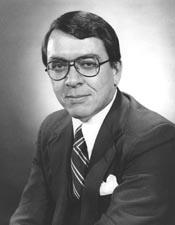
Historical · U.S. House · Maryland · District 1
Robert Bauman
Former U.S. Representative · Maryland District 1 · 1973–1981 · Republican
Robert Bauman represented Maryland's District 1 in the United States House of Representatives (1973–1981) for the Republican party. The page below collects sourced biographical facts, term history, committee roles, and provenance for Bauman.
Bioguide ID: B000244
Key facts
- Full name
- Robert Bauman
- State
- Maryland
- District
- District 1
- Party
- Republican
- House service
- 1973–1981
- First House term
- 1973
- Status
- Left office
- Current term ends
- —
- Born
- 1937
- Bioguide ID
- B000244
- Committee assignments
- —
- Dataset version
- 1.20260605
Biographical narrative
906 words · sourced from the Wikipedia REST extract
Robert E. Bauman is a former American politician and lawyer who served as a U.S. Representative for Maryland's 1st congressional district from 1973 to 1981. A member of the Republican Party, Bauman was known for his conservative views and active involvement in various political organizations. His congressional career was marked by both his legislative contributions and a significant personal scandal that ultimately led to his defeat in the 1980 elections.
Early life and career
Robert Edmund Bauman was born on April 4, 1937, in Bryn Mawr, Pennsylvania. He was raised by an unwed single mother, which shaped his early life experiences. During his teenage years, Bauman relocated to Easton, Maryland, where he completed his high school education at Easton High School, graduating in 1953. He continued his education at Georgetown University, where he earned a Bachelor of Science degree in international affairs from the School of Foreign Service in 1959. Following this, he pursued a law degree at Georgetown University Law Center, graduating in 1964. Bauman was admitted to the Maryland Bar in the same year and later to the District of Columbia bar, beginning his career in private legal practice.
Bauman's political involvement began early in his career. He served as a delegate to the Republican National Conventions in 1964, 1972, 1976, and 1980, showcasing his commitment to the party. His political career took a significant turn in 1970 when he was elected to the Maryland Senate, where he served until 1973. Additionally, he was a member of the Federal Hospital Council of the United States Department of Health, Education, and Welfare from 1970 to 1973. Bauman's personal life included his marriage to Carol Dawson, a co-founder of Young Americans for Freedom, with whom he had four children. He identified as a Roman Catholic throughout his life.
House tenure
Bauman's tenure in the U.S. House of Representatives began with his election in a special election held in August 1973. He succeeded William O. Mills, who had passed away earlier that year. Bauman was elected as a Republican and quickly established himself as a prominent figure within the party. Throughout his time in Congress, which lasted until January 3, 1981, Bauman served four terms, during which he became known for his strong conservative stance on various issues.
In Congress, Bauman was recognized for his advocacy of conservative principles and was a vocal critic of what he perceived as declining moral standards in the United States. He was a founding member of several influential conservative organizations, including the Young Americans for Freedom and the American Conservative Union, where he also held the position of national chairman. His expertise in parliamentary procedure was noted, and he was considered a rising star within the Republican Party during the late 1970s.
Bauman's legislative activities were characterized by his commitment to conservative values, which resonated with his constituents in Maryland's 1st congressional district. His reputation as a staunch conservative was solidified through his participation in various legislative initiatives and his active engagement in political discourse.
Legislative focus and committees
During his time in the House, Bauman focused on a range of issues that aligned with his conservative ideology. He was particularly vocal about matters related to morality and ethics, often addressing what he viewed as the moral decay of American society. His involvement in conservative activism extended beyond his congressional duties, as he played a key role in shaping the agenda of the Republican Party during his tenure.
Bauman's legislative contributions included participation in various committees, where he worked on issues pertinent to his constituents and the broader national landscape. His knowledge of parliamentary procedure allowed him to navigate the complexities of legislative processes effectively. He was involved in discussions and debates that reflected his commitment to conservative principles, advocating for policies that aligned with his vision for the country.
However, Bauman's congressional career was marred by a significant scandal that emerged in 1980. While campaigning for re-election, he faced charges related to soliciting sex from a minor. This incident garnered widespread media attention and ultimately impacted his political future. Following the revelation of the charges, Bauman publicly acknowledged his struggles with alcoholism and entered a court-supervised rehabilitation program. After completing the program, the charges against him were dropped, but the damage to his political career was substantial.
In the November 1980 election, Bauman was defeated by Democrat Roy Dyson, who had not been considered a serious contender prior to the scandal. Following his defeat, Bauman attempted to regain his political footing by running for the same House seat in 1982, but he withdrew from the race before the primary election.
After leaving Congress, Bauman transitioned into the private sector, co-founding and serving as legal counsel for the Sovereign Society, an organization focused on offshore banking and investment strategies. The group was known for its controversial practices, which included advising clients on how to minimize their tax liabilities through offshore investments. Bauman authored several books on financial topics, particularly those related to offshore banking and tax havens. He also published an autobiography that reflected on his life and career, providing insights into his experiences as a conservative politician.
In summary, Robert E. Bauman's career in the U.S. House of Representatives was marked by his strong conservative advocacy, significant legislative contributions, and a personal scandal that ultimately led to his political downfall. His post-congressional activities included legal work and authorship, reflecting his continued engagement with financial and political issues.
Notable legislation
Sponsored and co-sponsored legislation for Robert Bauman is pending operator curation. The biographical narrative above carries the same provenance trail until per-bill rows are written.
Sources
- [1]https://en.wikipedia.org/wiki/Robert_BaumanWikipedia · retrieved 2026-06-05
Notable quotes
Sourced quotes for Robert Bauman are pending operator curation. Narrative-scope provenance remains attached below.
Sources
- [1]https://en.wikipedia.org/wiki/Robert_BaumanWikipedia · retrieved 2026-06-05
Key positions
Curated policy positions for Robert Bauman are pending operator review. The biographical narrative above carries the same provenance trail until per-topic positions are written.
Sources
- [1]https://en.wikipedia.org/wiki/Robert_BaumanWikipedia · retrieved 2026-06-05
Terms served
- 1973–1975U.S. House · Term 1 · Republican
- 1975–1977U.S. House · Term 2 · Republican
- 1977–1979U.S. House · Term 3 · Republican
- 1979–1981U.S. House · Term 4 · Republican
Sources & provenance
Every attributable claim above carries a per-section [N] marker that resolves to the corresponding URL below. Each entry records the upstream provider, the canonical URL, and the timestamp at which the source was retrieved by the ingest pipeline.
Key facts
- https://bioguide.congress.gov/search/bio/B000244bioguide · retrieved 2026-06-05
- https://www.govtrack.us/congress/members/401238govtrack · retrieved 2026-06-05
Biographical narrative
- https://en.wikipedia.org/wiki/Robert_Baumanwikipedia · retrieved 2026-06-05
Find your representative
Every U.S. state elects representatives by district. Browse Maryland’s delegation, the full former-representative roster, or explore the role and term length.
Related on The Candidate
- Preceded by Rogers MortonEarlier holder of the Maryland District 1 House seat · Republican.Open
- Succeeded by Royden DysonLater holder of the Maryland District 1 House seat · Democratic.Open
- Clement DorseyFormer U.S. Representative · Maryland District 1Open
- Daniel HenryFormer U.S. Representative · Maryland District 1 · DemocraticOpen
- David WardFormer U.S. Representative · Maryland District 1 · DemocraticOpen
- Dudley RoeFormer U.S. Representative · Maryland District 1 · DemocraticOpen