
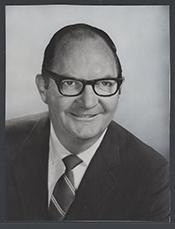
Historical · U.S. House · Maryland · District 1
William Mills
Former U.S. Representative · Maryland District 1 · 1971–1975 · Republican
William Mills represented Maryland's District 1 in the United States House of Representatives (1971–1975) for the Republican party. The page below collects sourced biographical facts, term history, committee roles, and provenance for Mills.
Bioguide ID: M000779
Key facts
- Full name
- William Mills
- State
- Maryland
- District
- District 1
- Party
- Republican
- House service
- 1971–1975
- First House term
- 1971
- Status
- Left office
- Current term ends
- —
- Born
- 1924
- Bioguide ID
- M000779
- Committee assignments
- —
- Dataset version
- 1.20260605
Biographical narrative
839 words · sourced from the Wikipedia REST extract
William O. Mills was a Republican politician who served as a U.S. Representative for Maryland's 1st congressional district from 1971 until his death in 1973. His tenure in Congress was marked by a rapid ascent following his election to fill the vacancy left by his predecessor, and he was involved in various legislative activities during his time in office. Mills's life was characterized by a blend of military service, business experience, and political engagement, culminating in a brief but impactful congressional career.
Early life and career
William Oswald Mills was born on August 12, 1924, in Bethlehem, Maryland. He grew up in Caroline County, where he attended local public schools. After completing his education at Federalsburg High School in 1941, Mills enlisted in the U.S. Army, serving during World War II. He was part of General George Patton's Third Army and participated in significant military operations, including the crossing of the Rhine River in Germany. His service was recognized with the awarding of the Bronze Star, a military honor that reflects his bravery and dedication during a pivotal time in history.
Following his military service, Mills transitioned to a career in the telecommunications industry. From 1946 to 1962, he worked for the Chesapeake & Potomac Telephone Company, where he progressed through various managerial roles in the company's offices located in Easton, Preston, and Cambridge, Maryland. This experience in management and operations provided him with a strong foundation for his later political career.
In 1962, Mills entered the political arena by joining the staff of Congressman Rogers Morton, who was a member of the Democratic Party at that time. Mills's political affiliation shifted when he became a Republican in 1970, reflecting a broader trend of realignment among political parties during that era. His connection with Morton was significant, as Morton later became a key figure in Mills's political journey.
Mills's opportunity to serve in Congress arose when Morton was appointed as the United States Secretary of the Interior by President Richard Nixon in 1971. Following this appointment, a special election was held to fill the vacancy in Maryland's 1st District, and Mills successfully won the election, marking the beginning of his congressional career.
House tenure
William O. Mills began his first term in the U.S. House of Representatives on May 25, 1971. During his time in office, he served in the 92nd Congress and was re-elected for a second term. His tenure was characterized by active participation in legislative processes and engagement with his constituents in Maryland's 1st congressional district.
Mills's congressional career, however, was cut short by his untimely death on May 24, 1973, just a day before he was found deceased at a stable near his home in Easton, Maryland. His passing at the age of 48 was a significant loss to his community and the political landscape of Maryland. Mills's death occurred under tragic circumstances, as it was determined to be the result of a self-inflicted gunshot wound.
Legislative focus and committees
During his time in the House of Representatives, Mills was involved in various legislative matters that reflected the interests and needs of his constituents. While specific details regarding the bills he sponsored or supported are not provided, it is common for members of Congress to focus on issues pertinent to their districts, including economic development, infrastructure, and social services.
Mills's involvement in Congress was also shaped by the political context of the early 1970s, a period marked by significant social and political change in the United States. As a member of the Republican Party, he would have engaged with the broader party agenda while also addressing local concerns in Maryland.
Tragically, Mills's political career was overshadowed by personal challenges leading up to his death. Reports indicated that he experienced significant emotional distress following the deaths of three of his congressional aides in a car accident in 1972, as well as the illness of his mentor, Rogers Morton. Additionally, Mills faced scrutiny regarding a campaign contribution he received during his special election campaign. This contribution, which was part of a larger financial controversy involving President Nixon's re-election campaign, contributed to his growing anxiety about his political future.
In the days leading up to his death, Mills expressed concerns about the implications of the campaign contribution and the potential for legal repercussions. Despite initial indications that he may not have violated campaign finance laws, the stress of the situation appeared to weigh heavily on him. Mills left behind several notes, including messages to his family and constituents, which reflected his state of mind and his feelings of despair.
William O. Mills's life and career serve as a reminder of the complexities of public service and the personal challenges that can accompany a life in politics. His contributions to Maryland and his brief tenure in Congress remain part of the historical narrative of the state's political landscape during the early 1970s. Mills is buried at Hillcrest Cemetery in Federalsburg, Maryland, where he is remembered for his service and the impact he had on his community.
Notable legislation
Sponsored and co-sponsored legislation for William Mills is pending operator curation. The biographical narrative above carries the same provenance trail until per-bill rows are written.
Sources
- [1]https://en.wikipedia.org/wiki/William_Oswald_MillsWikipedia · retrieved 2026-06-05
Notable quotes
Sourced quotes for William Mills are pending operator curation. Narrative-scope provenance remains attached below.
Sources
- [1]https://en.wikipedia.org/wiki/William_Oswald_MillsWikipedia · retrieved 2026-06-05
Key positions
Curated policy positions for William Mills are pending operator review. The biographical narrative above carries the same provenance trail until per-topic positions are written.
Sources
- [1]https://en.wikipedia.org/wiki/William_Oswald_MillsWikipedia · retrieved 2026-06-05
Terms served
- 1971–1973U.S. House · Term 1 · Republican
- 1973–1975U.S. House · Term 2 · Republican
Sources & provenance
Every attributable claim above carries a per-section [N] marker that resolves to the corresponding URL below. Each entry records the upstream provider, the canonical URL, and the timestamp at which the source was retrieved by the ingest pipeline.
Key facts
- https://bioguide.congress.gov/search/bio/M000779bioguide · retrieved 2026-06-05
- https://www.govtrack.us/congress/members/407757govtrack · retrieved 2026-06-05
Biographical narrative
- https://en.wikipedia.org/wiki/William_Oswald_Millswikipedia · retrieved 2026-06-05
Find your representative
Every U.S. state elects representatives by district. Browse Maryland’s delegation, the full former-representative roster, or explore the role and term length.
Related on The Candidate
- Preceded by Thomas JohnsonEarlier holder of the Maryland District 1 House seat · Democratic.Open
- Succeeded by Royden DysonLater holder of the Maryland District 1 House seat · Democratic.Open
- Clement DorseyFormer U.S. Representative · Maryland District 1Open
- Daniel HenryFormer U.S. Representative · Maryland District 1 · DemocraticOpen
- David WardFormer U.S. Representative · Maryland District 1 · DemocraticOpen
- Dudley RoeFormer U.S. Representative · Maryland District 1 · DemocraticOpen