
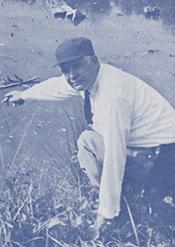
Historical · U.S. House · Maryland · District 2
Clarence Long
Former U.S. Representative · Maryland District 2 · 1963–1985 · Democratic
Clarence Long represented Maryland's District 2 in the United States House of Representatives (1963–1985) for the Democratic party. The page below collects sourced biographical facts, term history, committee roles, and provenance for Long.
Bioguide ID: L000413
Key facts
- Full name
- Clarence Long
- State
- Maryland
- District
- District 2
- Party
- Democratic
- House service
- 1963–1985
- First House term
- 1963
- Status
- Left office
- Current term ends
- —
- Born
- 1908
- Bioguide ID
- L000413
- Committee assignments
- —
- Dataset version
- 1.20260605
Biographical narrative
837 words · sourced from the Wikipedia REST extract
Clarence D. Long was a prominent American politician who served as a U.S. Representative for Maryland's 2nd congressional district from January 3, 1963, until January 3, 1985. A member of the Democratic Party, Long was known for his liberal views and significant contributions to various legislative efforts during his tenure in Congress. His background in economics and experience in government shaped his approach to policy-making, particularly in areas related to foreign aid and civil rights.
Early life and career
Clarence Dickinson Long Jr. was born on December 11, 1908, in South Bend, Indiana. He pursued higher education at Washington and Jefferson College, where he earned his bachelor's degree in 1932. Long's academic journey continued at Princeton University, where he obtained both a master's degree in 1935 and a Ph.D. in economics in 1938. His doctoral dissertation focused on the cyclical patterns in the building industry in the United States, analyzing public and residential construction from 1856 to 1935. This early academic work laid the foundation for his later career in economics and public policy.
In addition to his academic pursuits, Long served in the United States Navy during World War II. His military service contributed to his understanding of national and international issues, which would later influence his legislative priorities. Following the war, Long returned to academia and held teaching positions at Wesleyan University and Johns Hopkins University. He taught economics at Johns Hopkins from 1946 until he entered Congress in 1963.
Long's involvement in government began prior to his congressional career. He served as a member of the United States Council of Economic Advisers during two separate terms, from 1953 to 1954 and again from 1956 to 1957. This experience provided him with insights into federal economic policy and the complexities of governance, further preparing him for his future role as a legislator.
House tenure
Long's political career in the U.S. House of Representatives began when he was elected to represent Maryland's 2nd congressional district in 1962. He took office on January 3, 1963, and would go on to serve a total of 11 consecutive terms in the House. Throughout his tenure, Long was known for his commitment to liberal policies and his advocacy for civil rights. He voted in favor of significant legislation, including the Civil Rights Acts of 1964 and 1968, as well as the Voting Rights Act of 1965. These votes reflected his dedication to advancing social justice and equality in the United States.
Long's influence extended beyond civil rights; he played a key role in shaping foreign policy through his position on the House Appropriations Committee. He became the Chairman of the subcommittee on Foreign Operations, where he oversaw the foreign aid budget. This role allowed him to impact U.S. foreign policy significantly, particularly during the Cold War era. His support for the anti-Soviet Mujahideen in Afghanistan was a notable aspect of his foreign policy stance, and his involvement in this area was later depicted in popular culture, including the film "Charlie Wilson's War."
Despite his long and impactful career, Long faced challenges in the political landscape. In 1984, he was defeated in his bid for re-election by Republican candidate Helen Delich Bentley. This marked the end of his 22 years of service in the House of Representatives, concluding a significant chapter in Maryland's political history.
Legislative focus and committees
During his time in Congress, Long was involved in various legislative initiatives and served on multiple committees that aligned with his interests and expertise. His background in economics informed his approach to fiscal policy and government spending, particularly in relation to foreign aid and economic development programs. As Chairman of the subcommittee on Foreign Operations, he was responsible for allocating funds for international assistance, which included humanitarian aid and development projects aimed at fostering stability in various regions.
Long's commitment to civil rights was evident in his legislative actions, as he consistently supported measures aimed at dismantling institutional racism and promoting equality. His votes on landmark civil rights legislation demonstrated his alignment with the broader goals of the Democratic Party during the 1960s and 1970s, a period marked by significant social change in the United States.
In addition to his work on civil rights and foreign aid, Long's legislative focus included economic issues, reflecting his academic background. He advocated for policies that aimed to stimulate economic growth and address disparities in wealth and opportunity. His expertise in economics allowed him to contribute meaningfully to discussions on budgetary matters and economic policy, particularly in the context of federal spending and taxation.
Throughout his congressional career, Long's dedication to public service and his focus on critical issues of his time left a lasting impact on both his constituents and the broader legislative landscape. His ability to navigate complex policy areas and advocate for progressive change exemplified his role as a significant figure in Maryland's political history. After leaving Congress, Long's legacy continued to influence discussions around civil rights and foreign policy, reflecting the enduring relevance of his contributions to American governance.
Notable legislation
Sponsored and co-sponsored legislation for Clarence Long is pending operator curation. The biographical narrative above carries the same provenance trail until per-bill rows are written.
Sources
- [1]https://en.wikipedia.org/wiki/Clarence_LongWikipedia · retrieved 2026-06-05
Notable quotes
Sourced quotes for Clarence Long are pending operator curation. Narrative-scope provenance remains attached below.
Sources
- [1]https://en.wikipedia.org/wiki/Clarence_LongWikipedia · retrieved 2026-06-05
Key positions
Curated policy positions for Clarence Long are pending operator review. The biographical narrative above carries the same provenance trail until per-topic positions are written.
Sources
- [1]https://en.wikipedia.org/wiki/Clarence_LongWikipedia · retrieved 2026-06-05
Terms served
- 1963–1965U.S. House · Term 1 · Democratic
- 1965–1967U.S. House · Term 2 · Democratic
- 1967–1969U.S. House · Term 3 · Democratic
- 1969–1971U.S. House · Term 4 · Democratic
- 1971–1973U.S. House · Term 5 · Democratic
- 1973–1975U.S. House · Term 6 · Democratic
- 1975–1977U.S. House · Term 7 · Democratic
- 1977–1979U.S. House · Term 8 · Democratic
- 1979–1981U.S. House · Term 9 · Democratic
- 1981–1983U.S. House · Term 10 · Democratic
- 1983–1985U.S. House · Term 11 · Democratic
Sources & provenance
Every attributable claim above carries a per-section [N] marker that resolves to the corresponding URL below. Each entry records the upstream provider, the canonical URL, and the timestamp at which the source was retrieved by the ingest pipeline.
Key facts
- https://bioguide.congress.gov/search/bio/L000413bioguide · retrieved 2026-06-05
- https://www.govtrack.us/congress/members/406904govtrack · retrieved 2026-06-05
Biographical narrative
- https://en.wikipedia.org/wiki/Clarence_Longwikipedia · retrieved 2026-06-05
Find your representative
Every U.S. state elects representatives by district. Browse Maryland’s delegation, the full former-representative roster, or explore the role and term length.
Related on The Candidate
- Preceded by James DevereuxEarlier holder of the Maryland District 2 House seat · Republican.Open
- Succeeded by Helen BentleyLater holder of the Maryland District 2 House seat · Republican.Open
- Clement DorseyFormer U.S. Representative · Maryland District 1Open
- Daniel HenryFormer U.S. Representative · Maryland District 1 · DemocraticOpen
- David WardFormer U.S. Representative · Maryland District 1 · DemocraticOpen
- Dudley RoeFormer U.S. Representative · Maryland District 1 · DemocraticOpen