
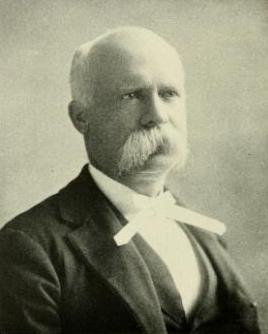
Historical · U.S. House · Maryland · District 2
William Baker
Former U.S. Representative · Maryland District 2 · 1895–1901 · Republican
William Baker represented Maryland's District 2 in the United States House of Representatives (1895–1901) for the Republican party. The page below collects sourced biographical facts, term history, committee roles, and provenance for Baker.
Bioguide ID: B000076
Key facts
- Full name
- William Baker
- State
- Maryland
- District
- District 2
- Party
- Republican
- House service
- 1895–1901
- First House term
- 1895
- Status
- Left office
- Current term ends
- —
- Born
- 1840
- Bioguide ID
- B000076
- Committee assignments
- —
- Dataset version
- 1.20260606
Biographical narrative
886 words · sourced from the Wikipedia REST extract
William Baker was a U.S. Congressman who served as a representative for Maryland's second congressional district from 1895 to 1901. A member of the Republican Party, Baker is often recognized for his significant contributions to the establishment of rural mail delivery in the United States. His career spanned various roles in both business and politics, reflecting a commitment to public service and community development.
Early life and career
William Benjamin Baker was born on July 22, 1840, near Aberdeen, Maryland, into a large family as one of fifteen children. His parents, Elizabeth (née Greenland) and George W. Baker, were engaged in the canning industry, which would later influence Baker's own career choices. He received his education through local common schools and private tutoring, remaining on the family homestead until he reached the age of 32. His familial connections included notable figures in local politics, such as his nephew Frank E. Baker, who served as a state delegate, and his uncle John H. Baker, who was both a state delegate and a preacher.
In 1872, Baker ventured into the business world by establishing a canning factory in Aberdeen alongside his brother Charles W. Baker. This enterprise, however, faced challenges when the factory was destroyed by fire in 1876. Undeterred, Baker rebuilt his business, setting up another cannery on a farm in Aberdeen and also establishing a facility in Odessa, Delaware. His entrepreneurial spirit extended beyond canning; he played a pivotal role in the formation of the First National Bank of Aberdeen, serving as its first president from 1891 until his death in 1911. Additionally, he held the presidency of the Harford County Telephone Company and was involved in the organization and directorship of the First National Bank of Havre de Grace.
Baker's political career began in earnest when he participated in various state and congressional conventions. His initial foray into politics was marked by a run for the Maryland House of Delegates in 1875, which resulted in a defeat. However, he successfully secured a seat in the House of Delegates in 1881, defeating his previous opponent, Murray Vandiver. Baker served in this capacity through 1882 but faced a setback in 1883 when he lost his re-election bid. He continued to pursue political office, running for the Maryland Senate in 1889 but losing by a narrow margin. In 1893, he was elected to the Maryland Senate after his brother withdrew his nomination, serving until 1895.
House tenure
Baker's tenure in the U.S. House of Representatives began on March 4, 1895, when he was elected as a Republican to the Fifty-fourth Congress. He represented Maryland's second congressional district, which at that time included Harford, Baltimore, and Carroll Counties. Over the course of three congressional terms, Baker was involved in various legislative matters and was known for his willingness to take on controversial issues.
One of Baker's most notable contributions during his time in Congress was his advocacy for rural mail delivery. At a time when the concept was met with skepticism, particularly regarding the role of rural merchants as postmasters, Baker championed the initiative. He facilitated the establishment of the first rural mail route in the United States, which was initiated in Carroll County, starting from the Westminster post office. This pioneering effort laid the groundwork for what would become a vital service for rural communities across the nation.
Baker's congressional career concluded on March 3, 1901, when he chose not to seek renomination for a fourth term. Following his departure from Congress, he returned to the canning business, continuing his entrepreneurial pursuits. His political career did not end there, as he was elected again to the Maryland Senate in 1905, serving from 1906 to 1908. However, he faced defeat in his re-election bid in 1909 and made another attempt at a congressional seat in 1910, which also ended in defeat.
Legislative focus and committees
During his time in the House of Representatives, Baker's legislative focus was primarily on issues that affected his constituents and the broader community. His most significant achievement, the establishment of rural mail delivery, demonstrated his commitment to improving services for rural populations. By advocating for this initiative, he not only addressed the logistical challenges faced by rural residents but also contributed to the evolution of postal services in the United States.
In addition to his work on rural mail delivery, Baker's involvement in various committees and legislative discussions reflected his broader interests in economic development and community welfare. His background in business and banking likely informed his perspectives on economic issues, allowing him to advocate effectively for policies that would benefit his district.
Baker's political career was characterized by a dedication to public service, as evidenced by his long-standing involvement in local banking and telecommunications, as well as his legislative efforts at both the state and federal levels. His contributions to the establishment of rural mail delivery have left a lasting impact on the postal system, and his legacy is remembered in the context of Maryland's political history.
William Baker passed away on May 17, 1911, in Aberdeen, Maryland, following a stroke. He was interred in Baker's Cemetery, the family burial ground. His life and career exemplify the intersection of business and politics in the late 19th and early 20th centuries, highlighting the role of local leaders in shaping national policies.
Notable legislation
Sponsored and co-sponsored legislation for William Baker is pending operator curation. The biographical narrative above carries the same provenance trail until per-bill rows are written.
Sources
- [1]https://en.wikipedia.org/wiki/William_Benjamin_BakerWikipedia · retrieved 2026-06-06
Notable quotes
Sourced quotes for William Baker are pending operator curation. Narrative-scope provenance remains attached below.
Sources
- [1]https://en.wikipedia.org/wiki/William_Benjamin_BakerWikipedia · retrieved 2026-06-06
Key positions
Curated policy positions for William Baker are pending operator review. The biographical narrative above carries the same provenance trail until per-topic positions are written.
Sources
- [1]https://en.wikipedia.org/wiki/William_Benjamin_BakerWikipedia · retrieved 2026-06-06
Terms served
- 1895–1897U.S. House · Term 1 · Republican
- 1897–1899U.S. House · Term 2 · Republican
- 1899–1901U.S. House · Term 3 · Republican
Sources & provenance
Every attributable claim above carries a per-section [N] marker that resolves to the corresponding URL below. Each entry records the upstream provider, the canonical URL, and the timestamp at which the source was retrieved by the ingest pipeline.
Key facts
- https://bioguide.congress.gov/search/bio/B000076bioguide · retrieved 2026-06-06
- https://www.govtrack.us/congress/members/401079govtrack · retrieved 2026-06-06
Biographical narrative
- https://en.wikipedia.org/wiki/William_Benjamin_Bakerwikipedia · retrieved 2026-06-06
Find your representative
Every U.S. state elects representatives by district. Browse Maryland’s delegation, the full former-representative roster, or explore the role and term length.
Related on The Candidate
- Preceded by Herman StumpEarlier holder of the Maryland District 2 House seat · Democratic.Open
- Succeeded by Albert BlakeneyLater holder of the Maryland District 2 House seat · Republican.Open
- Clement DorseyFormer U.S. Representative · Maryland District 1Open
- Daniel HenryFormer U.S. Representative · Maryland District 1 · DemocraticOpen
- David WardFormer U.S. Representative · Maryland District 1 · DemocraticOpen
- Dudley RoeFormer U.S. Representative · Maryland District 1 · DemocraticOpen