
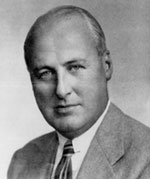
Historical · U.S. House · Maryland · District 4
George Fallon
Former U.S. Representative · Maryland District 4 · 1945–1971 · Democratic
George Fallon represented Maryland's District 4 in the United States House of Representatives (1945–1971) for the Democratic party. The page below collects sourced biographical facts, term history, committee roles, and provenance for Fallon.
Bioguide ID: F000012
Key facts
- Full name
- George Fallon
- State
- Maryland
- District
- District 4
- Party
- Democratic
- House service
- 1945–1971
- First House term
- 1945
- Status
- Left office
- Current term ends
- —
- Born
- 1902
- Bioguide ID
- F000012
- Committee assignments
- —
- Dataset version
- 1.20260605
Biographical narrative
1,035 words · sourced from the Wikipedia REST extract
George Hyde Fallon was a prominent American politician who served as a U.S. Representative for Maryland's 4th congressional district from January 3, 1945, until January 3, 1971. A member of the Democratic Party, Fallon was known for his long tenure in Congress, which spanned 13 terms, making him one of the longest-serving members in the history of the House of Representatives at the time of his departure. His political career was marked by significant involvement in various legislative initiatives, particularly in public works and civil rights, as well as a notable incident during the 1954 United States Capitol shooting, where he was among the congressmen injured.
Early life and career
George Hyde Fallon was born on July 24, 1902. He grew up in a period of significant change in the United States, which influenced his later political career. Fallon received his education in public schools, which laid the foundation for his future endeavors. He furthered his education at Calvert Business College and Johns Hopkins University, institutions known for their rigorous academic standards. This educational background equipped him with skills that would later be beneficial in his political and business pursuits.
Before entering politics, Fallon was engaged in the advertising sign business, which provided him with insights into the commercial aspects of society and the importance of effective communication. His entry into the political arena began in 1938 when he became the chairman of the Democratic state central committee of Baltimore, Maryland. This position marked the beginning of his formal political career, allowing him to build connections and gain experience in party organization and electoral strategy.
Fallon’s political career took a significant step forward when he was elected to the Baltimore City Council, representing the third council district. He served on the council from May 1939 until December 1944. During this time, he developed a reputation for his commitment to public service and his ability to address local issues. His tenure on the city council provided him with valuable experience in governance and public administration, which would serve him well in his future role as a congressman.
In 1944, Fallon successfully ran for the U.S. House of Representatives, winning election as a Democrat to the Seventy-ninth Congress. His election marked the beginning of a lengthy congressional career that would last for over two decades. Fallon was re-elected to the House for twelve consecutive terms, a testament to his political acumen and the support he garnered from his constituents.
House tenure
Fallon’s tenure in the U.S. House of Representatives began on January 3, 1945, and continued until January 3, 1971. During this period, he became known for his active participation in legislative matters and his leadership roles within the House. Notably, he served as the chairman of the Committee on Public Works during the 89th through 91st Congresses. This position allowed him to influence significant infrastructure projects and policies that shaped the development of public works in the United States.
Throughout his congressional career, Fallon was involved in various legislative initiatives, particularly those related to civil rights and infrastructure development. He was a supporter of key civil rights legislation, voting in favor of the Civil Rights Acts of 1957, 1960, 1964, and 1968. His commitment to civil rights was further demonstrated by his support for the Voting Rights Act of 1965 and the 24th Amendment to the U.S. Constitution, which aimed to eliminate barriers to voting.
In addition to his work on civil rights, Fallon played a crucial role in the passage of the Federal Aid Highway Act of 1956, which significantly impacted the development of the national highway system. This legislation facilitated the construction of interstate highways, contributing to the modernization of transportation infrastructure across the country.
Fallon’s legislative record reflects a generally liberal voting pattern, aligning him with progressive policies of the time. However, his political career was not without controversy. In the late 1960s, he faced criticism from environmentalists and conservationists, who labeled him as one of the "dirty dozen," identifying him as one of the most anti-environmental congressmen. This criticism ultimately affected his political standing and contributed to his unsuccessful bid for renomination in 1970 for the Ninety-second Congress.
In addition to his legislative activities, Fallon was also involved in a notable incident in 1954 when he was wounded during the United States Capitol shooting. This event underscored the risks associated with public service and highlighted the challenges faced by lawmakers during a tumultuous period in American history.
Legislative focus and committees
Throughout his congressional career, George Fallon focused on a range of issues that reflected the priorities of his constituents and the broader national landscape. His role as chairman of the Committee on Public Works allowed him to advocate for significant infrastructure projects that aimed to improve the quality of life for Americans. Under his leadership, the committee addressed various aspects of public works, including transportation, water resources, and urban development.
Fallon’s commitment to civil rights was a defining aspect of his legislative focus. He was an advocate for policies aimed at promoting equality and combating discrimination. His support for landmark civil rights legislation demonstrated his alignment with the growing movement for social justice during the mid-20th century. By voting in favor of key civil rights measures, he contributed to the advancement of policies that sought to dismantle systemic barriers faced by marginalized communities.
In addition to his work on civil rights and public works, Fallon was involved in various other legislative initiatives that addressed the needs of his constituents. His long tenure in Congress allowed him to build relationships with colleagues across party lines, facilitating collaboration on important issues.
Despite facing challenges and criticism, Fallon remained a dedicated public servant throughout his career. His contributions to the U.S. House of Representatives and his involvement in significant legislative initiatives left a lasting impact on the political landscape of Maryland and the nation. After his departure from Congress, Fallon retired to Baltimore, where he continued to be remembered for his service until his death in 1980. His legacy is commemorated in part by the designation of the Federal building in Baltimore as the "George H. Fallon Federal Office Building," a recognition of his contributions to public service and infrastructure development.
Notable legislation
Sponsored and co-sponsored legislation for George Fallon is pending operator curation. The biographical narrative above carries the same provenance trail until per-bill rows are written.
Sources
- [1]https://en.wikipedia.org/wiki/George_Hyde_FallonWikipedia · retrieved 2026-06-05
Notable quotes
Sourced quotes for George Fallon are pending operator curation. Narrative-scope provenance remains attached below.
Sources
- [1]https://en.wikipedia.org/wiki/George_Hyde_FallonWikipedia · retrieved 2026-06-05
Key positions
Curated policy positions for George Fallon are pending operator review. The biographical narrative above carries the same provenance trail until per-topic positions are written.
Sources
- [1]https://en.wikipedia.org/wiki/George_Hyde_FallonWikipedia · retrieved 2026-06-05
Terms served
- 1945–1947U.S. House · Term 1 · Democratic
- 1947–1949U.S. House · Term 2 · Democratic
- 1949–1951U.S. House · Term 3 · Democratic
- 1951–1953U.S. House · Term 4 · Democratic
- 1953–1955U.S. House · Term 5 · Democratic
- 1955–1957U.S. House · Term 6 · Democratic
- 1957–1959U.S. House · Term 7 · Democratic
- 1959–1961U.S. House · Term 8 · Democratic
- 1961–1963U.S. House · Term 9 · Democratic
- 1963–1965U.S. House · Term 10 · Democratic
- 1965–1967U.S. House · Term 11 · Democratic
- 1967–1969U.S. House · Term 12 · Democratic
- 1969–1971U.S. House · Term 13 · Democratic
Sources & provenance
Every attributable claim above carries a per-section [N] marker that resolves to the corresponding URL below. Each entry records the upstream provider, the canonical URL, and the timestamp at which the source was retrieved by the ingest pipeline.
Key facts
- https://bioguide.congress.gov/search/bio/F000012bioguide · retrieved 2026-06-05
- https://www.govtrack.us/congress/members/403974govtrack · retrieved 2026-06-05
Biographical narrative
- https://en.wikipedia.org/wiki/George_Hyde_Fallonwikipedia · retrieved 2026-06-05
Find your representative
Every U.S. state elects representatives by district. Browse Maryland’s delegation, the full former-representative roster, or explore the role and term length.
Related on The Candidate
- Preceded by Daniel EllisonEarlier holder of the Maryland District 4 House seat · Republican.Open
- Succeeded by Marjorie HoltLater holder of the Maryland District 4 House seat · Republican.Open
- Clement DorseyFormer U.S. Representative · Maryland District 1Open
- Daniel HenryFormer U.S. Representative · Maryland District 1 · DemocraticOpen
- David WardFormer U.S. Representative · Maryland District 1 · DemocraticOpen
- Dudley RoeFormer U.S. Representative · Maryland District 1 · DemocraticOpen