
Historical · U.S. House · Maryland · District 5
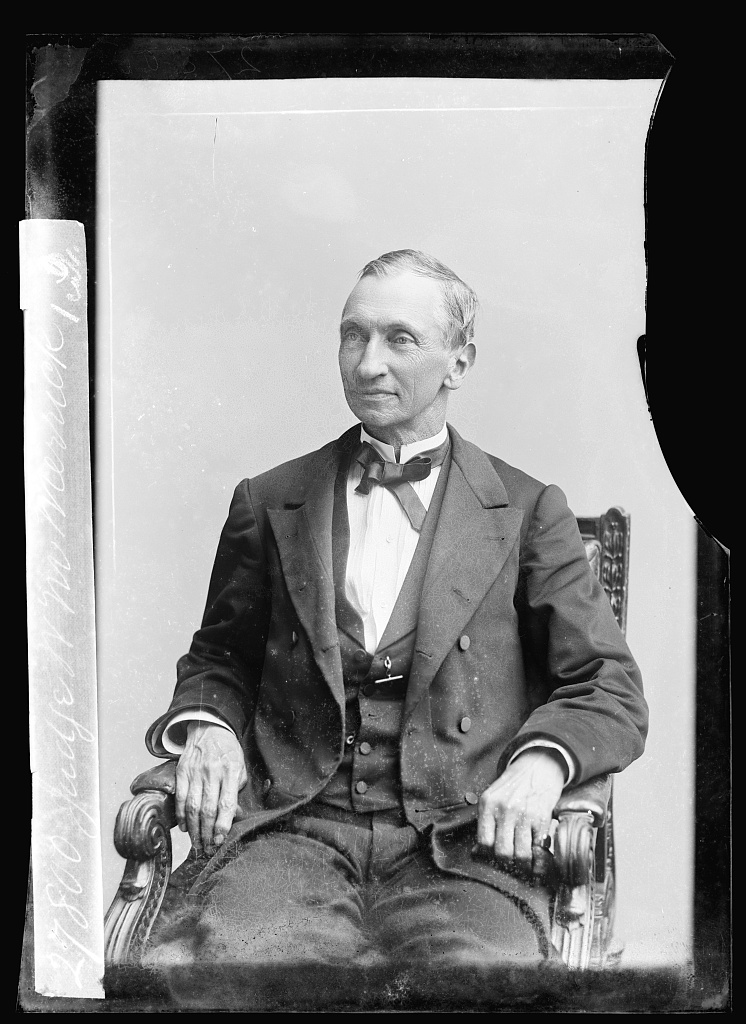
William Merrick
Former U.S. Representative · Maryland District 5 · 1871–1873 · Democratic
William Merrick represented Maryland's District 5 in the United States House of Representatives (1871–1873) for the Democratic party. The page below collects sourced biographical facts, term history, committee roles, and provenance for Merrick.
Bioguide ID: M000655
Key facts
- Full name
- William Merrick
- State
- Maryland
- District
- District 5
- Party
- Democratic
- House service
- 1871–1873
- First House term
- 1871
- Status
- Left office
- Current term ends
- —
- Born
- 1818
- Bioguide ID
- M000655
- Committee assignments
- —
- Dataset version
- 1.20260606
Biographical narrative
808 words · sourced from the Wikipedia REST extract
William Merrick was a prominent figure in American law and politics during the 19th century, serving as a U.S. Representative from Maryland's 5th congressional district and later as an associate justice of the Supreme Court of the District of Columbia. Born in 1818, Merrick's career spanned various roles, including private legal practice, judicial service, and legislative responsibilities. His contributions to the legal landscape and his political endeavors reflect the complexities of his time, particularly during the Civil War and Reconstruction eras.
Early life and career
William Merrick was born on September 1, 1818, in a rural area near Faulkner in Charles County, Maryland. He was the son of William Dunhurst Merrick and his wife, who provided him with a foundation that would support his future educational and professional pursuits. Merrick's academic journey began at Georgetown College, where he graduated in 1831. Following his graduation, he pursued legal studies at the University of Virginia, further preparing himself for a career in law. By 1839, he had completed his legal education and was admitted to the bar, marking the beginning of his professional journey.
Merrick's early career in law commenced in Baltimore, Maryland, where he practiced from 1839 until 1844. His legal expertise and reputation grew, leading him to relocate to Frederick, Maryland, where he continued his private practice from 1844 to 1854. During this period, he also served as the deputy attorney general for Frederick County from 1845 to 1859, a role that allowed him to further establish his legal credentials and engage with the local legal community. In 1854, Merrick briefly returned to private practice in Washington, D.C., before transitioning to a judicial role.
House tenure
Merrick's political career took a significant turn when he was elected as a Democrat to represent Maryland's 5th congressional district in the United States House of Representatives. He served in the 42nd Congress from March 4, 1871, to March 3, 1873. His election to the House came after a diverse career in law and public service, positioning him as a knowledgeable figure in legislative matters. During his time in Congress, Merrick was involved in various discussions and decisions that shaped the legislative landscape of the period.
Despite his contributions, Merrick was not successful in his bid for reelection to the 43rd Congress in 1872. Following his departure from Congress, he returned to private legal practice in Howard County, Maryland, where he continued to work until 1886. His time in Congress was relatively brief, but it was an important chapter in his career, reflecting the political dynamics of the early 1870s.
Legislative focus and committees
While specific details regarding Merrick's legislative focus during his congressional tenure are not extensively documented, his background in law and his previous roles likely influenced his approach to legislation. As a member of the Democratic Party, he would have engaged with the political issues of his time, including those related to Reconstruction, civil rights, and economic policies following the Civil War. The 42nd Congress was marked by significant debates over the direction of the nation after the war, and Merrick's legal expertise would have been an asset in navigating these complex issues.
In addition to his congressional service, Merrick's legal career included notable judicial appointments. He was nominated by President Franklin Pierce in 1855 to serve on the United States Circuit Court of the District of Columbia, a position he held until the court was abolished in 1863. His judicial tenure was marked by significant events, including his involvement in a controversial habeas corpus case during the Civil War, which brought him into conflict with military authorities. This experience likely informed his legislative perspective and understanding of the balance between civil liberties and national security.
After his congressional service, Merrick continued to engage with the legal community and public service. He was appointed as an associate justice of the Supreme Court of the District of Columbia by President Grover Cleveland in 1885, a role he held until his death in 1889. This position allowed him to influence the judicial landscape of the District of Columbia, further solidifying his legacy in American law.
Merrick's life and career were shaped by the historical context of his time, including the challenges of the Civil War and the subsequent Reconstruction era. His experiences as a lawyer, judge, and legislator reflect the complexities of navigating a nation in transition. His contributions to both the legal and political spheres demonstrate a commitment to public service and the rule of law.
In summary, William Merrick's career encompassed significant roles in both the legislative and judicial branches of government. His background in law, combined with his experiences in Congress and the judiciary, positioned him as a notable figure in 19th-century American politics. His legacy continues to be recognized through his contributions to the legal system and his service to the state of Maryland.
Notable legislation
Sponsored and co-sponsored legislation for William Merrick is pending operator curation. The biographical narrative above carries the same provenance trail until per-bill rows are written.
Sources
- [1]https://en.wikipedia.org/wiki/William_Matthews_MerrickWikipedia · retrieved 2026-06-06
Notable quotes
Sourced quotes for William Merrick are pending operator curation. Narrative-scope provenance remains attached below.
Sources
- [1]https://en.wikipedia.org/wiki/William_Matthews_MerrickWikipedia · retrieved 2026-06-06
Key positions
Curated policy positions for William Merrick are pending operator review. The biographical narrative above carries the same provenance trail until per-topic positions are written.
Sources
- [1]https://en.wikipedia.org/wiki/William_Matthews_MerrickWikipedia · retrieved 2026-06-06
Terms served
- 1871–1873U.S. House · Term 1 · Democratic
Sources & provenance
Every attributable claim above carries a per-section [N] marker that resolves to the corresponding URL below. Each entry records the upstream provider, the canonical URL, and the timestamp at which the source was retrieved by the ingest pipeline.
Key facts
- https://bioguide.congress.gov/search/bio/M000655bioguide · retrieved 2026-06-06
- https://www.govtrack.us/congress/members/407641govtrack · retrieved 2026-06-06
Biographical narrative
- https://en.wikipedia.org/wiki/William_Matthews_Merrickwikipedia · retrieved 2026-06-06
Find your representative
Every U.S. state elects representatives by district. Browse Maryland’s delegation, the full former-representative roster, or explore the role and term length.
Related on The Candidate
- Preceded by Frederick StoneEarlier holder of the Maryland District 5 House seat · Democratic.Open
- Succeeded by William AlbertLater holder of the Maryland District 5 House seat · Republican.Open
- Clement DorseyFormer U.S. Representative · Maryland District 1Open
- Daniel HenryFormer U.S. Representative · Maryland District 1 · DemocraticOpen
- David WardFormer U.S. Representative · Maryland District 1 · DemocraticOpen
- Dudley RoeFormer U.S. Representative · Maryland District 1 · DemocraticOpen