
Historical · U.S. House · Maryland · District 6
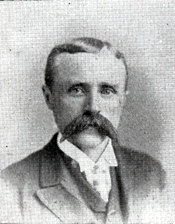
William McKaig
Former U.S. Representative · Maryland District 6 · 1891–1895 · Democratic
William McKaig represented Maryland's District 6 in the United States House of Representatives (1891–1895) for the Democratic party. The page below collects sourced biographical facts, term history, committee roles, and provenance for McKaig.
Bioguide ID: M000488
Key facts
- Full name
- William McKaig
- State
- Maryland
- District
- District 6
- Party
- Democratic
- House service
- 1891–1895
- First House term
- 1891
- Status
- Left office
- Current term ends
- —
- Born
- 1845
- Bioguide ID
- M000488
- Committee assignments
- —
- Dataset version
- 1.20260606
Biographical narrative
855 words · sourced from the Wikipedia REST extract
William McKaig was an American politician who served as a U.S. Representative for Maryland's sixth congressional district during the early 1890s. A member of the Democratic Party, McKaig's political career was marked by his involvement in various levels of government, including local and state positions, before his election to the U.S. Congress. His tenure in the House of Representatives lasted from 1891 until 1895, after which he returned to practicing law. McKaig's life and career reflect the political landscape of Maryland during a period of significant change and development in the United States.
Early life and career
William McKaig was born on July 29, 1845, in Cumberland, Maryland. His early education took place at the Carroll School and the Allegany County Academy, institutions that provided him with a foundational knowledge that would later serve him in his professional pursuits. Following his education, McKaig studied law and was admitted to the Allegany bar in 1868, marking the beginning of his legal career.
In 1873, McKaig relocated to the Colorado Territory, a move that reflected the westward expansion and opportunities available during that era. However, his time in Colorado was relatively brief, as he returned to Maryland, where he would become more deeply involved in local and state politics.
His political career began in earnest when he was appointed as the city attorney of Cumberland in 1876. This role allowed him to gain valuable experience in municipal law and governance, further establishing his reputation within the community. In 1877, he was elected to the Maryland House of Delegates, where he participated in the legislative process at the state level. His political trajectory continued upward when he was elected to the Maryland State Senate in 1887, a position that provided him with greater influence over state legislation and policy.
In 1890, McKaig was elected as the mayor of Cumberland, a role that underscored his commitment to local governance and community issues. His tenure as mayor likely contributed to his growing political profile and set the stage for his subsequent election to the U.S. Congress.
House tenure
William McKaig's congressional career began when he was elected as a Democrat to the Fifty-second and Fifty-third Congresses, representing Maryland's sixth congressional district. He officially took office on March 4, 1891. During his time in the House of Representatives, McKaig participated in the legislative process at a national level, contributing to discussions and decisions that shaped federal policy during a period marked by economic growth and social change in the United States.
His tenure in Congress lasted until March 3, 1895. Throughout this period, McKaig would have engaged with various issues pertinent to his constituents and the broader national landscape. Although specific details regarding his legislative initiatives and voting record are not provided, it is understood that members of Congress during this time were often involved in debates surrounding economic policies, infrastructure development, and social reforms.
After completing his second term, McKaig chose not to seek renomination in 1894, a decision that marked the end of his congressional career. Following his departure from the House, he returned to the practice of law, where he continued to apply his legal expertise in the community.
Legislative focus and committees
While specific details about William McKaig's legislative focus and committee assignments during his time in Congress are not explicitly documented, it can be inferred that, as a representative from Maryland, he would have been involved in issues relevant to his state and district. During the late 19th century, Congress was addressing a variety of significant topics, including economic policies related to industrialization, labor rights, and infrastructure improvements.
As a member of the Democratic Party, McKaig may have aligned with the party's platform, which often emphasized issues such as support for labor, opposition to monopolies, and advocacy for social reforms. His background in law and local governance likely informed his approach to legislative matters, as he would have been familiar with the legal implications of proposed policies and their potential impact on his constituents.
In addition to his legislative duties, McKaig's experience as mayor and state senator would have provided him with insights into the needs and concerns of local communities. This background may have influenced his priorities in Congress, as representatives often seek to address the specific interests of their districts while also considering broader national issues.
After concluding his congressional service, McKaig returned to Cumberland, Maryland, where he resumed his legal practice. His decision to step away from the political arena did not diminish his involvement in the community, as he continued to contribute to local governance and legal matters until his passing on June 6, 1907. He is interred in Rose Hill Cemetery in Cumberland, Maryland, leaving behind a legacy of public service that reflects the political dynamics of his time.
In summary, William McKaig's career spanned various levels of government, from local to national, and his contributions to Maryland's political landscape were shaped by his legal background and commitment to public service. His time in the U.S. House of Representatives, although relatively brief, was part of a broader narrative of political engagement during a transformative period in American history.
Notable legislation
Sponsored and co-sponsored legislation for William McKaig is pending operator curation. The biographical narrative above carries the same provenance trail until per-bill rows are written.
Sources
- [1]https://en.wikipedia.org/wiki/William_McMahon_McKaigWikipedia · retrieved 2026-06-06
Notable quotes
Sourced quotes for William McKaig are pending operator curation. Narrative-scope provenance remains attached below.
Sources
- [1]https://en.wikipedia.org/wiki/William_McMahon_McKaigWikipedia · retrieved 2026-06-06
Key positions
Curated policy positions for William McKaig are pending operator review. The biographical narrative above carries the same provenance trail until per-topic positions are written.
Sources
- [1]https://en.wikipedia.org/wiki/William_McMahon_McKaigWikipedia · retrieved 2026-06-06
Terms served
- 1891–1893U.S. House · Term 1 · Democratic
- 1893–1895U.S. House · Term 2 · Democratic
Sources & provenance
Every attributable claim above carries a per-section [N] marker that resolves to the corresponding URL below. Each entry records the upstream provider, the canonical URL, and the timestamp at which the source was retrieved by the ingest pipeline.
Key facts
- https://bioguide.congress.gov/search/bio/M000488bioguide · retrieved 2026-06-06
- https://www.govtrack.us/congress/members/407483govtrack · retrieved 2026-06-06
Biographical narrative
- https://en.wikipedia.org/wiki/William_McMahon_McKaigwikipedia · retrieved 2026-06-06
Find your representative
Every U.S. state elects representatives by district. Browse Maryland’s delegation, the full former-representative roster, or explore the role and term length.
Related on The Candidate
- Preceded by Milton UrnerEarlier holder of the Maryland District 6 House seat · Republican.Open
- Succeeded by John McDonaldLater holder of the Maryland District 6 House seat · Republican.Open
- Clement DorseyFormer U.S. Representative · Maryland District 1Open
- Daniel HenryFormer U.S. Representative · Maryland District 1 · DemocraticOpen
- David WardFormer U.S. Representative · Maryland District 1 · DemocraticOpen
- Dudley RoeFormer U.S. Representative · Maryland District 1 · DemocraticOpen