
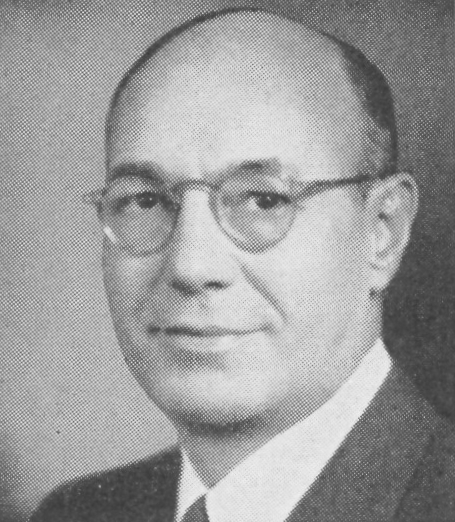
Historical · U.S. House · Maryland · District 7
Samuel Friedel
Former U.S. Representative · Maryland District 7 · 1953–1971 · Democratic
Samuel Friedel represented Maryland's District 7 in the United States House of Representatives (1953–1971) for the Democratic party. The page below collects sourced biographical facts, term history, committee roles, and provenance for Friedel.
Bioguide ID: F000384
Key facts
- Full name
- Samuel Friedel
- State
- Maryland
- District
- District 7
- Party
- Democratic
- House service
- 1953–1971
- First House term
- 1953
- Status
- Left office
- Current term ends
- —
- Born
- 1898
- Bioguide ID
- F000384
- Committee assignments
- —
- Dataset version
- 1.20260605
Biographical narrative
889 words · sourced from the Wikipedia REST extract
Samuel Friedel was a Democratic U.S. Congressman who served Maryland's 7th congressional district from January 3, 1953, until January 3, 1971. His political career spanned nearly two decades, during which he played a significant role in various legislative activities and committees. Friedel's background as a businessman and local politician provided him with a unique perspective that he brought to his work in Congress.
Early life and career
Samuel Nathaniel Friedel was born on April 18, 1898, in Washington, D.C. He was the child of Russian-Jewish immigrants who moved to Baltimore, Maryland, when he was just six months old. Growing up in Baltimore, Friedel attended local public schools and later pursued further education at Strayer Business College. His early work experience began in 1919 when he took a position as a mailing clerk in a Baltimore store, a role he held until 1923.
In 1926, Friedel established the Industrial Loan Company, where he served as president until 1956. This venture marked the beginning of his long-standing involvement in the business community. Friedel's business acumen and local engagement paved the way for his entry into politics. He began his political career in the Maryland House of Delegates, where he served from 1935 to 1939. Following this, he was elected to the Baltimore City Council, representing the first district and later the fifth district from 1939 until 1952. His time in local government allowed him to build a network and gain valuable experience in public service.
Friedel's political involvement extended beyond local governance; he also participated as a delegate to the Democratic National Convention in 1964 and 1968. His early career laid the groundwork for his subsequent election to the U.S. House of Representatives, where he would serve for nearly two decades.
House tenure
Friedel was elected to the U.S. House of Representatives in 1952, beginning his first term on January 3, 1953. Over the course of his political career, he was re-elected multiple times, serving a total of nine terms in Congress. His tenure in the House was characterized by active participation in various legislative initiatives and committee work.
During his time in Congress, Friedel held several significant leadership positions. Notably, he served as the chairman of the Committee on House Administration during the 90th and 91st Congresses. This role placed him at the forefront of managing the internal operations of the House, overseeing matters related to the administration of the chamber. Additionally, he was involved with the Joint Committee on the Library and the Joint Committee on Printing during the 91st Congress, further indicating his commitment to legislative processes and institutional management.
Friedel's legislative career coincided with a period of significant social change in the United States, particularly regarding civil rights. He was known for his liberal voting record, which aligned with the Democratic Party's progressive stance on various issues. Friedel did not sign the 1956 Southern Manifesto, a document that opposed the Supreme Court's decision in Brown v. Board of Education, and he voted in favor of several key civil rights measures, including the Civil Rights Acts of 1957, 1960, 1964, and 1968. He also supported the 24th Amendment to the U.S. Constitution and the Voting Rights Act of 1965, reflecting his commitment to advancing civil rights and voting access for all citizens.
Despite his long and active service, Friedel faced challenges in his later political career. He was an unsuccessful candidate for renomination in 1970 for the 92nd Congress, which marked the end of his time in the House. His departure from Congress concluded a significant chapter in his political life, during which he had made considerable contributions to legislative efforts and local governance.
Legislative focus and committees
Throughout his congressional career, Friedel's legislative focus was primarily on issues related to civil rights, social justice, and the administration of the House of Representatives. His involvement in civil rights legislation was particularly notable, as he consistently supported measures aimed at promoting equality and protecting the rights of marginalized communities. His voting record demonstrated a commitment to liberal values, aligning with the broader goals of the Democratic Party during a transformative era in American history.
As chairman of the Committee on House Administration, Friedel played a crucial role in overseeing the operational aspects of the House of Representatives. This position required a keen understanding of legislative processes and the ability to manage complex administrative tasks. His leadership in this committee was instrumental in shaping the internal workings of the House, ensuring that it functioned effectively and efficiently.
Friedel's participation in the Joint Committee on the Library and the Joint Committee on Printing further exemplified his dedication to institutional responsibilities. These committees were essential in managing the resources and services that supported the legislative process, highlighting Friedel's commitment to enhancing the functionality of Congress.
In summary, Samuel Friedel's legislative career was marked by a strong focus on civil rights and effective governance. His roles in various committees allowed him to influence significant aspects of congressional operations while advocating for progressive policies. His tenure in the U.S. House of Representatives reflected a dedication to public service and a commitment to the principles of democracy and equality. After leaving Congress, Friedel continued to be recognized for his contributions to both local and national politics until his passing in 1979. He is interred at the Hebrew Friendship Cemetery in Baltimore, Maryland.
Notable legislation
Sponsored and co-sponsored legislation for Samuel Friedel is pending operator curation. The biographical narrative above carries the same provenance trail until per-bill rows are written.
Sources
- [1]https://en.wikipedia.org/wiki/Samuel_FriedelWikipedia · retrieved 2026-06-05
Notable quotes
Sourced quotes for Samuel Friedel are pending operator curation. Narrative-scope provenance remains attached below.
Sources
- [1]https://en.wikipedia.org/wiki/Samuel_FriedelWikipedia · retrieved 2026-06-05
Key positions
Curated policy positions for Samuel Friedel are pending operator review. The biographical narrative above carries the same provenance trail until per-topic positions are written.
Sources
- [1]https://en.wikipedia.org/wiki/Samuel_FriedelWikipedia · retrieved 2026-06-05
Terms served
- 1953–1955U.S. House · Term 1 · Democratic
- 1955–1957U.S. House · Term 2 · Democratic
- 1957–1959U.S. House · Term 3 · Democratic
- 1959–1961U.S. House · Term 4 · Democratic
- 1961–1963U.S. House · Term 5 · Democratic
- 1963–1965U.S. House · Term 6 · Democratic
- 1965–1967U.S. House · Term 7 · Democratic
- 1967–1969U.S. House · Term 8 · Democratic
- 1969–1971U.S. House · Term 9 · Democratic
Sources & provenance
Every attributable claim above carries a per-section [N] marker that resolves to the corresponding URL below. Each entry records the upstream provider, the canonical URL, and the timestamp at which the source was retrieved by the ingest pipeline.
Key facts
- https://bioguide.congress.gov/search/bio/F000384bioguide · retrieved 2026-06-05
- https://www.govtrack.us/congress/members/404329govtrack · retrieved 2026-06-05
Biographical narrative
- https://en.wikipedia.org/wiki/Samuel_Friedelwikipedia · retrieved 2026-06-05
Find your representative
Every U.S. state elects representatives by district. Browse Maryland’s delegation, the full former-representative roster, or explore the role and term length.
Related on The Candidate
- Preceded by Daniel JeniferEarlier holder of the Maryland District 7 House seat · Whig.Open
- Succeeded by Parren MitchellLater holder of the Maryland District 7 House seat · Democratic.Open
- Clement DorseyFormer U.S. Representative · Maryland District 1Open
- Daniel HenryFormer U.S. Representative · Maryland District 1 · DemocraticOpen
- David WardFormer U.S. Representative · Maryland District 1 · DemocraticOpen
- Dudley RoeFormer U.S. Representative · Maryland District 1 · DemocraticOpen