
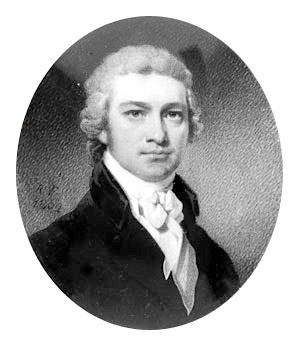
Historical · U.S. House · Maryland · District 8
Charles Goldsborough
Former U.S. Representative · Maryland District 8 · 1805–1817 · Federalist
Charles Goldsborough represented Maryland's District 8 in the United States House of Representatives (1805–1817) for the Federalist party. The page below collects sourced biographical facts, term history, committee roles, and provenance for Goldsborough.
Bioguide ID: G000261
Key facts
- Full name
- Charles Goldsborough
- State
- Maryland
- District
- District 8
- Party
- Federalist
- House service
- 1805–1817
- First House term
- 1805
- Status
- Left office
- Current term ends
- —
- Born
- 1765
- Bioguide ID
- G000261
- Committee assignments
- —
- Dataset version
- 1.20260606
Biographical narrative
968 words · sourced from the Wikipedia REST extract
Charles Goldsborough was a prominent figure in early American politics, serving as a U.S. Representative for Maryland's 8th congressional district and later as the 16th governor of Maryland. His political career spanned over a decade in the early 19th century, during which he was affiliated with the Federalist Party. Goldsborough's tenure in the U.S. House of Representatives lasted from 1805 until 1817, marking him as a significant participant in the legislative processes of the time. His contributions to both state and national politics were notable, and his legacy continued through his descendants.
Early life and career
Charles Goldsborough was born on July 15, 1765, at "Hunting Creek," located near Cambridge in Dorchester County, Maryland. His early education set the foundation for his future endeavors, as he pursued an academic course that culminated in his graduation from the University of Pennsylvania in Philadelphia in 1784. Following his graduation, Goldsborough began studying law, which would become a significant aspect of his professional life.
In 1790, Goldsborough was admitted to the bar, allowing him to practice law in Maryland. His legal career was complemented by his involvement in local politics, where he held several positions that contributed to his growing influence in the community. Goldsborough's political career began in earnest when he was elected to the Maryland State Senate, serving from 1791 to 1795 and again from 1799 to 1801. His experience in the state legislature provided him with valuable insights into governance and the political landscape of Maryland, preparing him for his future role in the U.S. Congress.
Goldsborough's personal life also reflected his connections within the political and social elite of Maryland. His daughter, Maria, married William Henry Fitzhugh, a Virginia planter and politician, who was the son of the notable patriot and planter William Fitzhugh. This marriage further solidified Goldsborough's ties to influential families in the region, enhancing his standing within the community.
House tenure
Charles Goldsborough's congressional career began when he was elected as a Federalist to the U.S. House of Representatives, taking office on March 4, 1805. He was re-elected to five consecutive terms, serving until March 3, 1817. Throughout his time in Congress, Goldsborough was involved in various legislative matters that shaped the early years of the United States. As a member of the Federalist Party, he was part of a political group that advocated for a strong central government and supported policies that promoted commerce and industry.
During his tenure, Goldsborough participated in the legislative processes that addressed the pressing issues of the day, including matters related to national defense, economic development, and the expansion of the United States. His experience in the Maryland State Senate likely informed his contributions to discussions on state and national issues, as he worked alongside other representatives to craft legislation that would impact the lives of citizens.
In 1814, Goldsborough was elected to the American Antiquarian Society, reflecting his interest in history and the preservation of American culture. This membership indicated his commitment to understanding and documenting the nation's past, which was particularly relevant during a time when the United States was still defining its identity and values.
Goldsborough's congressional career coincided with significant events in American history, including the War of 1812. His role as a legislator during this tumultuous period contributed to the shaping of policies that would affect the nation's military and economic strategies. After serving six terms in the House, Goldsborough concluded his congressional service in 1817, marking the end of a significant chapter in his political life.
Legislative focus and committees
Throughout his time in the U.S. House of Representatives, Charles Goldsborough's legislative focus was aligned with the priorities of the Federalist Party. His commitment to fostering a strong federal government and supporting economic growth was evident in his participation in various committees and legislative initiatives. While specific details regarding the committees he served on are not provided, it can be inferred that his legal background and political experience would have positioned him well to contribute to discussions on legislation related to commerce, trade, and national defense.
Goldsborough's alignment with the Federalist Party meant that he often advocated for policies that favored a robust federal infrastructure, including support for internal improvements and the establishment of a national bank. These initiatives were seen as essential for promoting economic stability and growth in the post-Revolutionary War era. His legislative efforts likely reflected the broader goals of the Federalists, who sought to create a strong economic framework that would enable the United States to compete on the global stage.
In addition to his legislative work, Goldsborough's election to the American Antiquarian Society in 1814 highlights his interest in historical preservation and education. This involvement suggests that he valued the importance of understanding the nation's history and its implications for contemporary governance. His contributions to the society may have included efforts to promote the study of American history and culture, further indicating his commitment to the intellectual and cultural development of the nation.
After concluding his congressional service, Goldsborough transitioned to the role of governor of Maryland in 1819, a position that allowed him to continue influencing state policy and governance. His experiences in the House of Representatives undoubtedly informed his approach to leadership as governor, as he navigated the complexities of state politics in the years following his congressional tenure.
In summary, Charles Goldsborough's political career spanned significant developments in early American history. His service as a U.S. Representative and later as governor of Maryland positioned him as a key figure in the political landscape of his time. His contributions to legislative processes and his commitment to the values of the Federalist Party left a lasting impact on the governance of both Maryland and the nation. Goldsborough's legacy continued through his family, ensuring that his influence would be felt for generations to come.
Notable legislation
Sponsored and co-sponsored legislation for Charles Goldsborough is pending operator curation. The biographical narrative above carries the same provenance trail until per-bill rows are written.
Sources
- [1]https://en.wikipedia.org/wiki/Charles_GoldsboroughWikipedia · retrieved 2026-06-06
Notable quotes
Sourced quotes for Charles Goldsborough are pending operator curation. Narrative-scope provenance remains attached below.
Sources
- [1]https://en.wikipedia.org/wiki/Charles_GoldsboroughWikipedia · retrieved 2026-06-06
Key positions
Curated policy positions for Charles Goldsborough are pending operator review. The biographical narrative above carries the same provenance trail until per-topic positions are written.
Sources
- [1]https://en.wikipedia.org/wiki/Charles_GoldsboroughWikipedia · retrieved 2026-06-06
Terms served
- 1805–1807U.S. House · Term 1 · Federalist
- 1807–1809U.S. House · Term 2 · Federalist
- 1809–1811U.S. House · Term 3 · Federalist
- 1811–1813U.S. House · Term 4 · Federalist
- 1813–1815U.S. House · Term 5 · Federalist
- 1815–1817U.S. House · Term 6 · Federalist
Sources & provenance
Every attributable claim above carries a per-section [N] marker that resolves to the corresponding URL below. Each entry records the upstream provider, the canonical URL, and the timestamp at which the source was retrieved by the ingest pipeline.
Key facts
- https://bioguide.congress.gov/search/bio/G000261bioguide · retrieved 2026-06-06
- https://www.govtrack.us/congress/members/404623govtrack · retrieved 2026-06-06
Biographical narrative
- https://en.wikipedia.org/wiki/Charles_Goldsboroughwikipedia · retrieved 2026-06-06
Find your representative
Every U.S. state elects representatives by district. Browse Maryland’s delegation, the full former-representative roster, or explore the role and term length.
Related on The Candidate
- Preceded by John DennisEarlier holder of the Maryland District 8 House seat · Federalist.Open
- Succeeded by Thomas BaylyLater holder of the Maryland District 8 House seat · Federalist.Open
- Clement DorseyFormer U.S. Representative · Maryland District 1Open
- Daniel HenryFormer U.S. Representative · Maryland District 1 · DemocraticOpen
- David WardFormer U.S. Representative · Maryland District 1 · DemocraticOpen
- Dudley RoeFormer U.S. Representative · Maryland District 1 · DemocraticOpen