
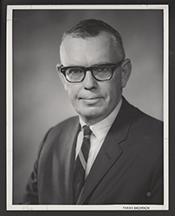
Historical · U.S. House · Maryland · District 8
Gilbert Gude
Former U.S. Representative · Maryland District 8 · 1967–1977 · Republican
Gilbert Gude represented Maryland's District 8 in the United States House of Representatives (1967–1977) for the Republican party. The page below collects sourced biographical facts, term history, committee roles, and provenance for Gude.
Bioguide ID: G000513
Key facts
- Full name
- Gilbert Gude
- State
- Maryland
- District
- District 8
- Party
- Republican
- House service
- 1967–1977
- First House term
- 1967
- Status
- Left office
- Current term ends
- —
- Born
- 1923
- Bioguide ID
- G000513
- Committee assignments
- —
- Dataset version
- 1.20260605
Biographical narrative
978 words · sourced from the Wikipedia REST extract
Gilbert Gude was an American politician who served as a U.S. Representative for Maryland's 8th congressional district from 1967 until 1977. A member of the Republican Party, Gude's political career spanned over a decade in the U.S. Congress, where he was known for his moderate stances on various issues, particularly in the areas of civil rights and economic policy. His legislative efforts included significant contributions to environmental conservation and urban development, reflecting his commitment to both local and national issues.
Early life and career
Gilbert Gude was born on March 9, 1923, in Washington, D.C. He grew up in the nearby area, receiving his education in the public schools of Rockville, Maryland, and Washington. Gude pursued higher education at the University of Maryland before transferring to Cornell University, where he earned a Bachelor of Science degree in 1948. He later obtained a Master of Arts degree in Public Administration from George Washington University in 1958. His academic background laid the foundation for a career that would combine public service with education; he taught history and environmental courses at Georgetown University.
During World War II, Gude served in the United States Army Medical Department from 1943 to 1946, participating in the Pacific Theater. His military service contributed to his understanding of public service and civic responsibility, which would later influence his political career. After the war, Gude entered politics, beginning with an appointment to the Maryland House of Delegates in January 1953. He was subsequently elected to the House of Delegates in 1954 and served until 1958. His early political involvement included a role on the Republican State Central Committee, which he joined in 1958.
In 1962, Gude was elected to the Maryland State Senate, where he served until 1967. During his time in the state legislature, he was instrumental in several key initiatives. He sponsored legislation that contributed to the development of the Washington Metro system, which has since become a critical component of public transportation in the Washington, D.C. metropolitan area. Additionally, Gude played a significant role in efforts to preserve the Chesapeake and Ohio Canal, advocating for its designation as a national historical park. He also supported home rule for the District of Columbia, reflecting his commitment to local governance.
Gude's political engagement extended beyond state politics; he was a delegate to the Republican State Convention in 1952 and later to the Republican National Convention in 1968. His growing influence within the party and his legislative accomplishments positioned him as a viable candidate for federal office.
House tenure
Gilbert Gude was elected as a Republican to the 90th Congress, beginning his term on January 3, 1967. He was re-elected to four subsequent Congresses, serving until January 3, 1977. Gude chose not to seek re-election in 1976, concluding a decade-long tenure in the House of Representatives. Throughout his time in Congress, he was known for his moderate political stance, particularly in relation to civil rights and economic issues. He voted in favor of the Civil Rights Act of 1968, demonstrating his commitment to civil rights legislation during a pivotal era in American history.
In the 1970 election, Gude faced Democratic candidate Thomas Hale Boggs Jr., who was the son of a prominent Louisiana congressman. Gude's victory in this election underscored his political acumen and ability to appeal to a diverse electorate.
During his congressional career, Gude was involved in various committees that shaped national policy. He served on the Government Operations Committee and its Conservation, Energy, and Natural Resources Subcommittee, which focused on environmental issues and resource management. His involvement in the House Environmental Study and the Franklin Delano Roosevelt Memorial Commission further highlighted his dedication to environmental conservation and historical preservation.
Additionally, Gude was a member of the Select Committee on Aging, where he contributed to discussions on retirement income and employment, reflecting his concern for the welfare of older Americans. He also served on the House District of Columbia Committee, which dealt with issues pertinent to the governance and administration of the nation's capital.
Gude's international perspective was evident in his role as a congressional observer at the United Nations Conference on the Human Environment in Stockholm, Sweden, in 1972. This experience likely influenced his legislative priorities and commitment to environmental issues.
Legislative focus and committees
Throughout his time in the House of Representatives, Gilbert Gude's legislative focus encompassed a range of issues, with a particular emphasis on environmental conservation, civil rights, and urban development. His moderate approach allowed him to navigate complex political landscapes while advocating for policies that he believed would benefit his constituents and the nation as a whole.
Gude's work on the Government Operations Committee and its subcommittees allowed him to engage with pressing environmental concerns, including energy conservation and natural resource management. His efforts in these areas were part of a broader national conversation about environmental protection that gained momentum during the 1960s and 1970s.
In addition to his committee work, Gude's involvement with the House District of Columbia Committee showcased his commitment to addressing the unique challenges faced by the capital. His advocacy for D.C. home rule was a significant aspect of his legislative agenda, reflecting his belief in local governance and the importance of giving residents a voice in their own administration.
After leaving Congress in 1977, Gude continued to contribute to public service as the director of the Library of Congress' Congressional Research Service from 1977 to 1985. His post-congressional career allowed him to leverage his legislative experience and expertise in a new capacity, furthering his commitment to public policy and research.
Gilbert Gude passed away on June 7, 2007, from congestive heart failure in Washington, D.C. He was survived by his wife, Jane, and their five children, along with three grandchildren. His legacy in public service, particularly in the realms of environmental conservation and civil rights, remains a notable aspect of his career.
Notable legislation
Sponsored and co-sponsored legislation for Gilbert Gude is pending operator curation. The biographical narrative above carries the same provenance trail until per-bill rows are written.
Sources
- [1]https://en.wikipedia.org/wiki/Gilbert_GudeWikipedia · retrieved 2026-06-05
Notable quotes
Sourced quotes for Gilbert Gude are pending operator curation. Narrative-scope provenance remains attached below.
Sources
- [1]https://en.wikipedia.org/wiki/Gilbert_GudeWikipedia · retrieved 2026-06-05
Key positions
Curated policy positions for Gilbert Gude are pending operator review. The biographical narrative above carries the same provenance trail until per-topic positions are written.
Sources
- [1]https://en.wikipedia.org/wiki/Gilbert_GudeWikipedia · retrieved 2026-06-05
Terms served
- 1967–1969U.S. House · Term 1 · Republican
- 1969–1971U.S. House · Term 2 · Republican
- 1971–1973U.S. House · Term 3 · Republican
- 1973–1975U.S. House · Term 4 · Republican
- 1975–1977U.S. House · Term 5 · Republican
Sources & provenance
Every attributable claim above carries a per-section [N] marker that resolves to the corresponding URL below. Each entry records the upstream provider, the canonical URL, and the timestamp at which the source was retrieved by the ingest pipeline.
Key facts
- https://bioguide.congress.gov/search/bio/G000513bioguide · retrieved 2026-06-05
- https://www.govtrack.us/congress/members/404858govtrack · retrieved 2026-06-05
Biographical narrative
- https://en.wikipedia.org/wiki/Gilbert_Gudewikipedia · retrieved 2026-06-05
Find your representative
Every U.S. state elects representatives by district. Browse Maryland’s delegation, the full former-representative roster, or explore the role and term length.
Related on The Candidate
- Preceded by John StoddertEarlier holder of the Maryland District 8 House seat · Jackson.Open
- Succeeded by Newton Steers Jr.Later holder of the Maryland District 8 House seat · Republican.Open
- Clement DorseyFormer U.S. Representative · Maryland District 1Open
- Daniel HenryFormer U.S. Representative · Maryland District 1 · DemocraticOpen
- David WardFormer U.S. Representative · Maryland District 1 · DemocraticOpen
- Dudley RoeFormer U.S. Representative · Maryland District 1 · DemocraticOpen