
Historical · U.S. House · Maine · District 1
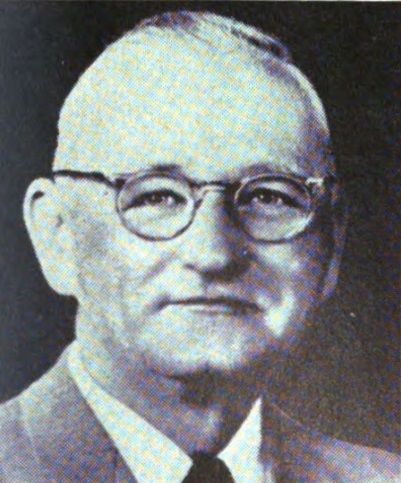
James Oliver
Former U.S. Representative · Maine District 1 · 1937–1961 · Democratic
James Oliver represented Maine's District 1 in the United States House of Representatives (1937–1961) for the Democratic party. The page below collects sourced biographical facts, term history, committee roles, and provenance for Oliver.
Bioguide ID: O000074
Key facts
- Full name
- James Oliver
- State
- Maine
- District
- District 1
- Party
- Democratic
- House service
- 1937–1961
- First House term
- 1937
- Status
- Left office
- Current term ends
- —
- Born
- 1895
- Bioguide ID
- O000074
- Committee assignments
- —
- Dataset version
- 1.20260605
Biographical narrative
942 words · sourced from the Wikipedia REST extract
James Oliver was a U.S. Representative from Maine who served in the House of Representatives over two distinct periods, first as a Republican and later as a Democrat. His political career spanned from the late 1930s to the early 1960s, during which he participated in significant legislative activities and held various roles within the government. Oliver's life was marked by his early military service, his involvement in local government, and his later ventures in business and real estate.
Early life and career
James Oliver was born on August 6, 1895, in South Portland, Maine. He received his early education in the public school system before attending Bowdoin College, a prestigious liberal arts college located in Brunswick, Maine. He graduated with an A.B. degree in 1917, which laid the foundation for his future endeavors in both business and politics.
Shortly after his graduation, Oliver enlisted in the United States Army during World War I. He joined the military on June 4, 1917, and underwent training at the Plattsburg Barracks Training Camp, a facility known for preparing civilian volunteers for military service. His commitment to the Army culminated in his commissioning as a captain on November 27, 1917. Demonstrating leadership and capability, he was promoted to the rank of major in the Infantry on October 9, 1918. Following the conclusion of the war, he served in the Inspector General's Department, where he was responsible for overseeing various aspects of military operations. Oliver was honorably discharged from the Army on July 22, 1919, after which he returned to civilian life.
In the years that followed, Oliver engaged in the general insurance business in Portland, Maine, from 1930 until 1937. His experience in the insurance sector provided him with valuable insights into the economic and social issues affecting his community. Additionally, he became involved in local governance, serving as a member of the board of aldermen in South Portland during 1932 and 1933. This role allowed him to gain practical experience in public service and to understand the needs and concerns of his constituents.
House tenure
James Oliver's political career in the U.S. House of Representatives began when he was elected as a Republican to the Seventy-fifth Congress, which commenced on January 3, 1937. He was subsequently re-elected to the Seventy-sixth and Seventy-seventh Congresses, serving in total for three consecutive terms until January 3, 1943. During this period, he participated in legislative discussions and decisions that shaped the nation during a time of significant change, including the Great Depression and the lead-up to World War II.
Despite his initial success, Oliver faced challenges in his political career. He sought renomination in 1942 but was unsuccessful. Following his time in Congress, he served in the United States Coast Guard from January 26, 1943, to April 23, 1946, attaining the rank of lieutenant commander. His military service during World War II further emphasized his commitment to public service and national duty.
After his military tenure, Oliver returned to the private sector, engaging in the real estate and insurance business in both Maine and California. His experiences in these fields would later inform his political perspectives and initiatives. In 1952, he attempted to return to politics as the Democratic nominee for governor of Maine; however, he was not successful in this endeavor.
Oliver's political aspirations did not end there. He made further attempts to return to Congress, running as a Democratic candidate in the elections of 1954 and 1956. He contested the election for the Eighty-fifth Congress in 1956, but these efforts did not yield the desired outcome. Nevertheless, he persevered and was eventually elected as a Democrat to the Eighty-sixth Congress, serving from January 3, 1959, until January 3, 1961. His return to Congress marked a significant shift in his political alignment, reflecting the evolving political landscape of the time.
Despite his efforts to secure re-election in 1960 to the Eighty-seventh Congress, Oliver was unsuccessful. His tenure in Congress concluded after this term, marking the end of his formal political career.
Legislative focus and committees
Throughout his time in the House of Representatives, James Oliver was involved in various legislative activities and discussions that were pertinent to his constituents and the nation as a whole. While specific details regarding the bills he sponsored or the committees he served on are not provided, it can be inferred that his background in insurance and real estate likely influenced his legislative priorities. Issues related to economic development, housing, and public welfare may have been central to his work in Congress.
Oliver's political career was characterized by his adaptability and willingness to engage with the changing political environment. His transition from the Republican Party to the Democratic Party reflects broader shifts in American political dynamics during the mid-20th century. This adaptability may have allowed him to connect with a diverse range of constituents and to address their needs effectively.
In addition to his legislative work, Oliver participated as a delegate at the 1960 Democratic National Convention, further solidifying his involvement in the political process and the Democratic Party. His engagement at this level indicates his continued commitment to public service and the political landscape, even after his congressional career had concluded.
After leaving Congress, Oliver continued to work in real estate development in Cape Elizabeth, Maine. Eventually, he relocated to Orlando, Florida, where he spent the later years of his life. James Oliver passed away on December 25, 1986, leaving behind a legacy of public service that spanned several decades and encompassed various roles within both the military and government. His life and career reflect the complexities of American political life during a transformative era in the nation's history.
Notable legislation
Sponsored and co-sponsored legislation for James Oliver is pending operator curation. The biographical narrative above carries the same provenance trail until per-bill rows are written.
Sources
- [1]https://en.wikipedia.org/wiki/James_C._OliverWikipedia · retrieved 2026-06-05
Notable quotes
Sourced quotes for James Oliver are pending operator curation. Narrative-scope provenance remains attached below.
Sources
- [1]https://en.wikipedia.org/wiki/James_C._OliverWikipedia · retrieved 2026-06-05
Key positions
Curated policy positions for James Oliver are pending operator review. The biographical narrative above carries the same provenance trail until per-topic positions are written.
Sources
- [1]https://en.wikipedia.org/wiki/James_C._OliverWikipedia · retrieved 2026-06-05
Terms served
- 1937–1939U.S. House · Term 1 · Republican
- 1939–1941U.S. House · Term 2 · Republican
- 1941–1943U.S. House · Term 3 · Republican
- 1959–1961U.S. House · Term 4 · Democratic
Sources & provenance
Every attributable claim above carries a per-section [N] marker that resolves to the corresponding URL below. Each entry records the upstream provider, the canonical URL, and the timestamp at which the source was retrieved by the ingest pipeline.
Key facts
- https://bioguide.congress.gov/search/bio/O000074bioguide · retrieved 2026-06-05
- https://www.govtrack.us/congress/members/408347govtrack · retrieved 2026-06-05
Biographical narrative
- https://en.wikipedia.org/wiki/James_C._Oliverwikipedia · retrieved 2026-06-05
Find your representative
Every U.S. state elects representatives by district. Browse Maine’s delegation, the full former-representative roster, or explore the role and term length.
Related on The Candidate
- Preceded by Simon HamlinEarlier holder of the Maine District 1 House seat · Democratic.Open
- Succeeded by Peter GarlandLater holder of the Maine District 1 House seat · Republican.Open
- Amos AllenFormer U.S. Representative · Maine District 1 · RepublicanOpen
- Asher HindsFormer U.S. Representative · Maine District 1 · RepublicanOpen
- Carroll BeedyFormer U.S. Representative · Maine District 1 · RepublicanOpen
- Daniel SomesFormer U.S. Representative · Maine District 1 · RepublicanOpen