
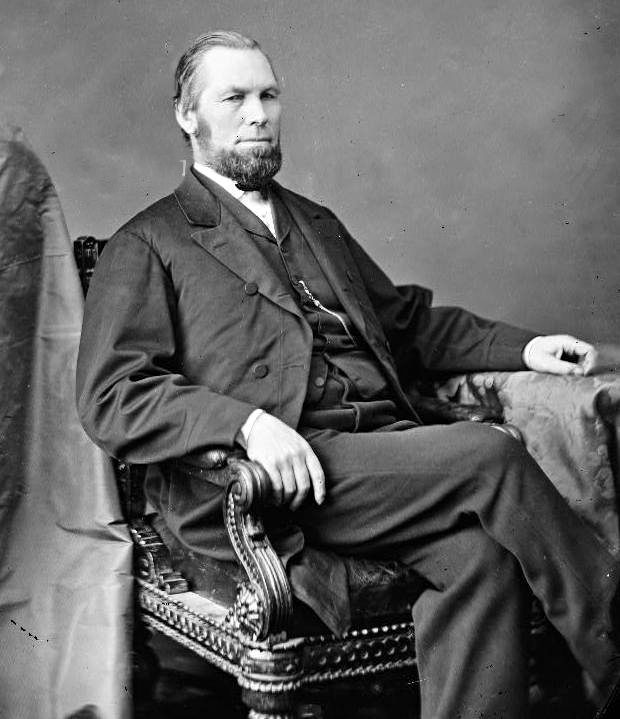
Historical · U.S. House · Maine · District 2
Sidney Perham
Former U.S. Representative · Maine District 2 · 1863–1869 · Republican
Sidney Perham represented Maine's District 2 in the United States House of Representatives (1863–1869) for the Republican party. The page below collects sourced biographical facts, term history, committee roles, and provenance for Perham.
Bioguide ID: P000226
Key facts
- Full name
- Sidney Perham
- State
- Maine
- District
- District 2
- Party
- Republican
- House service
- 1863–1869
- First House term
- 1863
- Status
- Left office
- Current term ends
- —
- Born
- 1819
- Bioguide ID
- P000226
- Committee assignments
- —
- Dataset version
- 1.20260606
Biographical narrative
858 words · sourced from the Wikipedia REST extract
Sidney Perham was a prominent American politician who served as a U.S. Representative for Maine's 2nd congressional district from 1863 to 1869. A member of the Republican Party, he played a significant role in both state and national politics during the post-Civil War era. In addition to his congressional service, Perham was also the 33rd governor of Maine and was actively involved in various educational and agricultural initiatives throughout his life.
Early life and career
Sidney Perham was born on March 27, 1819, in Woodstock, which was then part of Massachusetts but is now located in modern-day Maine. He was the son of Joel and Sophronia Bisbee Perham. His early education took place in common schools, where he developed a foundational understanding of various subjects. Perham's academic pursuits included a brief period at Bates College, but he ultimately chose to leave the institution to focus on agriculture, a field that would become central to his life and career.
Perham's commitment to agriculture was evident early on, and he began engaging in agricultural pursuits shortly after leaving school. His dedication to this field led to his election to the Maine Board of Agriculture in 1853, where he contributed to the advancement of agricultural practices and policies in the state. In 1854, he expanded his political involvement by becoming a member of the Maine House of Representatives, where he served as Speaker of the House during that same year. This role marked the beginning of his significant political career in Maine.
In addition to his legislative work, Perham served as the clerk of the courts for Oxford County, Maine, from 1859 until 1863. This position allowed him to gain further insights into the legal and administrative functions of government, which would later inform his work in Congress. His early career was characterized by a blend of agricultural advocacy and public service, setting the stage for his subsequent political endeavors.
House tenure
Sidney Perham's congressional career began when he was elected as a Republican to the United States House of Representatives in 1862. He officially took office in 1863 and served three consecutive terms until 1869. During his time in the House, Perham was involved in various legislative activities and served as chairman of the Committee on Invalid Pensions from 1865 to 1869. This committee was responsible for overseeing issues related to pensions for veterans, a significant concern in the post-Civil War United States as many soldiers returned home seeking support for their service-related disabilities.
Perham's tenure in Congress coincided with a transformative period in American history, marked by the aftermath of the Civil War and the challenges of Reconstruction. His legislative work during this time reflected the broader national efforts to address the needs of veterans and their families, as well as the ongoing social and economic changes occurring throughout the country.
Despite his contributions to the House, Perham chose not to seek renomination in 1868, concluding his congressional service on March 3, 1869. His decision to step away from national politics allowed him to focus on other pursuits, including his later role as governor of Maine.
Legislative focus and committees
Throughout his time in the U.S. House of Representatives, Sidney Perham demonstrated a particular focus on issues related to veterans and pension reform. As chairman of the Committee on Invalid Pensions, he played a crucial role in shaping policies that aimed to provide financial support and assistance to those who had served in the military. This focus was especially pertinent given the large number of veterans returning from the Civil War, many of whom faced significant challenges in reintegrating into civilian life.
In addition to his work on veterans' issues, Perham's broader legislative agenda reflected the interests of his constituents in Maine. His background in agriculture likely influenced his perspective on economic policies and the importance of supporting local farmers and industries. While specific details of his legislative initiatives are not extensively documented, his roles in various committees and his leadership positions suggest a commitment to addressing the pressing needs of his time.
After leaving Congress, Perham continued to be active in public service and education. He served as president of the board of trustees of Westbrook Seminary in Deering, Maine, from 1865 to 1880, contributing to the development of educational opportunities in the region. His involvement in education extended to his role as president of the board of trustees of the Maine Industrial School in Hallowell, Maine, from 1873 to 1898, where he worked to promote vocational training and education for young people.
In addition to his educational endeavors, Perham's public service included a term as Secretary of State of Maine in 1875. He also held the position of appraiser in the United States Customhouse in Portland, Maine, from 1877 to 1885, further demonstrating his commitment to public service and governance.
Sidney Perham passed away on April 10, 1907, in Washington, D.C. His contributions to Maine and the nation, particularly in the areas of agriculture, education, and veterans' affairs, left a lasting impact on the communities he served. He was interred in Lakeside Cemetery in Bryant Pond, Maine, where his legacy continues to be remembered.
Notable legislation
Sponsored and co-sponsored legislation for Sidney Perham is pending operator curation. The biographical narrative above carries the same provenance trail until per-bill rows are written.
Sources
- [1]https://en.wikipedia.org/wiki/Sidney_PerhamWikipedia · retrieved 2026-06-06
Notable quotes
Sourced quotes for Sidney Perham are pending operator curation. Narrative-scope provenance remains attached below.
Sources
- [1]https://en.wikipedia.org/wiki/Sidney_PerhamWikipedia · retrieved 2026-06-06
Key positions
Curated policy positions for Sidney Perham are pending operator review. The biographical narrative above carries the same provenance trail until per-topic positions are written.
Sources
- [1]https://en.wikipedia.org/wiki/Sidney_PerhamWikipedia · retrieved 2026-06-06
Terms served
- 1863–1865U.S. House · Term 1 · Republican
- 1865–1867U.S. House · Term 2 · Republican
- 1867–1869U.S. House · Term 3 · Republican
Sources & provenance
Every attributable claim above carries a per-section [N] marker that resolves to the corresponding URL below. Each entry records the upstream provider, the canonical URL, and the timestamp at which the source was retrieved by the ingest pipeline.
Key facts
- https://bioguide.congress.gov/search/bio/P000226bioguide · retrieved 2026-06-06
- https://www.govtrack.us/congress/members/408629govtrack · retrieved 2026-06-06
Biographical narrative
- https://en.wikipedia.org/wiki/Sidney_Perhamwikipedia · retrieved 2026-06-06
Find your representative
Every U.S. state elects representatives by district. Browse Maine’s delegation, the full former-representative roster, or explore the role and term length.
Related on The Candidate
- Preceded by Charles WaltonEarlier holder of the Maine District 2 House seat · Republican.Open
- Succeeded by Samuel MorrillLater holder of the Maine District 2 House seat · Republican.Open
- Amos AllenFormer U.S. Representative · Maine District 1 · RepublicanOpen
- Asher HindsFormer U.S. Representative · Maine District 1 · RepublicanOpen
- Carroll BeedyFormer U.S. Representative · Maine District 1 · RepublicanOpen
- Daniel SomesFormer U.S. Representative · Maine District 1 · RepublicanOpen