
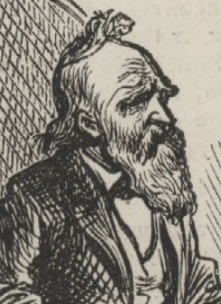
Historical · U.S. House · Maine · District 3
Edwin Flye
Former U.S. Representative · Maine District 3 · 1875–1877 · Republican
Edwin Flye represented Maine's District 3 in the United States House of Representatives (1875–1877) for the Republican party. The page below collects sourced biographical facts, term history, committee roles, and provenance for Flye.
Bioguide ID: F000225
Key facts
- Full name
- Edwin Flye
- State
- Maine
- District
- District 3
- Party
- Republican
- House service
- 1875–1877
- First House term
- 1875
- Status
- Left office
- Current term ends
- —
- Born
- 1817
- Bioguide ID
- F000225
- Committee assignments
- —
- Dataset version
- 1.20260606
Biographical narrative
932 words · sourced from the Wikipedia REST extract
Edwin Flye was an American politician and businessman who served as a U.S. Representative from Maine's 3rd congressional district in the mid-1870s. A member of the Republican Party, Flye's political career was marked by his involvement in various sectors, including banking, shipbuilding, and public service. His tenure in the U.S. House of Representatives was brief, but it followed a diverse career that included military service during the Civil War and participation in state politics.
Early life and career
Edwin Flye was born on March 4, 1817, in Newcastle, Massachusetts, which is now part of the state of Maine. His early education took place in local common schools, where he received a foundational education that would serve him throughout his life. He also attended Lincoln Academy, an institution known for preparing students for higher education and providing a well-rounded education. The skills and knowledge he acquired during his formative years would later contribute to his various professional endeavors.
Following his education, Flye entered into mercantile pursuits, which involved engaging in trade and commerce. This experience in business provided him with insights into the economic landscape of his time, particularly in the coastal regions of Maine, where maritime activities were prevalent. In addition to his work in commerce, Flye became involved in shipbuilding, a significant industry in Maine, which was known for its shipyards and maritime heritage. His dual focus on commerce and shipbuilding not only established him as a prominent figure in his community but also laid the groundwork for his future political career.
In 1858, Flye expanded his public service by becoming a member of the Maine House of Representatives. This role allowed him to engage directly in the legislative process at the state level, where he could influence policies affecting his constituents. His involvement in state politics was a precursor to his later national political career. Additionally, Flye served as president of the First National Bank of Damariscotta, Maine, for many years, further solidifying his reputation as a businessman and leader in his community. His banking experience provided him with a deep understanding of financial matters, which would be relevant in his later political roles.
During the tumultuous years of the American Civil War, Flye served with distinction as a paymaster in the Union Army, achieving the rank of major. In this capacity, he was responsible for managing the financial affairs of soldiers, ensuring that they received their pay and support during the conflict. This military service not only demonstrated his commitment to the Union cause but also enhanced his leadership skills and public profile.
House tenure
Edwin Flye's congressional career began when he was elected to the United States House of Representatives in 1876. He filled a vacancy that arose during that election cycle, representing Maine's 3rd congressional district. As a member of the Republican Party, Flye aligned with the political values and priorities of his party during a time of significant national change and reconstruction following the Civil War.
His term in the House commenced in 1875, and he served until March 3, 1877. During this period, Flye participated in the legislative process, contributing to discussions and decisions that shaped national policy. Although his time in office was relatively short, it was part of a broader Republican effort to address the challenges facing the nation in the post-war era. The political landscape of the time was marked by issues such as civil rights, economic recovery, and the integration of formerly Confederate states back into the Union.
Despite his active role in Congress, Flye did not seek renomination in 1876. After completing his term, he chose to return to his previous pursuits in shipbuilding and banking, indicating a preference for his business interests over a prolonged political career. This decision reflects a common trend among politicians of the era, who often transitioned between public service and private enterprise.
Legislative focus and committees
During his time in the House of Representatives, Edwin Flye's specific legislative focus and committee assignments are not extensively documented. However, as a member of the Republican Party during the Reconstruction era, it is likely that he engaged with issues pertinent to the economic and social challenges of the time. The Republican Party was primarily concerned with rebuilding the nation, promoting civil rights for newly freed African Americans, and addressing the economic ramifications of the Civil War.
Flye's background in banking and commerce may have influenced his perspectives on economic policy, particularly in relation to financial institutions and trade. His experience as a shipbuilder could also have provided him with insights into maritime commerce and the interests of coastal communities in Maine. These areas of expertise may have informed his contributions to legislative discussions, even if specific details of his committee work are not available.
After completing his term in Congress, Flye returned to his business interests, indicating a preference for the private sector over a continued political career. His decision not to seek reelection suggests that he may have felt more aligned with his entrepreneurial pursuits, which included shipbuilding and banking, than with the ongoing political landscape.
Edwin Flye passed away on July 12, 1886, while visiting his daughter in Ashland, Kentucky. His life and career reflect the multifaceted nature of public service during a transformative period in American history. He was interred in Congregational Cemetery in Newcastle, Maine, where he is remembered as a significant figure in both business and politics in his community. His contributions to the state of Maine and his brief tenure in the U.S. House of Representatives remain part of the historical narrative of the region and the nation.
Notable legislation
Sponsored and co-sponsored legislation for Edwin Flye is pending operator curation. The biographical narrative above carries the same provenance trail until per-bill rows are written.
Sources
- [1]https://en.wikipedia.org/wiki/Edwin_FlyeWikipedia · retrieved 2026-06-06
Notable quotes
Sourced quotes for Edwin Flye are pending operator curation. Narrative-scope provenance remains attached below.
Sources
- [1]https://en.wikipedia.org/wiki/Edwin_FlyeWikipedia · retrieved 2026-06-06
Key positions
Curated policy positions for Edwin Flye are pending operator review. The biographical narrative above carries the same provenance trail until per-topic positions are written.
Sources
- [1]https://en.wikipedia.org/wiki/Edwin_FlyeWikipedia · retrieved 2026-06-06
Terms served
- 1875–1877U.S. House · Term 1 · Republican
Sources & provenance
Every attributable claim above carries a per-section [N] marker that resolves to the corresponding URL below. Each entry records the upstream provider, the canonical URL, and the timestamp at which the source was retrieved by the ingest pipeline.
Key facts
- https://bioguide.congress.gov/search/bio/F000225bioguide · retrieved 2026-06-06
- https://www.govtrack.us/congress/members/404180govtrack · retrieved 2026-06-06
Biographical narrative
- https://en.wikipedia.org/wiki/Edwin_Flyewikipedia · retrieved 2026-06-06
Find your representative
Every U.S. state elects representatives by district. Browse Maine’s delegation, the full former-representative roster, or explore the role and term length.
Related on The Candidate
- Preceded by Samuel FessendenEarlier holder of the Maine District 3 House seat · Republican.Open
- Succeeded by Stephen LindseyLater holder of the Maine District 3 House seat · Republican.Open
- Amos AllenFormer U.S. Representative · Maine District 1 · RepublicanOpen
- Asher HindsFormer U.S. Representative · Maine District 1 · RepublicanOpen
- Carroll BeedyFormer U.S. Representative · Maine District 1 · RepublicanOpen
- Daniel SomesFormer U.S. Representative · Maine District 1 · RepublicanOpen