
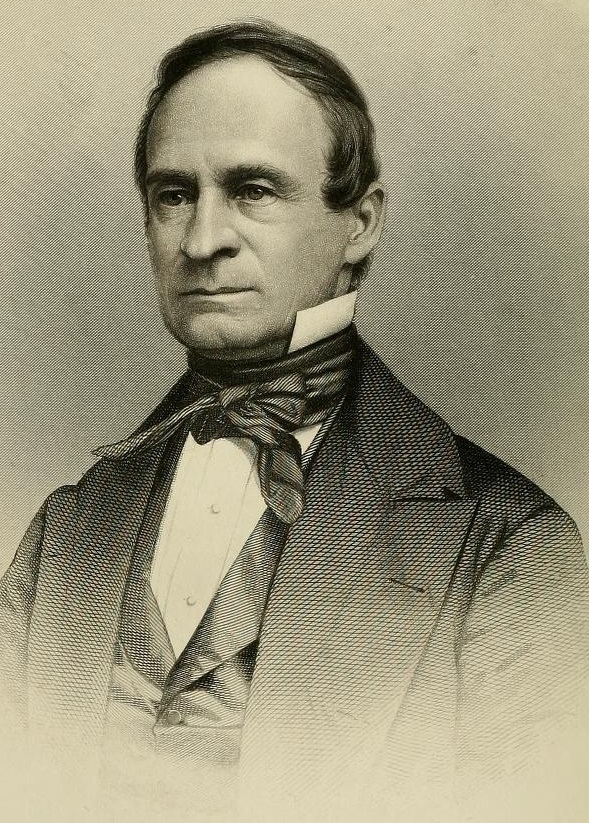
Historical · U.S. House · Maine · District 4
Samuel Benson
Former U.S. Representative · Maine District 4 · 1853–1857 · Ind. Republican-Democrat
Samuel Benson represented Maine's District 4 in the United States House of Representatives (1853–1857) for the Ind. Republican-Democrat party. The page below collects sourced biographical facts, term history, committee roles, and provenance for Benson.
Bioguide ID: B000390
Key facts
- Full name
- Samuel Benson
- State
- Maine
- District
- District 4
- Party
- Ind. Republican-Democrat
- House service
- 1853–1857
- First House term
- 1853
- Status
- Left office
- Current term ends
- —
- Born
- 1804
- Bioguide ID
- B000390
- Committee assignments
- —
- Dataset version
- 1.20260606
Biographical narrative
975 words · sourced from the Wikipedia REST extract
Samuel Benson was a notable figure in 19th-century American politics, serving as a U.S. Representative from Maine. His political career spanned two terms in the U.S. House of Representatives, during which he was affiliated with both the Whig Party and later the Republican Party. Benson's contributions extended beyond his congressional service; he was also an accomplished lawyer, a railroad builder, and an influential member of various state and educational institutions in Maine.
Early life and career
Samuel Page Benson was born on November 28, 1804, in Winthrop, Massachusetts, which is now part of the state of Maine. He was the son of Peleg and Sally Benson. His early education was facilitated by private tutors, which laid a strong foundation for his academic pursuits. He later attended Monmouth Academy in Maine, where he further developed his educational background. In 1825, Benson graduated from Bowdoin College, an institution known for its rigorous academic standards and influential alumni.
Following his graduation, Benson pursued a career in law. He studied the legal profession and was eventually admitted to the bar, allowing him to commence his practice in Unity, Maine. His legal career was marked by a return to Winthrop, where he continued to practice law until 1850. During this time, Benson developed a reputation for his legal acumen and became well-regarded in his community.
In addition to his legal work, Benson was involved in the burgeoning railroad industry, which was crucial to the economic development of the United States during the 19th century. He served as the secretary of the Androscoggin & Kennebec Railroad, which would later become part of the Maine Central Railroad. This role not only highlighted his business acumen but also positioned him at the forefront of a transformative period in American transportation.
Benson's political career began to take shape as he became more involved in local governance. He was elected to the Maine House of Representatives, where he contributed to state-level legislation and policy-making. His political engagement continued as he served in the Maine State Senate, further establishing his presence in the state's political landscape. In 1838, he was elected Maine Secretary of State, a position he held again in 1841, demonstrating his growing influence in state politics.
Benson's commitment to education was evident in his long-term association with Bowdoin College, where he served as an overseer from 1838 until his death in 1876. His leadership role included serving as president of the board for sixteen years, reflecting his dedication to the institution and its mission.
House tenure
Benson's congressional career began when he was elected as a member of the Whig Party to the Thirty-third Congress. He served from March 4, 1853, to March 3, 1855. His tenure in the House of Representatives marked a significant period in his life, as he transitioned from state politics to the national stage. During this time, he was involved in various legislative discussions and decisions that shaped the direction of the country.
In the subsequent election cycle, Benson was re-elected as a Republican to the Thirty-fourth Congress, serving from March 4, 1855, to March 3, 1857. His affiliation with the Republican Party during this period was indicative of the shifting political landscape in the United States, particularly as the country grappled with issues surrounding slavery and states' rights. As a member of the House, Benson participated in debates and legislative initiatives that were critical to the era.
Throughout his time in Congress, Benson served as the chairman of the Committee on Naval Affairs during the Thirty-fourth Congress. This position allowed him to influence naval policy and military funding, which were essential components of national security and defense during a time of growing tensions in the country. His leadership in this committee underscored his commitment to the military and the importance of naval power in American strategy.
Despite his contributions, Benson chose not to seek re-election in 1856. His decision to step away from congressional politics marked the end of his formal legislative career, but it did not signify a retreat from public life. Instead, he returned to his legal practice, where he continued to apply his expertise in law and governance.
Legislative focus and committees
During his time in the U.S. House of Representatives, Benson's legislative focus was primarily centered on issues related to naval affairs, reflecting his role as chairman of the Committee on Naval Affairs. This committee was responsible for overseeing matters related to the U.S. Navy, including shipbuilding, military readiness, and naval appropriations. The significance of naval power was particularly pronounced during the mid-19th century, as the United States was expanding its influence and interests both domestically and internationally.
Benson's involvement in naval affairs was crucial during a period when the nation was preparing for potential conflicts and addressing the challenges posed by foreign powers. His work on the committee would have included discussions on the allocation of resources for naval expansion and modernization, which were vital for maintaining the United States' status as a growing power on the world stage.
In addition to his focus on naval issues, Benson's broader legislative activities would have encompassed various topics relevant to his constituents in Maine and the nation as a whole. His background as a lawyer and his experience in state government likely informed his approach to legislation, emphasizing the importance of legal frameworks and governance in addressing the needs of the public.
After concluding his congressional service in 1857, Benson continued to be active in his community and professional life. He resumed his legal practice and remained engaged in local affairs until his death on August 12, 1876, in Yarmouth, Maine. His contributions to law, politics, and education left a lasting impact on the state of Maine and its governance. Samuel Benson was interred in Maple Cemetery in Winthrop, where his legacy as a public servant and community leader is remembered.
Notable legislation
Sponsored and co-sponsored legislation for Samuel Benson is pending operator curation. The biographical narrative above carries the same provenance trail until per-bill rows are written.
Sources
- [1]https://en.wikipedia.org/wiki/Samuel_P._BensonWikipedia · retrieved 2026-06-06
Notable quotes
Sourced quotes for Samuel Benson are pending operator curation. Narrative-scope provenance remains attached below.
Sources
- [1]https://en.wikipedia.org/wiki/Samuel_P._BensonWikipedia · retrieved 2026-06-06
Key positions
Curated policy positions for Samuel Benson are pending operator review. The biographical narrative above carries the same provenance trail until per-topic positions are written.
Sources
- [1]https://en.wikipedia.org/wiki/Samuel_P._BensonWikipedia · retrieved 2026-06-06
Terms served
- 1853–1855U.S. House · Term 1 · Whig
- 1855–1857U.S. House · Term 2 · Ind. Republican-Democrat
Sources & provenance
Every attributable claim above carries a per-section [N] marker that resolves to the corresponding URL below. Each entry records the upstream provider, the canonical URL, and the timestamp at which the source was retrieved by the ingest pipeline.
Key facts
- https://bioguide.congress.gov/search/bio/B000390bioguide · retrieved 2026-06-06
- https://www.govtrack.us/congress/members/401381govtrack · retrieved 2026-06-06
Biographical narrative
- https://en.wikipedia.org/wiki/Samuel_P._Bensonwikipedia · retrieved 2026-06-06
Find your representative
Every U.S. state elects representatives by district. Browse Maine’s delegation, the full former-representative roster, or explore the role and term length.
Related on The Candidate
- Preceded by Charles AndrewsEarlier holder of the Maine District 4 House seat · Democratic.Open
- Succeeded by Anson MorrillLater holder of the Maine District 4 House seat · Republican.Open
- Amos AllenFormer U.S. Representative · Maine District 1 · RepublicanOpen
- Asher HindsFormer U.S. Representative · Maine District 1 · RepublicanOpen
- Carroll BeedyFormer U.S. Representative · Maine District 1 · RepublicanOpen
- Daniel SomesFormer U.S. Representative · Maine District 1 · RepublicanOpen