
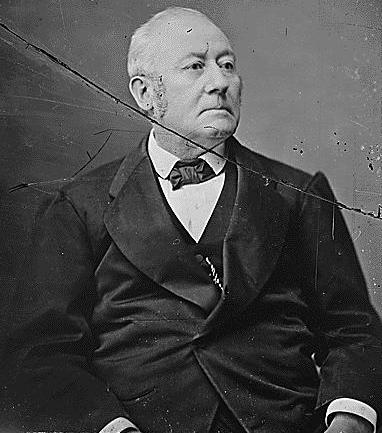
Historical · U.S. House · Maine · District 6
Charles Stetson
Former U.S. Representative · Maine District 6 · 1849–1851 · Democratic
Charles Stetson represented Maine's District 6 in the United States House of Representatives (1849–1851) for the Democratic party. The page below collects sourced biographical facts, term history, committee roles, and provenance for Stetson.
Bioguide ID: S000873
Key facts
- Full name
- Charles Stetson
- State
- Maine
- District
- District 6
- Party
- Democratic
- House service
- 1849–1851
- First House term
- 1849
- Status
- Left office
- Current term ends
- —
- Born
- 1801
- Bioguide ID
- S000873
- Committee assignments
- —
- Dataset version
- 1.20260606
Biographical narrative
950 words · sourced from the Wikipedia REST extract
Charles Stetson was a U.S. Representative from Maine, serving as a member of the Democratic Party during the Thirty-first Congress from 1849 to 1851. Born on November 2, 1801, in New Ipswich, New Hampshire, he was a prominent figure in Maine's political landscape and a member of a notable Bangor family that played a significant role in the region's mercantile and political affairs. Stetson's legal career and political involvement were marked by various local offices before his election to the U.S. House of Representatives, where he contributed to the legislative process during a transformative period in American history.
Early life and career
Charles Stetson was born into a family with deep roots in New England. His father, Simeon Stetson, originally from Braintree, Massachusetts, moved the family to Hampden, Maine, in 1802, where he established a store and a sawmill, as well as engaged in shipbuilding for the West India Trade. This environment likely influenced Charles's later pursuits in law and politics. Stetson's formative years were marked by significant events, including the British invasion of Hampden during the War of 1812, which left a lasting impression on the young Stetson and the local community.
Stetson's education began at Hampden Academy, where he laid the groundwork for his future academic and professional achievements. He furthered his studies at Yale College, graduating in 1823. Following his graduation, he studied law and was admitted to the bar in 1826, commencing his legal practice in Hampden. His legal career began to flourish as he gained recognition in the community, leading to his admission to the bar of the United States Supreme Court in 1828.
In 1833, Stetson relocated to Bangor, which was rapidly developing into the largest port in the region. His move to Bangor coincided with the city's growth, and he became actively involved in local governance. He held various positions, including Judge of the Bangor Municipal Court from 1834 to 1839, a member of the Common Council of Bangor from 1843 to 1844, and a member of the Executive Council of Maine from 1845 to 1848. These roles allowed him to establish a strong political presence in the area and build connections that would later benefit his congressional career.
House tenure
Stetson's political career reached a significant milestone when he was elected as a Democrat to the Thirty-first United States Congress, serving from March 4, 1849, to March 3, 1851. His election to Congress marked his entry into the national political arena, where he participated in the legislative process during a time of considerable change in the United States. The late 1840s and early 1850s were characterized by debates over issues such as slavery, westward expansion, and the balance of power between free and slave states, which would ultimately lead to significant national conflict.
During his time in Congress, Stetson engaged with various legislative initiatives and discussions pertinent to his constituents and the broader national interest. Although specific details regarding his voting record or the bills he supported are not provided, it is understood that his tenure coincided with critical legislative developments, including the debates surrounding the Compromise of 1850, which aimed to address the contentious issue of slavery in newly acquired territories.
Stetson's congressional career was relatively brief, as he was not renominated for the Thirty-second Congress. Following his departure from Congress, he returned to his legal practice in Bangor, where he continued to contribute to the local legal community and engage in civic affairs. His affiliation with the Democratic Party shifted in 1860 when he aligned himself with the Republican Party, reflecting the broader political realignment occurring in the United States during that period. This shift was emblematic of the changing political landscape as the nation moved closer to the Civil War.
Legislative focus and committees
While specific details about the committees on which Charles Stetson served during his time in Congress are not documented, it can be inferred that as a member of the Democratic Party during a tumultuous period in American history, he would have been involved in discussions and legislative actions related to key national issues. The late 1840s and early 1850s were marked by significant debates over the expansion of slavery, the rights of states versus federal authority, and the implications of westward expansion on American society and politics.
Stetson's background as a lawyer and his experience in local government likely informed his legislative priorities and approach to governance. His legal expertise would have been beneficial in navigating the complexities of federal legislation and understanding the implications of various policies on his constituents in Maine. As a representative from a state with strong maritime and commercial interests, Stetson may have also focused on issues related to trade, shipping, and economic development, which were crucial to the prosperity of Bangor and the surrounding areas.
After his congressional term, Stetson continued to be active in his community and maintained his legal practice until his death on March 27, 1883, in Bangor. He was interred in Mount Hope Cemetery in Bangor, leaving behind a legacy intertwined with the history of his family and the region. The Stetson family became known for their contributions to Bangor's mercantile and political landscape, with several family members holding prominent positions in local government and business.
Stetson's life and career reflect the interconnectedness of local and national politics during a formative period in American history. His contributions to the legal profession and his service in Congress underscore the role of individuals in shaping the political landscape of their time. The Stetson family's enduring influence in Bangor is evidenced by the historical significance of their contributions to the community, including the establishment of notable buildings and institutions that continue to be recognized today.
Notable legislation
Sponsored and co-sponsored legislation for Charles Stetson is pending operator curation. The biographical narrative above carries the same provenance trail until per-bill rows are written.
Sources
- [1]https://en.wikipedia.org/wiki/Charles_StetsonWikipedia · retrieved 2026-06-06
Notable quotes
Sourced quotes for Charles Stetson are pending operator curation. Narrative-scope provenance remains attached below.
Sources
- [1]https://en.wikipedia.org/wiki/Charles_StetsonWikipedia · retrieved 2026-06-06
Key positions
Curated policy positions for Charles Stetson are pending operator review. The biographical narrative above carries the same provenance trail until per-topic positions are written.
Sources
- [1]https://en.wikipedia.org/wiki/Charles_StetsonWikipedia · retrieved 2026-06-06
Terms served
- 1849–1851U.S. House · Term 1 · Democratic
Sources & provenance
Every attributable claim above carries a per-section [N] marker that resolves to the corresponding URL below. Each entry records the upstream provider, the canonical URL, and the timestamp at which the source was retrieved by the ingest pipeline.
Key facts
- https://bioguide.congress.gov/search/bio/S000873bioguide · retrieved 2026-06-06
- https://www.govtrack.us/congress/members/410335govtrack · retrieved 2026-06-06
Biographical narrative
- https://en.wikipedia.org/wiki/Charles_Stetsonwikipedia · retrieved 2026-06-06
Find your representative
Every U.S. state elects representatives by district. Browse Maine’s delegation, the full former-representative roster, or explore the role and term length.
Related on The Candidate
- Preceded by James WileyEarlier holder of the Maine District 6 House seat · Democratic.Open
- Succeeded by Stephen FosterLater holder of the Maine District 6 House seat · Republican.Open
- Amos AllenFormer U.S. Representative · Maine District 1 · RepublicanOpen
- Asher HindsFormer U.S. Representative · Maine District 1 · RepublicanOpen
- Carroll BeedyFormer U.S. Representative · Maine District 1 · RepublicanOpen
- Daniel SomesFormer U.S. Representative · Maine District 1 · RepublicanOpen