
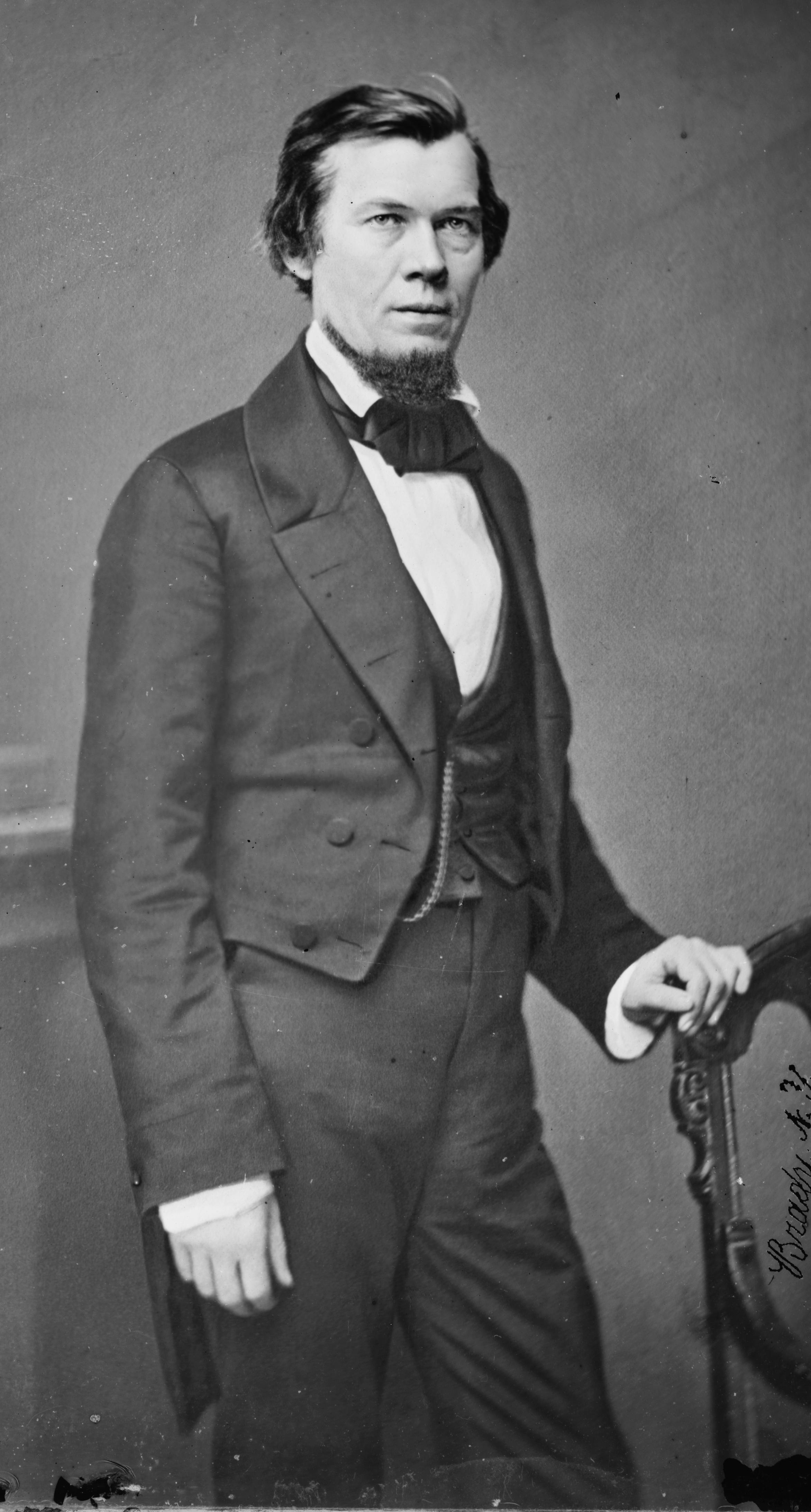
Historical · U.S. House · Mississippi · District 1
Jacob Thompson
Former U.S. Representative · Mississippi District 1 · 1839–1851 · Democratic
Jacob Thompson represented Mississippi's District 1 in the United States House of Representatives (1839–1851) for the Democratic party. The page below collects sourced biographical facts, term history, committee roles, and provenance for Thompson.
Bioguide ID: T000203
Key facts
- Full name
- Jacob Thompson
- State
- Mississippi
- District
- District 1
- Party
- Democratic
- House service
- 1839–1851
- First House term
- 1839
- Status
- Left office
- Current term ends
- —
- Born
- 1810
- Bioguide ID
- T000203
- Committee assignments
- —
- Dataset version
- 1.20260606
Biographical narrative
954 words · sourced from the Wikipedia REST extract
Jacob Thompson was a prominent American politician and lawyer who served as a U.S. Representative for Mississippi's 1st congressional district. A member of the Democratic Party, Thompson's political career spanned several significant periods in American history, including his tenure in Congress from 1839 to 1851. He later held the position of Secretary of the Interior under President James Buchanan and became involved with the Confederate government during the Civil War. His life and career were marked by his involvement in key political issues of his time, particularly those surrounding slavery and secession.
Early life and career
Jacob Thompson was born on May 15, 1810, in Leasburg, North Carolina, to Nicolas Thompson and Lucretia van Hook Thompson. He received his early education at Bingham Academy in Orange County, North Carolina, before attending the University of North Carolina, where he graduated in 1831. During his time at the university, Thompson was an active member of the Philanthropic Society. Following his graduation, he briefly served on the university faculty before turning his attention to the study of law in 1832. He was admitted to the bar in 1834 and established a law practice in Pontotoc, Mississippi, in 1837. His early political ambitions included an unsuccessful bid for the position of state attorney general.
Thompson's political career began in earnest when he was elected to the 26th Congress in 1839. He would go on to serve in the House of Representatives through the 31st Congress, completing a total of six terms. His early congressional years were marked by his commitment to the Democratic Party and his involvement in various legislative matters. In 1845, he was appointed to the United States Senate, but he never received the commission, and the seat was ultimately filled by Joseph W. Chalmers. During his time in the House, Thompson served as chairman of the Committee on Indian Affairs during the 29th Congress, where he played a role in shaping policies related to Native American affairs.
After losing his reelection bid for the 32nd Congress, Thompson returned to practicing law in Mississippi. In 1853, he declined an offer from President Franklin Pierce to become the U.S. Consul to Havana. He later lost a Senate election in 1855 to Jefferson Davis. However, in 1857, he was appointed Secretary of the Interior by President James Buchanan, a position he held until 1861. His tenure as Secretary was marked by internal conflicts within the cabinet, particularly regarding issues of slavery and secession.
House tenure
Thompson's congressional career began in 1839, and he was an active participant in the legislative process during a time of significant national tension surrounding issues of slavery and states' rights. His service in the House of Representatives spanned from the 26th Congress to the 31st Congress, concluding in 1851. Throughout these years, Thompson was involved in various legislative initiatives and discussions that reflected the prevailing political climate of the era.
As a member of the Democratic Party, Thompson aligned himself with the interests of the Southern states, advocating for policies that supported slavery and state sovereignty. His role as chairman of the Committee on Indian Affairs during the 29th Congress highlighted his involvement in matters concerning Native American relations, which were critical issues during this period. Thompson's political career in the House was characterized by his commitment to his constituents in Mississippi and his efforts to navigate the complexities of national politics.
Despite his initial success in Congress, Thompson faced challenges in maintaining his political influence. After losing his reelection bid for the 32nd Congress, he returned to his legal practice in Mississippi. His political aspirations did not wane, as he continued to be involved in national politics, eventually leading to his appointment as Secretary of the Interior in 1857.
Legislative focus and committees
During his time in the House of Representatives, Jacob Thompson's legislative focus was primarily on issues pertinent to the Southern states, particularly those related to slavery and Native American affairs. As chairman of the Committee on Indian Affairs, he was responsible for overseeing legislation that impacted Native American tribes and their relations with the federal government. This role required him to engage with complex issues surrounding land rights, treaties, and the treatment of Indigenous peoples, which were significant topics of discussion during his tenure.
Thompson's alignment with the Democratic Party and his advocacy for Southern interests were evident in his legislative priorities. He often found himself at the center of debates regarding the expansion of slavery into new territories and the rights of states to govern themselves without federal interference. His moderate unionist position, expressed in speeches and writings, sought to balance the interests of Southern constituents with the growing tensions between North and South.
After his congressional service, Thompson's political career continued to evolve as he took on the role of Secretary of the Interior. In this capacity, he was involved in managing federal lands and resources, which included navigating the contentious issues of slavery and secession that were increasingly dominating national discourse. His resignation from this position in early 1861 marked a significant turning point in his career, as he transitioned from federal service to active involvement with the Confederate government during the Civil War.
In summary, Jacob Thompson's career as a U.S. Representative was characterized by his commitment to the Democratic Party and his focus on issues relevant to the Southern states. His legislative work, particularly in relation to Indian affairs and the contentious debates surrounding slavery, reflected the complexities of the political landscape during his time in office. Thompson's subsequent roles, including his appointment as Secretary of the Interior and his involvement with the Confederate government, further illustrate the trajectory of his political life amid the tumultuous events of the 19th century.
Notable legislation
Sponsored and co-sponsored legislation for Jacob Thompson is pending operator curation. The biographical narrative above carries the same provenance trail until per-bill rows are written.
Sources
- [1]https://en.wikipedia.org/wiki/Jacob_ThompsonWikipedia · retrieved 2026-06-06
Notable quotes
Sourced quotes for Jacob Thompson are pending operator curation. Narrative-scope provenance remains attached below.
Sources
- [1]https://en.wikipedia.org/wiki/Jacob_ThompsonWikipedia · retrieved 2026-06-06
Key positions
Curated policy positions for Jacob Thompson are pending operator review. The biographical narrative above carries the same provenance trail until per-topic positions are written.
Sources
- [1]https://en.wikipedia.org/wiki/Jacob_ThompsonWikipedia · retrieved 2026-06-06
Terms served
- 1839–1841U.S. House · Term 1 · Democratic
- 1841–1843U.S. House · Term 2 · Democratic
- 1843–1845U.S. House · Term 3 · Democratic
- 1845–1847U.S. House · Term 4 · Democratic
- 1847–1849U.S. House · Term 5 · Democratic
- 1849–1851U.S. House · Term 6 · Democratic
Sources & provenance
Every attributable claim above carries a per-section [N] marker that resolves to the corresponding URL below. Each entry records the upstream provider, the canonical URL, and the timestamp at which the source was retrieved by the ingest pipeline.
Key facts
- https://bioguide.congress.gov/search/bio/T000203bioguide · retrieved 2026-06-06
- https://www.govtrack.us/congress/members/410782govtrack · retrieved 2026-06-06
Biographical narrative
- https://en.wikipedia.org/wiki/Jacob_Thompsonwikipedia · retrieved 2026-06-06
Find your representative
Every U.S. state elects representatives by district. Browse Mississippi’s delegation, the full former-representative roster, or explore the role and term length.
Related on The Candidate
- Preceded by Thomas HindsEarlier holder of the Mississippi District 1 House seat · Jackson.Open
- Succeeded by Benjamin NabersLater holder of the Mississippi District 1 House seat · Unionist.Open
- Alan NunneleeFormer U.S. Representative · Mississippi District 1 · RepublicanOpen
- Christopher RankinFormer U.S. Representative · Mississippi District 1 · JacksonOpen
- Daniel WrightFormer U.S. Representative · Mississippi District 1 · DemocraticOpen
- Democratic PartyFederal candidates and office holders on the Democratic line.Open