
Historical · U.S. House · Mississippi · District 2
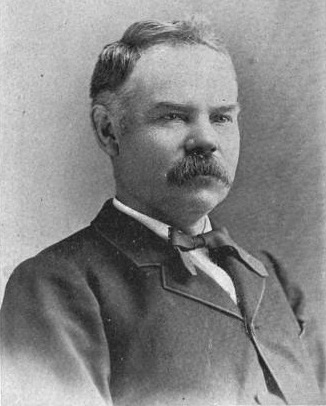
John Kyle
Former U.S. Representative · Mississippi District 2 · 1891–1897 · Democratic
John Kyle represented Mississippi's District 2 in the United States House of Representatives (1891–1897) for the Democratic party. The page below collects sourced biographical facts, term history, committee roles, and provenance for Kyle.
Bioguide ID: K000354
Key facts
- Full name
- John Kyle
- State
- Mississippi
- District
- District 2
- Party
- Democratic
- House service
- 1891–1897
- First House term
- 1891
- Status
- Left office
- Current term ends
- —
- Born
- 1851
- Bioguide ID
- K000354
- Committee assignments
- —
- Dataset version
- 1.20260606
Biographical narrative
1,005 words · sourced from the Wikipedia REST extract
John Curtis Kyle was an American attorney and politician affiliated with the Democratic Party, who served as a U.S. Representative for Mississippi's 2nd congressional district from 1891 to 1897. Born on July 17, 1851, in Sardis, Mississippi, Kyle's political career spanned several significant roles, including mayor, state senator, and member of the Mississippi Railroad Commission. His tenure in the U.S. House of Representatives was marked by his involvement in various legislative matters, although he ultimately chose not to seek re-election in 1896 due to his opposition to a key party stance. Following his congressional service, Kyle returned to law and engaged in business ventures until his retirement in 1912. He passed away on July 6, 1913, shortly before his 62nd birthday.
Early life and career
John Curtis Kyle was born to James M. Kyle and Susannah (Curtis) Kyle in Sardis, a small town in Mississippi. Growing up in a rural environment, he attended local schools and contributed to the family farm, which provided him with a foundational understanding of agricultural life. His early education included a stint at Bethel College, where he studied until his junior year. Afterward, Kyle returned home to assist with farming duties, demonstrating a commitment to his family's livelihood.
Kyle's academic pursuits resumed when he enrolled at Cumberland University Law School, where he earned a Bachelor of Laws (LL.B.) degree in 1874. This legal education paved the way for his admission to the bar, allowing him to establish a law practice in Batesville, Mississippi. His legal career began in Batesville, where he gained experience and built a reputation before returning to his hometown of Sardis to continue his practice. This return to Sardis marked the beginning of his active engagement in local politics.
House tenure
Kyle's political career took off when he was elected as the mayor of Sardis in 1879, a position he held until 1881. Notably, he did not actively campaign for this role, which underscores his unexpected rise to local leadership. His tenure as mayor provided him with valuable experience in governance and public service, which would later inform his legislative work.
In 1881, Kyle transitioned to a broader political role when he was elected to the Mississippi State Senate, serving until 1885. His decision not to seek re-election after his first term indicates a strategic approach to his political career, allowing him to explore other opportunities. In 1886, he was appointed to the Mississippi Railroad Commission, a position he did not actively pursue but won through legislative selection, defeating a prominent figure, John Marshall Stone. This role involved oversight of transportation and infrastructure, critical issues in a rapidly developing state.
Kyle's influence within the Democratic Party grew during this period. In 1887, he was elected chairman of the Mississippi Democratic Party's executive committee, where he played a pivotal role in coordinating the party's efforts during statewide elections. His leadership in this capacity demonstrated his commitment to the party and his ability to navigate the political landscape of the time.
In 1890, Kyle's political journey culminated in his election to the United States House of Representatives. He officially took office on March 4, 1891, representing Mississippi's 2nd congressional district. Over the course of his three terms in Congress, which lasted until March 3, 1897, Kyle participated in various legislative activities and contributed to discussions on issues pertinent to his constituents and the nation.
Kyle's congressional service coincided with a period of significant political and economic change in the United States. His re-elections in 1892 and 1894 reflected his constituents' support, but he ultimately chose not to seek renomination in 1896. His decision was influenced by his opposition to the Democratic Party's endorsement of the Free Silver position, a contentious issue that divided party members at the time. This choice marked a significant turning point in his political career, as he opted to step back from the national stage rather than align with a platform he did not support.
Legislative focus and committees
During his time in the House of Representatives, Kyle was involved in various legislative matters, although specific details regarding his committee assignments or particular bills he sponsored are not extensively documented. His background as an attorney and his experience in local and state government likely informed his legislative priorities, focusing on issues relevant to Mississippi and the broader Southern region.
Kyle's legal expertise and understanding of infrastructure, gained from his time on the Mississippi Railroad Commission, may have influenced his views on transportation and economic development. As a representative from a predominantly agricultural state, he likely engaged in discussions surrounding agricultural policies, land use, and economic support for farmers, who were crucial to Mississippi's economy during this era.
Despite the lack of detailed records on his specific legislative initiatives, Kyle's overall contributions to the House can be understood within the context of his political philosophy and the challenges facing his constituents. His decision to leave Congress in 1897, following a period of significant national debate over monetary policy and economic reform, reflects a broader trend among politicians who grappled with the shifting priorities of their parties and constituents.
After concluding his congressional service, Kyle returned to his law practice and became involved in various business ventures, showcasing his adaptability and continued engagement in the economic life of Mississippi. His candidacy for the presidency of Mississippi Agricultural & Mechanical College in 1900, although unsuccessful, indicates his ongoing interest in education and public service. Additionally, his announcement to run for governor in 1902, though ultimately withdrawn, highlights his sustained involvement in state politics and governance.
Kyle's retirement from business in 1912 marked the end of an active professional life. He passed away on July 6, 1913, in Sardis, Mississippi, and was interred in Rosehill Cemetery. His legacy as a public servant is reflected in his various roles throughout his career, contributing to the political landscape of Mississippi during a transformative period in American history. He left behind a family, including his wife, Sallie G. Heflin, and their son, John Curtis Kyle Jr., who predeceased him.
Notable legislation
Sponsored and co-sponsored legislation for John Kyle is pending operator curation. The biographical narrative above carries the same provenance trail until per-bill rows are written.
Sources
- [1]https://en.wikipedia.org/wiki/John_C._KyleWikipedia · retrieved 2026-06-06
Notable quotes
Sourced quotes for John Kyle are pending operator curation. Narrative-scope provenance remains attached below.
Sources
- [1]https://en.wikipedia.org/wiki/John_C._KyleWikipedia · retrieved 2026-06-06
Key positions
Curated policy positions for John Kyle are pending operator review. The biographical narrative above carries the same provenance trail until per-topic positions are written.
Sources
- [1]https://en.wikipedia.org/wiki/John_C._KyleWikipedia · retrieved 2026-06-06
Terms served
- 1891–1893U.S. House · Term 1 · Democratic
- 1893–1895U.S. House · Term 2 · Democratic
- 1895–1897U.S. House · Term 3 · Democratic
Sources & provenance
Every attributable claim above carries a per-section [N] marker that resolves to the corresponding URL below. Each entry records the upstream provider, the canonical URL, and the timestamp at which the source was retrieved by the ingest pipeline.
Key facts
- https://bioguide.congress.gov/search/bio/K000354bioguide · retrieved 2026-06-06
- https://www.govtrack.us/congress/members/406506govtrack · retrieved 2026-06-06
Biographical narrative
- https://en.wikipedia.org/wiki/John_C._Kylewikipedia · retrieved 2026-06-06
Find your representative
Every U.S. state elects representatives by district. Browse Mississippi’s delegation, the full former-representative roster, or explore the role and term length.
Related on The Candidate
- Preceded by James MorganEarlier holder of the Mississippi District 2 House seat · Democratic.Open
- Succeeded by Thomas SpightLater holder of the Mississippi District 2 House seat · Democratic.Open
- Alan NunneleeFormer U.S. Representative · Mississippi District 1 · RepublicanOpen
- Benjamin NabersFormer U.S. Representative · Mississippi District 1 · UnionistOpen
- Christopher RankinFormer U.S. Representative · Mississippi District 1 · JacksonOpen
- Daniel WrightFormer U.S. Representative · Mississippi District 1 · DemocraticOpen