
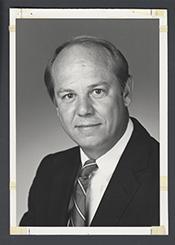
Historical · U.S. House · Mississippi · District 2
William Franklin
Former U.S. Representative · Mississippi District 2 · 1983–1987 · Republican
William Franklin represented Mississippi's District 2 in the United States House of Representatives (1983–1987) for the Republican party. The page below collects sourced biographical facts, term history, committee roles, and provenance for Franklin.
Bioguide ID: F000347
Key facts
- Full name
- William Franklin
- State
- Mississippi
- District
- District 2
- Party
- Republican
- House service
- 1983–1987
- First House term
- 1983
- Status
- Left office
- Current term ends
- —
- Born
- 1941
- Bioguide ID
- F000347
- Committee assignments
- —
- Dataset version
- 1.20260605
Biographical narrative
983 words · sourced from the Wikipedia REST extract
William W. Franklin is a former American politician and lawyer who served as a U.S. Representative for Mississippi's 2nd congressional district from 1983 to 1987. A member of the Republican Party, Franklin's political career was preceded by a notable military and legal background. His tenure in Congress was marked by his involvement in various legislative matters, although he ultimately lost his bid for re-election in 1986. Following his congressional service, Franklin returned to his legal practice in Greenwood, Mississippi.
Early life and career
William Webster Franklin was born on December 13, 1941, in Greenwood, a city located in Leflore County, Mississippi. This area is situated on the eastern edge of the Mississippi Delta, a region known for its rich cultural history and significant agricultural output. Franklin completed his secondary education at Greenwood High School, where he likely developed foundational skills that would serve him in his future endeavors.
In 1963, Franklin earned a Bachelor of Arts degree from Mississippi State University in Starkville, a prominent institution known for its comprehensive educational programs. This undergraduate education provided him with a broad knowledge base and critical thinking skills, which are essential for any aspiring politician or lawyer. Following his graduation, he pursued a legal education at the University of Mississippi School of Law, located in Oxford. He received his Bachelor of Laws degree in 1966, a qualification that was later reclassified as a Juris Doctor degree. Upon completing his studies, he was admitted to the bar, allowing him to practice law in Mississippi.
Franklin's early career was marked by a commitment to public service, which began with his enlistment in the United States Army. He attended The JAG School at the University of Virginia, where he received specialized training in military law. Franklin served as a major in the U.S. Army Judge Advocate General's Corps from 1963 to 1970. His role in the JAG Corps involved providing legal counsel and representation to military personnel, as well as handling various legal matters related to military operations. This experience not only honed his legal skills but also instilled in him a sense of duty and commitment to serving his country.
After his military service, Franklin returned to Mississippi, where he began practicing law in Greenwood in 1970. His legal career took a significant turn in 1972 when he became an assistant district attorney for the Fourth Circuit District Court. In this role, he was responsible for prosecuting criminal cases and representing the state in legal matters, further establishing his reputation as a dedicated public servant. His legal expertise and commitment to justice led to his election as circuit judge for the Fourth District in 1978, a position he held until 1982. This judicial experience provided him with insights into the legal system and the challenges faced by constituents, which would later inform his legislative priorities.
House tenure
Franklin's political career transitioned to the national stage when he was elected to the United States House of Representatives in 1982. He began his first term in Congress in 1983, representing Mississippi's 2nd congressional district. This district encompasses a diverse population and includes urban areas, rural communities, and a significant African American demographic. Franklin's election to Congress was part of a broader trend of Republican gains in the South during the early 1980s, as the party sought to expand its influence in traditionally Democratic regions.
During his time in the House, Franklin served on various committees and participated in legislative discussions that addressed a range of issues affecting his constituents and the nation. His legal background likely informed his approach to policymaking, as he drew upon his experiences in the courtroom and his understanding of the law. Franklin's tenure in Congress lasted until January 3, 1987, when he concluded his second term. His time in office was characterized by a focus on issues pertinent to Mississippi and the broader Southern region, although specific legislative achievements during his tenure are not detailed in the available records.
In 1986, Franklin sought re-election for a third term but was defeated by Democrat Mike Espy, an African American candidate who would go on to become the first African American to represent Mississippi in Congress since Reconstruction. This defeat marked the end of Franklin's congressional career, but it did not diminish his contributions to public service and the legal profession.
Legislative focus and committees
While specific details regarding Franklin's legislative focus and committee assignments during his time in Congress are not provided, it is reasonable to infer that his background as a lawyer and judge influenced his priorities as a legislator. Representatives often draw upon their professional experiences to advocate for policies that align with their expertise and the needs of their constituents.
Given the demographic composition of Mississippi's 2nd congressional district, Franklin may have engaged with issues related to civil rights, economic development, education, and healthcare. The district has historically faced challenges such as poverty and limited access to resources, making these issues critical for its residents. Franklin's legal experience would have equipped him to address these challenges effectively, advocating for legislation that aimed to improve the quality of life for his constituents.
After leaving Congress, Franklin returned to Greenwood, where he resumed his legal practice. His decision to return to law reflects a commitment to continue serving his community, albeit in a different capacity. Franklin's career trajectory illustrates the interconnectedness of law, politics, and public service, highlighting the various ways individuals can contribute to their communities and the nation.
In summary, William W. Franklin's career encompasses a range of experiences in law, military service, and politics. His tenure as a U.S. Representative for Mississippi's 2nd congressional district was marked by a commitment to public service and a focus on issues relevant to his constituents. Although his time in Congress was relatively brief, Franklin's background and experiences have left a lasting impact on his community and the legal field in Mississippi.
Notable legislation
Sponsored and co-sponsored legislation for William Franklin is pending operator curation. The biographical narrative above carries the same provenance trail until per-bill rows are written.
Sources
- [1]https://en.wikipedia.org/wiki/Webb_FranklinWikipedia · retrieved 2026-06-05
Notable quotes
Sourced quotes for William Franklin are pending operator curation. Narrative-scope provenance remains attached below.
Sources
- [1]https://en.wikipedia.org/wiki/Webb_FranklinWikipedia · retrieved 2026-06-05
Key positions
Curated policy positions for William Franklin are pending operator review. The biographical narrative above carries the same provenance trail until per-topic positions are written.
Sources
- [1]https://en.wikipedia.org/wiki/Webb_FranklinWikipedia · retrieved 2026-06-05
Terms served
- 1983–1985U.S. House · Term 1 · Republican
- 1985–1987U.S. House · Term 2 · Republican
Sources & provenance
Every attributable claim above carries a per-section [N] marker that resolves to the corresponding URL below. Each entry records the upstream provider, the canonical URL, and the timestamp at which the source was retrieved by the ingest pipeline.
Key facts
- https://bioguide.congress.gov/search/bio/F000347bioguide · retrieved 2026-06-05
- https://www.govtrack.us/congress/members/404295govtrack · retrieved 2026-06-05
Biographical narrative
- https://en.wikipedia.org/wiki/Webb_Franklinwikipedia · retrieved 2026-06-05
Find your representative
Every U.S. state elects representatives by district. Browse Mississippi’s delegation, the full former-representative roster, or explore the role and term length.
Related on The Candidate
- Preceded by David BowenEarlier holder of the Mississippi District 2 House seat · Democratic.Open
- Succeeded by Albert EspyLater holder of the Mississippi District 2 House seat · Democratic.Open
- Alan NunneleeFormer U.S. Representative · Mississippi District 1 · RepublicanOpen
- Benjamin NabersFormer U.S. Representative · Mississippi District 1 · UnionistOpen
- Christopher RankinFormer U.S. Representative · Mississippi District 1 · JacksonOpen
- Daniel WrightFormer U.S. Representative · Mississippi District 1 · DemocraticOpen