
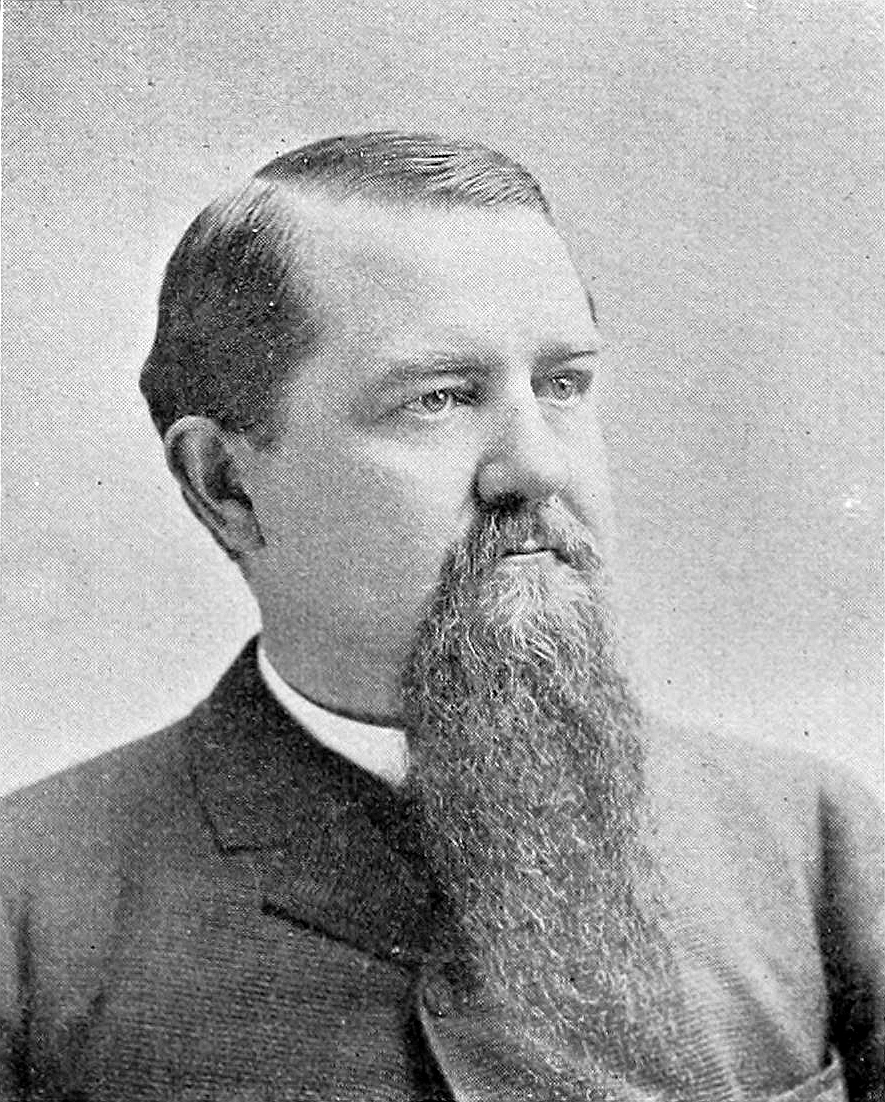
Historical · U.S. House · Mississippi · District 3
Thomas Catchings
Former U.S. Representative · Mississippi District 3 · 1885–1901 · Democratic
Thomas Catchings represented Mississippi's District 3 in the United States House of Representatives (1885–1901) for the Democratic party. The page below collects sourced biographical facts, term history, committee roles, and provenance for Catchings.
Bioguide ID: C000247
Key facts
- Full name
- Thomas Catchings
- State
- Mississippi
- District
- District 3
- Party
- Democratic
- House service
- 1885–1901
- First House term
- 1885
- Status
- Left office
- Current term ends
- —
- Born
- 1847
- Bioguide ID
- C000247
- Committee assignments
- —
- Dataset version
- 1.20260606
Biographical narrative
807 words · sourced from the Wikipedia REST extract
Thomas Catchings was an American lawyer and politician who served as a U.S. Representative for Mississippi's 3rd congressional district from 1885 until 1901. A member of the Democratic Party, Catchings was elected to eight consecutive terms in the House of Representatives, where he was involved in various legislative activities and held significant committee positions. His political career was preceded by a background in law and public service within the state of Mississippi.
Early life and career
Thomas Clendenin Catchings was born on January 11, 1847, at a plantation known as "Fleetwood" in Hinds County, Mississippi. He was the son of Dr. T. J. Catchings and Nancy M. Catchings (née Clendenin). His early education was conducted at home until 1860, after which he attended the State University at Oxford, where he became a member of St. Anthony Hall. In 1861, he transferred to Oakland College near Rodney, Mississippi.
The onset of the American Civil War saw Catchings enlist in the Confederate States Army, where he served as a private in Company K of the 18th Mississippi Infantry Regiment. He later transferred to Company C of the 11th Mississippi Cavalry Regiment. Following the war, Catchings returned to his studies and was admitted to the bar in 1866, beginning his legal practice in Vicksburg, Mississippi.
Catchings's political career commenced in the mid-1870s when he was elected to the Mississippi State Senate in 1875. However, he resigned from this position in 1877. That same year, he was elected as the state’s attorney general, a role he held until February 16, 1885, after being re-elected in 1881. His tenure in this office helped establish his reputation as a prominent figure in Mississippi politics.
House tenure
In 1885, Thomas Catchings was elected to the U.S. House of Representatives, representing Mississippi's 3rd congressional district. His election was notable for being contested, as he won a disputed race against Cornelius Jones, an African American lawyer and state legislator. Catchings's first term began on March 4, 1885, and he would go on to serve a total of eight terms in the House, concluding his service on March 3, 1901.
During his time in Congress, Catchings was involved in various legislative initiatives and served on several important committees. He was the chairman of the Committee on Levees and Improvements of the Mississippi River during the 50th Congress, which was crucial given the significance of river management in the region. Additionally, he held leadership roles on the Committee on Railways and Canals during the 52nd and 53rd Congresses, as well as on the Committee on Rivers and Harbors during the 53rd Congress. His committee assignments reflected his focus on infrastructure and regional development, particularly concerning waterways and transportation.
Catchings was also an advocate for historical preservation, notably introducing a bill for the establishment of Vicksburg National Military Park in January 1896. Although the initial proposal did not pass, he continued to pursue this initiative and reintroduced the bill in December 1897, demonstrating his commitment to honoring the historical significance of the Civil War battles fought in the region.
Legislative focus and committees
Throughout his congressional career, Thomas Catchings's legislative focus was largely centered on issues pertinent to Mississippi and the broader Southern United States. His work on committees related to infrastructure, such as the Committee on Levees and Improvements of the Mississippi River, underscored his dedication to improving the region's transportation and flood management systems. These efforts were particularly important in a state that relied heavily on its river systems for commerce and agriculture.
Catchings's role on the Committee on Railways and Canals further illustrated his interest in enhancing transportation networks, which were vital for economic development in the late 19th century. His involvement in the Committee on Rivers and Harbors also indicated a broader concern for the management and improvement of waterways, which were essential for trade and navigation.
In addition to his committee work, Catchings's introduction of legislation aimed at establishing Vicksburg National Military Park highlighted his dedication to preserving the historical legacy of the Civil War. This initiative was part of a larger movement during that era to commemorate significant historical sites and events, reflecting a growing national interest in heritage and history.
After concluding his congressional service, Catchings continued to engage in public service. He was employed as division counsel for the Southern Railway and was appointed by Governor Vardaman to serve on the Mississippi Code Commission, contributing to the legal framework of the state.
Thomas Catchings passed away on December 24, 1927, in Vicksburg, Mississippi. He was interred at Cedar Hill Cemetery, leaving behind a legacy of public service and commitment to the development of his state and its historical preservation. His career in law and politics exemplified the interconnectedness of legal expertise and legislative action in shaping the policies that affected his constituents and the region as a whole.
Notable legislation
Sponsored and co-sponsored legislation for Thomas Catchings is pending operator curation. The biographical narrative above carries the same provenance trail until per-bill rows are written.
Sources
- [1]https://en.wikipedia.org/wiki/Thomas_C._CatchingsWikipedia · retrieved 2026-06-06
Notable quotes
Sourced quotes for Thomas Catchings are pending operator curation. Narrative-scope provenance remains attached below.
Sources
- [1]https://en.wikipedia.org/wiki/Thomas_C._CatchingsWikipedia · retrieved 2026-06-06
Key positions
Curated policy positions for Thomas Catchings are pending operator review. The biographical narrative above carries the same provenance trail until per-topic positions are written.
Sources
- [1]https://en.wikipedia.org/wiki/Thomas_C._CatchingsWikipedia · retrieved 2026-06-06
Terms served
- 1885–1887U.S. House · Term 1 · Democratic
- 1887–1889U.S. House · Term 2 · Democratic
- 1889–1891U.S. House · Term 3 · Democratic
- 1891–1893U.S. House · Term 4 · Democratic
- 1893–1895U.S. House · Term 5 · Democratic
- 1895–1897U.S. House · Term 6 · Democratic
- 1897–1899U.S. House · Term 7 · Democratic
- 1899–1901U.S. House · Term 8 · Democratic
Sources & provenance
Every attributable claim above carries a per-section [N] marker that resolves to the corresponding URL below. Each entry records the upstream provider, the canonical URL, and the timestamp at which the source was retrieved by the ingest pipeline.
Key facts
- https://bioguide.congress.gov/search/bio/C000247bioguide · retrieved 2026-06-06
- https://www.govtrack.us/congress/members/402391govtrack · retrieved 2026-06-06
Biographical narrative
- https://en.wikipedia.org/wiki/Thomas_C._Catchingswikipedia · retrieved 2026-06-06
Find your representative
Every U.S. state elects representatives by district. Browse Mississippi’s delegation, the full former-representative roster, or explore the role and term length.
Related on The Candidate
- Preceded by Elza JeffordsEarlier holder of the Mississippi District 3 House seat · Republican.Open
- Succeeded by Patrick HenryLater holder of the Mississippi District 3 House seat · Democratic.Open
- Alan NunneleeFormer U.S. Representative · Mississippi District 1 · RepublicanOpen
- Benjamin NabersFormer U.S. Representative · Mississippi District 1 · UnionistOpen
- Christopher RankinFormer U.S. Representative · Mississippi District 1 · JacksonOpen
- Daniel WrightFormer U.S. Representative · Mississippi District 1 · DemocraticOpen