
Historical · U.S. House · Mississippi · District 3
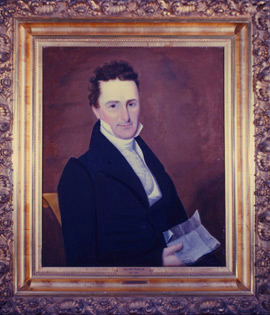
William McWillie
Former U.S. Representative · Mississippi District 3 · 1849–1851 · Democratic
William McWillie represented Mississippi's District 3 in the United States House of Representatives (1849–1851) for the Democratic party. The page below collects sourced biographical facts, term history, committee roles, and provenance for McWillie.
Bioguide ID: M000612
Key facts
- Full name
- William McWillie
- State
- Mississippi
- District
- District 3
- Party
- Democratic
- House service
- 1849–1851
- First House term
- 1849
- Status
- Left office
- Current term ends
- —
- Born
- 1795
- Bioguide ID
- M000612
- Committee assignments
- —
- Dataset version
- 1.20260606
Biographical narrative
881 words · sourced from the Wikipedia REST extract
William McWillie was a prominent American politician in the 19th century, serving as a U.S. Representative for Mississippi's 3rd congressional district from 1849 to 1851. A member of the Democratic Party, McWillie later became the twenty-second governor of Mississippi, holding office from 1857 to 1859. His political career was marked by his commitment to the Democratic ideals of his time, and he played a significant role in the political landscape of Mississippi during a period of considerable change in the United States.
Early life and career
William McWillie was born on November 17, 1795, near Liberty Hill, South Carolina. He was the son of Colonel Adam McWillie, a Scottish immigrant who made notable contributions to the military as a commander of the 2nd Regiment of the South Carolina militia during the War of 1812. This military background likely influenced William's early life and career choices. During the war, he served as an adjutant in his father's regiment, gaining firsthand experience in military operations and leadership.
McWillie pursued higher education at South Carolina College, which is now known as the University of South Carolina, graduating in 1817. Following his graduation, he began studying law and was admitted to the bar in 1818, marking the beginning of his professional career in the legal field. His legal expertise would later serve him well in his political endeavors.
Before moving to Mississippi, McWillie was active in South Carolina's political scene. Between 1836 and 1840, he served in both the South Carolina House of Representatives and the South Carolina Senate. His experience in these legislative bodies provided him with a solid foundation in governance and public policy, which would be instrumental in his later political career in Mississippi. In 1845, seeking new opportunities, McWillie relocated to Madison County, Mississippi, where he would continue his public service.
House tenure
William McWillie's congressional career began when he was elected as a U.S. Representative for Mississippi's 3rd congressional district in 1849. His term in the House of Representatives lasted from December 3, 1849, until March 3, 1851. During this period, McWillie was part of a Congress that faced numerous challenges, including debates over slavery, territorial expansion, and the growing tensions between Northern and Southern states.
As a member of the Democratic Party, McWillie aligned himself with the prevailing political sentiments of the South, which were characterized by a strong defense of states' rights and the institution of slavery. His tenure in Congress was marked by the broader national discourse surrounding these issues, which would eventually lead to significant conflicts in the years to come. Although specific details about his legislative actions during his time in the House are not documented, it is likely that he participated in discussions and votes that reflected the interests and concerns of his constituents in Mississippi.
After serving a single term in the House, McWillie did not seek re-election. His focus shifted to state-level politics, where he would later achieve greater prominence as governor of Mississippi. His experience in Congress, however, undoubtedly informed his subsequent political decisions and leadership style.
Legislative focus and committees
While specific details regarding McWillie's committee assignments or legislative initiatives during his time in the House of Representatives are not available, it is important to contextualize his role within the political landscape of the time. As a Democratic representative from Mississippi, McWillie's legislative focus would have likely aligned with the interests of his Southern constituents, particularly in matters related to agriculture, land use, and the institution of slavery, which were critical issues for the economy and society of the South.
Following his congressional tenure, McWillie's political career continued to evolve. In 1857, he ran for governor of Mississippi as the Democratic candidate. His campaign was successful, and he won a significant majority of the popular vote, securing his position as the state's governor. During his time in office, McWillie faced various challenges, including the increasing sectional tensions that would eventually lead to the Civil War. His moderate stance on certain issues, however, led to his replacement by a more extreme candidate in the subsequent election.
McWillie's political career was shaped by the tumultuous events of the era, and his experiences as a legislator and governor reflected the complexities of governance during a time of significant national strife. His contributions to Mississippi's political landscape were part of a larger narrative of Southern politics in the antebellum period, characterized by a struggle to maintain power and influence amid growing national divisions.
In his personal life, McWillie was married twice. His first marriage was to Nancy Cunningham, and after her passing, he married Catherine Anderson. He had children, one of whom, Adam, served in the Confederate Army and was killed during the conflict. This personal connection to the Civil War underscores the impact of the era on McWillie's family and highlights the broader societal implications of the war on Southern families.
William McWillie passed away on March 3, 1869, in Kirkwood, Madison County, Mississippi. He was laid to rest in Kirkwood Cemetery, near Camden, Mississippi, a town he founded and named in honor of his hometown in South Carolina. His legacy as a politician and public servant is remembered within the context of Mississippi's history and the broader narrative of American politics during a time of significant change and upheaval.
Notable legislation
Sponsored and co-sponsored legislation for William McWillie is pending operator curation. The biographical narrative above carries the same provenance trail until per-bill rows are written.
Sources
- [1]https://en.wikipedia.org/wiki/William_McWillieWikipedia · retrieved 2026-06-06
Notable quotes
Sourced quotes for William McWillie are pending operator curation. Narrative-scope provenance remains attached below.
Sources
- [1]https://en.wikipedia.org/wiki/William_McWillieWikipedia · retrieved 2026-06-06
Key positions
Curated policy positions for William McWillie are pending operator review. The biographical narrative above carries the same provenance trail until per-topic positions are written.
Sources
- [1]https://en.wikipedia.org/wiki/William_McWillieWikipedia · retrieved 2026-06-06
Terms served
- 1849–1851U.S. House · Term 1 · Democratic
Sources & provenance
Every attributable claim above carries a per-section [N] marker that resolves to the corresponding URL below. Each entry records the upstream provider, the canonical URL, and the timestamp at which the source was retrieved by the ingest pipeline.
Key facts
- https://bioguide.congress.gov/search/bio/M000612bioguide · retrieved 2026-06-06
- https://www.govtrack.us/congress/members/407601govtrack · retrieved 2026-06-06
Biographical narrative
- https://en.wikipedia.org/wiki/William_McWilliewikipedia · retrieved 2026-06-06
Find your representative
Every U.S. state elects representatives by district. Browse Mississippi’s delegation, the full former-representative roster, or explore the role and term length.
Related on The Candidate
- Preceded by Patrick TompkinsEarlier holder of the Mississippi District 3 House seat · Whig.Open
- Succeeded by John FreemanLater holder of the Mississippi District 3 House seat · Unionist.Open
- Alan NunneleeFormer U.S. Representative · Mississippi District 1 · RepublicanOpen
- Benjamin NabersFormer U.S. Representative · Mississippi District 1 · UnionistOpen
- Christopher RankinFormer U.S. Representative · Mississippi District 1 · JacksonOpen
- Daniel WrightFormer U.S. Representative · Mississippi District 1 · DemocraticOpen