
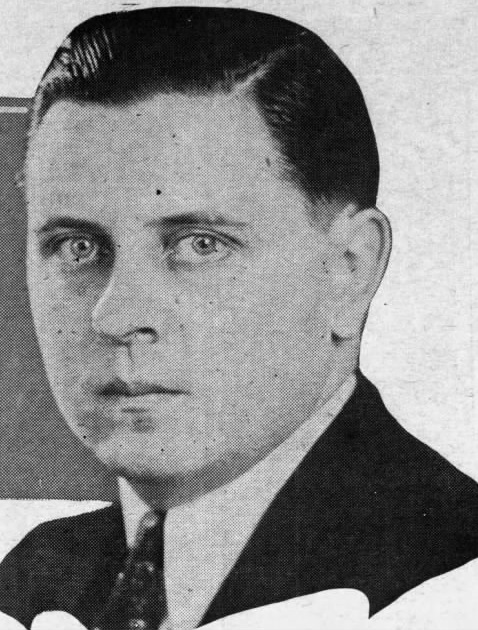
Historical · U.S. House · Mississippi · District 4
Aaron Ford
Former U.S. Representative · Mississippi District 4 · 1935–1943 · Democratic
Aaron Ford represented Mississippi's District 4 in the United States House of Representatives (1935–1943) for the Democratic party. The page below collects sourced biographical facts, term history, committee roles, and provenance for Ford.
Bioguide ID: F000258
Key facts
- Full name
- Aaron Ford
- State
- Mississippi
- District
- District 4
- Party
- Democratic
- House service
- 1935–1943
- First House term
- 1935
- Status
- Left office
- Current term ends
- —
- Born
- 1903
- Bioguide ID
- F000258
- Committee assignments
- —
- Dataset version
- 1.20260605
Biographical narrative
939 words · sourced from the Wikipedia REST extract
Aaron Ford was an American lawyer and politician who served as a U.S. Representative for Mississippi's 4th congressional district from 1935 until 1943. A member of the Democratic Party, Ford's political career spanned four terms in the House of Representatives during a significant period in American history, encompassing the Great Depression and the onset of World War II. Born in the early 20th century, Ford's background in law and his commitment to public service shaped his legislative priorities and career trajectory.
Early life and career
Aaron Lane Ford was born on December 21, 1903, in Potts Camp, Mississippi. Growing up in a region marked by its agricultural economy and rural lifestyle, Ford attended public schools in Mississippi, where he likely developed a foundational understanding of the social and economic issues facing his community. His pursuit of higher education led him to Cumberland School of Law at Cumberland University, located in Lebanon, Tennessee. There, he received a legal education that would prepare him for a career in law and public service.
After completing his studies, Ford was admitted to the bar in 1927, marking the beginning of his professional journey as a lawyer. He initially began his legal practice in Aberdeen, Mississippi, where he gained experience and established his reputation in the legal community. In the same year he started practicing law, Ford relocated to Ackerman, Mississippi, continuing to build his career in the legal field. His work as a lawyer not only provided him with a livelihood but also allowed him to engage with the legal and social issues affecting his constituents.
Ford's early career in public service included a significant role as the district attorney for the fifth circuit court district from 1932 to 1934. This position enabled him to gain insights into the workings of the judicial system and the challenges faced by the legal community, as well as the broader societal issues that would later inform his legislative priorities. His experiences as a district attorney likely contributed to his understanding of the importance of law and governance, setting the stage for his entry into national politics.
House tenure
Aaron Ford's political career took a significant turn when he was elected as a Democrat to the U.S. House of Representatives, beginning his first term on January 3, 1935. He served in this capacity for four consecutive terms, concluding his tenure on January 3, 1943. During this period, Ford was a member of the Seventy-fourth Congress and the three subsequent Congresses, representing Mississippi's 4th congressional district during a time of considerable national and global change.
Ford's election to Congress came during the Great Depression, a time when economic hardship was widespread, and the federal government was increasingly involved in addressing the needs of its citizens. As a member of the House, Ford participated in legislative discussions and decisions that were crucial for the recovery and reform efforts of the era. His role in Congress placed him at the center of debates surrounding economic policy, social welfare programs, and the evolving responsibilities of the federal government.
Despite his contributions and service, Ford faced challenges in his political career. After completing four terms in the House, he was an unsuccessful candidate for renomination in 1942 for the Seventy-eighth Congress. This defeat marked the end of his direct involvement in federal legislative affairs, but it did not signify the end of his public service or engagement in political matters.
Legislative focus and committees
Throughout his time in Congress, Aaron Ford's legislative focus was likely influenced by the pressing issues of his time, including economic recovery, social justice, and the implications of global conflict. While specific details regarding the bills he sponsored or supported are not provided, it can be inferred that, as a Democrat during the New Deal era, Ford would have aligned with initiatives aimed at economic recovery and social reform. The Democratic Party at the time was associated with policies designed to address the economic struggles faced by many Americans, particularly in the South, where poverty and unemployment were significant issues.
Ford's background as a lawyer and district attorney may have also informed his perspectives on legal and judicial matters. His experiences in the legal field would have provided him with a unique understanding of the implications of legislation on the judicial system and the lives of everyday citizens. This understanding may have guided his contributions to discussions on legal reform, civil rights, and other related issues.
In addition to his legislative work, Ford was involved in international diplomacy as a delegate to the Inter-Parliamentary Union conference held in The Hague, Netherlands, in 1938. This role allowed him to engage with representatives from other nations, discussing issues of mutual concern and fostering international cooperation. His participation in such conferences reflects a recognition of the importance of global dialogue and collaboration, particularly in the context of the rising tensions leading up to World War II.
After leaving Congress, Ford resumed his legal practice in Washington, D.C., and Jackson, Mississippi. His return to the legal profession allowed him to continue contributing to his community and the legal field, even after his tenure in Congress had ended. He remained a resident of Jackson, Mississippi, until his death on July 8, 1983. Following his passing, he was interred in Rosedale Cemetery in Cuthbert, Georgia.
Aaron Ford's life and career exemplify the journey of a public servant dedicated to the legal profession and the political landscape of his time. His contributions as a U.S. Representative during a transformative period in American history reflect the complexities and challenges of governance, as well as the ongoing pursuit of justice and equity in society.
Notable legislation
Sponsored and co-sponsored legislation for Aaron Ford is pending operator curation. The biographical narrative above carries the same provenance trail until per-bill rows are written.
Sources
- [1]https://en.wikipedia.org/wiki/Aaron_Ford_(Mississippi_politician)Wikipedia · retrieved 2026-06-05
Notable quotes
Sourced quotes for Aaron Ford are pending operator curation. Narrative-scope provenance remains attached below.
Sources
- [1]https://en.wikipedia.org/wiki/Aaron_Ford_(Mississippi_politician)Wikipedia · retrieved 2026-06-05
Key positions
Curated policy positions for Aaron Ford are pending operator review. The biographical narrative above carries the same provenance trail until per-topic positions are written.
Sources
- [1]https://en.wikipedia.org/wiki/Aaron_Ford_(Mississippi_politician)Wikipedia · retrieved 2026-06-05
Terms served
- 1935–1937U.S. House · Term 1 · Democratic
- 1937–1939U.S. House · Term 2 · Democratic
- 1939–1941U.S. House · Term 3 · Democratic
- 1941–1943U.S. House · Term 4 · Democratic
Sources & provenance
Every attributable claim above carries a per-section [N] marker that resolves to the corresponding URL below. Each entry records the upstream provider, the canonical URL, and the timestamp at which the source was retrieved by the ingest pipeline.
Key facts
- https://bioguide.congress.gov/search/bio/F000258bioguide · retrieved 2026-06-05
- https://www.govtrack.us/congress/members/404210govtrack · retrieved 2026-06-05
Biographical narrative
- https://en.wikipedia.org/wiki/Aaron_Ford_(Mississippi_politician)wikipedia · retrieved 2026-06-05
Find your representative
Every U.S. state elects representatives by district. Browse Mississippi’s delegation, the full former-representative roster, or explore the role and term length.
Related on The Candidate
- Preceded by Thomas BusbyEarlier holder of the Mississippi District 4 House seat · Democratic.Open
- Succeeded by William WinsteadLater holder of the Mississippi District 4 House seat · Democratic.Open
- Alan NunneleeFormer U.S. Representative · Mississippi District 1 · RepublicanOpen
- Benjamin NabersFormer U.S. Representative · Mississippi District 1 · UnionistOpen
- Christopher RankinFormer U.S. Representative · Mississippi District 1 · JacksonOpen
- Daniel WrightFormer U.S. Representative · Mississippi District 1 · DemocraticOpen