
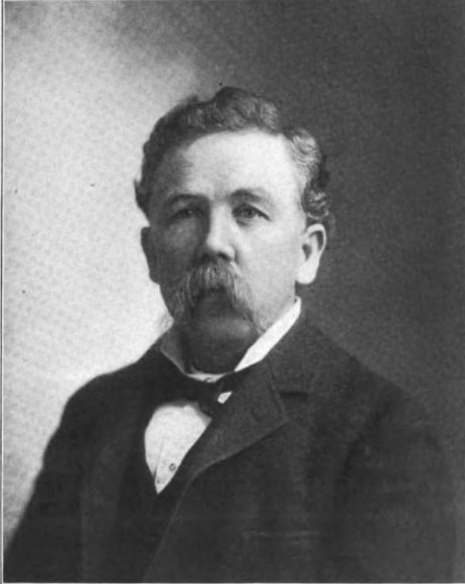
Historical · U.S. House · Mississippi · District 4
Andrew Fox
Former U.S. Representative · Mississippi District 4 · 1897–1903 · Democratic
Andrew Fox represented Mississippi's District 4 in the United States House of Representatives (1897–1903) for the Democratic party. The page below collects sourced biographical facts, term history, committee roles, and provenance for Fox.
Bioguide ID: F000330
Key facts
- Full name
- Andrew Fox
- State
- Mississippi
- District
- District 4
- Party
- Democratic
- House service
- 1897–1903
- First House term
- 1897
- Status
- Left office
- Current term ends
- —
- Born
- 1849
- Bioguide ID
- F000330
- Committee assignments
- —
- Dataset version
- 1.20260606
Biographical narrative
981 words · sourced from the Wikipedia REST extract
Andrew Fox was an American lawyer and politician who served as a U.S. Representative for Mississippi's 4th congressional district from 1897 to 1903. A member of the Democratic Party, Fox's political career spanned several decades and included significant roles at both the state and national levels. His legal career and public service were marked by a commitment to his constituents and the legal profession, reflecting the values and challenges of his time.
Early life and career
Andrew Fuller Fox was born on April 26, 1849, in Reform, Alabama, to Hally Fox and Sarah Hughes. His family relocated to Calhoun County, Mississippi, in 1853, a move that would shape his future both personally and professionally. Growing up in Mississippi, Fox received his education at private schools, which laid the groundwork for his later academic pursuits. He graduated from Mansfield College in Texas in 1872, an achievement that marked the beginning of his professional journey.
Following his graduation, Fox pursued a career in law, which he studied in Grenada, Mississippi. His dedication to the field led to his admission to the bar in 1877, allowing him to commence his legal practice in Calhoun and Webster Counties. In 1883, Fox moved to West Point, Mississippi, following an invitation from Frank White, a prominent figure in the area. This relocation marked a significant step in his career, as he established a law partnership with S. M. Roane after White's departure to Birmingham. Fox's legal practice flourished during this period, and he became well-known in the community for his legal expertise and commitment to justice.
Fox's early career was not limited to legal practice; he also engaged in public service. His political involvement began to take shape when he served as a delegate to the Democratic National Convention in 1888. This experience provided him with valuable insights into the political landscape of the time and helped him build connections within the Democratic Party. His political aspirations continued to grow, leading him to serve in the Mississippi State Senate from 1891 until 1893. However, he resigned from the Senate to accept the position of United States Attorney for the Northern District of Mississippi, a role he held until his resignation on September 1, 1896. This position further solidified his reputation as a dedicated public servant and legal professional.
House tenure
Andrew Fox was elected to the United States House of Representatives as a Democrat, beginning his first term on March 4, 1897. He served three consecutive terms in the House, representing Mississippi's 4th congressional district during the Fifty-fifth, Fifty-sixth, and Fifty-seventh Congresses. His tenure in Congress lasted until March 3, 1903, marking a significant period in his political career. Throughout these years, Fox was involved in various legislative activities and contributed to discussions on issues pertinent to his constituents and the nation.
During his time in the House, Fox participated in the legislative process that shaped the policies of the late 19th and early 20th centuries. The political climate of this era was characterized by significant changes, including industrialization, urbanization, and various social reforms. As a member of the Democratic Party, Fox aligned himself with the party's platform, which often focused on issues such as economic reform, civil rights, and social justice. His role in Congress allowed him to advocate for the interests of his district and engage with broader national issues.
Despite his active participation in Congress, Fox chose not to seek renomination in 1902, concluding his time in the House after his third term. His decision not to run for re-election marked a transition in his career, allowing him to focus on other pursuits while leaving behind a legacy of public service.
Legislative focus and committees
During his congressional tenure, Andrew Fox's legislative focus reflected the priorities and concerns of his constituents in Mississippi. While specific details regarding the bills he sponsored or supported are not documented, his involvement in the House placed him at the center of critical discussions that shaped the future of the nation. The late 19th century was a time of significant transformation in the United States, with issues such as economic development, labor rights, and civil rights coming to the forefront of national discourse.
Fox's legal background likely informed his approach to legislative matters, as he would have drawn upon his understanding of the law and its implications for society. His experience as a United States Attorney and a practicing lawyer would have equipped him with the skills necessary to navigate the complexities of federal legislation and advocate effectively for his district's interests.
In addition to his legislative duties, Fox was also involved in various committees during his time in the House. These committees played a crucial role in shaping policy and overseeing the implementation of laws. While specific committee assignments are not detailed in the available information, it can be inferred that Fox's legal expertise and experience would have made him a valuable member of any committee he served on.
Following his congressional career, Fox continued to be active in the legal profession. He served as the president of the Mississippi State Bar Association in 1911, further solidifying his commitment to the legal community and the principles of justice. He practiced law in West Point, Mississippi, until 1914, when he retired from active practice. His retirement marked the end of a significant chapter in his professional life, but his contributions to the legal field and public service continued to resonate within the community.
Andrew Fox passed away on August 29, 1926, in West Point, Mississippi. His legacy is preserved in the memories of those he served and the impact he made during his time in public office and the legal profession. He was interred at Greenwood Cemetery in West Point, Mississippi, where he is remembered as a dedicated public servant and legal professional who contributed to the development of his community and the state of Mississippi.
Notable legislation
Sponsored and co-sponsored legislation for Andrew Fox is pending operator curation. The biographical narrative above carries the same provenance trail until per-bill rows are written.
Sources
- [1]https://en.wikipedia.org/wiki/Andrew_F._FoxWikipedia · retrieved 2026-06-06
Notable quotes
Sourced quotes for Andrew Fox are pending operator curation. Narrative-scope provenance remains attached below.
Sources
- [1]https://en.wikipedia.org/wiki/Andrew_F._FoxWikipedia · retrieved 2026-06-06
Key positions
Curated policy positions for Andrew Fox are pending operator review. The biographical narrative above carries the same provenance trail until per-topic positions are written.
Sources
- [1]https://en.wikipedia.org/wiki/Andrew_F._FoxWikipedia · retrieved 2026-06-06
Terms served
- 1897–1899U.S. House · Term 1 · Democratic
- 1899–1901U.S. House · Term 2 · Democratic
- 1901–1903U.S. House · Term 3 · Democratic
Sources & provenance
Every attributable claim above carries a per-section [N] marker that resolves to the corresponding URL below. Each entry records the upstream provider, the canonical URL, and the timestamp at which the source was retrieved by the ingest pipeline.
Key facts
- https://bioguide.congress.gov/search/bio/F000330bioguide · retrieved 2026-06-06
- https://www.govtrack.us/congress/members/404278govtrack · retrieved 2026-06-06
Biographical narrative
- https://en.wikipedia.org/wiki/Andrew_F._Foxwikipedia · retrieved 2026-06-06
Find your representative
Every U.S. state elects representatives by district. Browse Mississippi’s delegation, the full former-representative roster, or explore the role and term length.
Related on The Candidate
- Preceded by Clarke LewisEarlier holder of the Mississippi District 4 House seat · Democratic.Open
- Succeeded by Wilson HillLater holder of the Mississippi District 4 House seat · Democratic.Open
- Alan NunneleeFormer U.S. Representative · Mississippi District 1 · RepublicanOpen
- Benjamin NabersFormer U.S. Representative · Mississippi District 1 · UnionistOpen
- Christopher RankinFormer U.S. Representative · Mississippi District 1 · JacksonOpen
- Daniel WrightFormer U.S. Representative · Mississippi District 1 · DemocraticOpen