
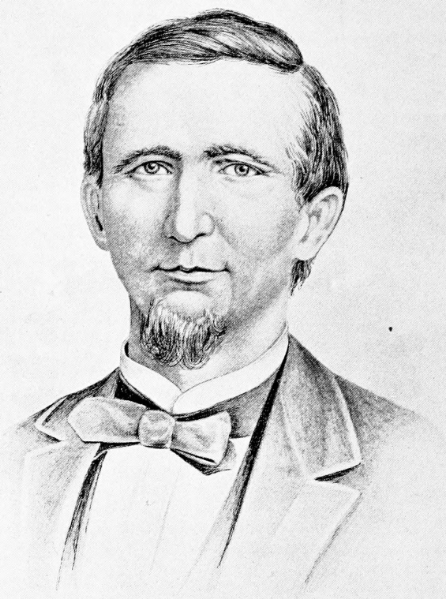
Historical · U.S. House · Mississippi · District 4
Wiley Harris
Former U.S. Representative · Mississippi District 4 · 1853–1855 · Democratic
Wiley Harris represented Mississippi's District 4 in the United States House of Representatives (1853–1855) for the Democratic party. The page below collects sourced biographical facts, term history, committee roles, and provenance for Harris.
Bioguide ID: H000256
Key facts
- Full name
- Wiley Harris
- State
- Mississippi
- District
- District 4
- Party
- Democratic
- House service
- 1853–1855
- First House term
- 1853
- Status
- Left office
- Current term ends
- —
- Born
- 1818
- Bioguide ID
- H000256
- Committee assignments
- —
- Dataset version
- 1.20260606
Biographical narrative
1,045 words · sourced from the Wikipedia REST extract
Wiley Harris was a prominent political figure in Mississippi during the mid-19th century, serving as a U.S. Representative for the state’s fourth congressional district. A member of the Democratic Party, he held office during a tumultuous period in American history, characterized by rising tensions that would ultimately lead to the Civil War. Harris's political career was marked by his involvement in state and national legislative processes, as well as his role in the Confederate government during the Civil War. His life and career reflect the complexities of Southern politics in the antebellum and postbellum eras.
Early life and career
Wiley Harris was born on November 9, 1818, in Pike County, Mississippi. His early education took place in local common schools, where he received foundational instruction that would serve him well in his future endeavors. Seeking further academic advancement, he attended the University of Virginia in Charlottesville, a prestigious institution known for its rigorous academic standards and influential alumni. After completing his studies, Harris graduated from the law department of Transylvania College in Lexington, Kentucky, in 1840. This legal education equipped him with the knowledge and skills necessary for a career in law and politics.
Following his graduation, Harris was admitted to the bar in 1840, marking the beginning of his legal practice in Gallatin, Mississippi. His work as an attorney allowed him to build a reputation in the legal community, and he quickly became involved in local governance and judicial matters. In 1844, he was appointed as the Circuit Judge of the second district, a position he held until 1850. This role not only showcased his legal acumen but also provided him with valuable experience in the judicial system and its operations.
Harris's political involvement extended beyond his judicial duties. He participated in several state constitutional conventions, notably in 1850, 1861, and 1890. These conventions were significant events in Mississippi's political history, as they addressed critical issues such as state governance, civil rights, and the implications of the Civil War. His engagement in these conventions demonstrated his commitment to shaping the legal and political landscape of Mississippi.
House tenure
Wiley Harris's congressional career began when he was elected as a Democrat to the Thirty-third Congress, serving from March 4, 1853, to March 3, 1855. His election to the U.S. House of Representatives came at a time when the nation was grappling with deep divisions over issues such as slavery and states' rights. As a representative from Mississippi, Harris was part of a legislative body that was increasingly polarized, reflecting the broader societal tensions of the era.
During his time in Congress, Harris participated in various legislative discussions and debates, contributing to the discourse surrounding the pressing issues of his day. However, he chose not to seek re-election after his first term, opting instead to return to his legal practice in Jackson, Mississippi. This decision marked a shift in his career, as he transitioned from national politics back to state-level legal work.
Harris's tenure in Congress was relatively brief, but it occurred during a critical juncture in American history. The political landscape was rapidly changing, and the issues he faced as a representative were deeply intertwined with the impending conflict that would engulf the nation. His decision to leave Congress and focus on law practice may have been influenced by the growing tensions surrounding the Civil War.
Legislative focus and committees
While specific details regarding the committees on which Harris served during his time in Congress are not provided, it is important to understand the context in which he operated. As a Democratic representative from a Southern state, Harris likely aligned with the interests and priorities of his constituents, who were predominantly pro-slavery and supportive of states' rights. The Democratic Party at the time was largely characterized by its defense of slavery and opposition to federal intervention in state affairs.
Harris's legislative focus would have been influenced by the political climate of the early 1850s, as the nation was increasingly divided over the issue of slavery. Southern representatives, including Harris, often advocated for the protection of slaveholding interests and sought to maintain the status quo in the face of growing abolitionist sentiments in the North. This alignment with Southern interests would have shaped his approach to legislation and his interactions with colleagues from other regions.
In addition to his congressional duties, Harris's political career continued to evolve in response to the Civil War. As tensions escalated, he became a staunch secessionist, reflecting the sentiments of many in Mississippi. In January 1861, he was elected as a delegate to the Mississippi state secession convention, which was a pivotal moment in the state's history. This convention ultimately led to Mississippi's decision to secede from the Union, a move that would have profound implications for the state and the nation.
Following Mississippi's secession, Harris was selected as one of the state's delegates to the Provisional Congress of the Confederate States in 1861. In this role, he actively participated in the legislative processes of the Confederate government, contributing to the formation of policies and laws that would govern the Confederacy during the war. However, he chose not to run for election to the first regular session of the Confederate Congress, stepping away from this role in 1862. After leaving the Provisional Congress, Harris returned to his legal practice in Jackson, where he continued to engage with the legal and political issues of the time.
Harris's involvement in the Mississippi constitutional convention of 1890 marked another significant chapter in his career. This convention addressed various issues related to state governance, including voting rights and electoral processes, reflecting the ongoing evolution of civil rights in the post-Civil War era. Harris's participation in this convention underscored his enduring commitment to shaping the legal framework of Mississippi.
Wiley Harris passed away on December 3, 1891, leaving behind a legacy intertwined with the complex history of Mississippi and the broader narrative of the United States during a time of significant change. His life and career encapsulate the challenges and transformations that defined the antebellum and postbellum periods, as well as the enduring impact of the Civil War on American society. Harris's contributions to both the legal and political realms of Mississippi continue to be recognized as part of the state's historical narrative.
Notable legislation
Sponsored and co-sponsored legislation for Wiley Harris is pending operator curation. The biographical narrative above carries the same provenance trail until per-bill rows are written.
Sources
- [1]https://en.wikipedia.org/wiki/Wiley_P._HarrisWikipedia · retrieved 2026-06-06
Notable quotes
Sourced quotes for Wiley Harris are pending operator curation. Narrative-scope provenance remains attached below.
Sources
- [1]https://en.wikipedia.org/wiki/Wiley_P._HarrisWikipedia · retrieved 2026-06-06
Key positions
Curated policy positions for Wiley Harris are pending operator review. The biographical narrative above carries the same provenance trail until per-topic positions are written.
Sources
- [1]https://en.wikipedia.org/wiki/Wiley_P._HarrisWikipedia · retrieved 2026-06-06
Terms served
- 1853–1855U.S. House · Term 1 · Democratic
Sources & provenance
Every attributable claim above carries a per-section [N] marker that resolves to the corresponding URL below. Each entry records the upstream provider, the canonical URL, and the timestamp at which the source was retrieved by the ingest pipeline.
Key facts
- https://bioguide.congress.gov/search/bio/H000256bioguide · retrieved 2026-06-06
- https://www.govtrack.us/congress/members/405133govtrack · retrieved 2026-06-06
Biographical narrative
- https://en.wikipedia.org/wiki/Wiley_P._Harriswikipedia · retrieved 2026-06-06
Find your representative
Every U.S. state elects representatives by district. Browse Mississippi’s delegation, the full former-representative roster, or explore the role and term length.
Related on The Candidate
- Succeeded by William LakeLater holder of the Mississippi District 4 House seat · American.Open
- Alan NunneleeFormer U.S. Representative · Mississippi District 1 · RepublicanOpen
- Benjamin NabersFormer U.S. Representative · Mississippi District 1 · UnionistOpen
- Christopher RankinFormer U.S. Representative · Mississippi District 1 · JacksonOpen
- Daniel WrightFormer U.S. Representative · Mississippi District 1 · DemocraticOpen
- Democratic PartyFederal candidates and office holders on the Democratic line.Open