
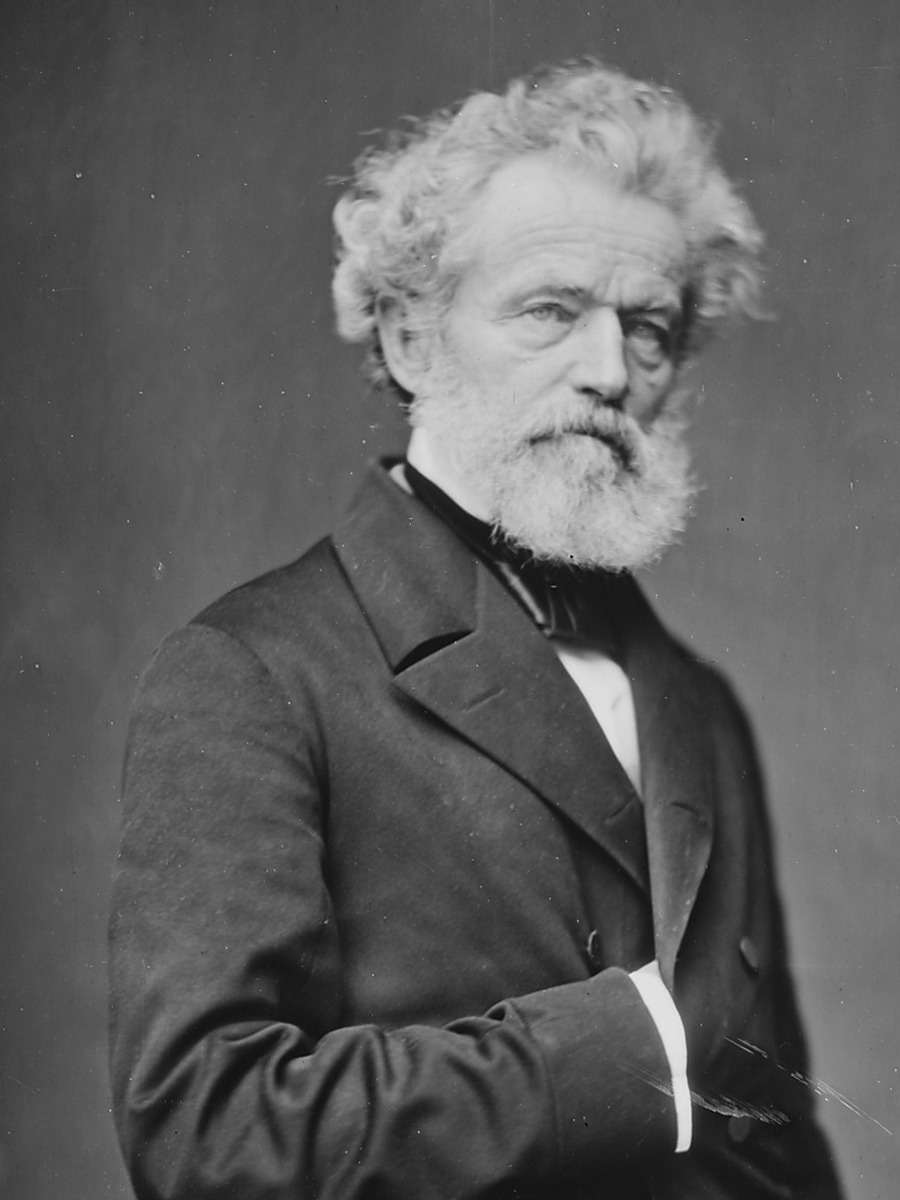
Historical · U.S. House · Mississippi · District 5
John Quitman
Former U.S. Representative · Mississippi District 5 · 1855–1859 · Democratic
John Quitman represented Mississippi's District 5 in the United States House of Representatives (1855–1859) for the Democratic party. The page below collects sourced biographical facts, term history, committee roles, and provenance for Quitman.
Bioguide ID: Q000022
Key facts
- Full name
- John Quitman
- State
- Mississippi
- District
- District 5
- Party
- Democratic
- House service
- 1855–1859
- First House term
- 1855
- Status
- Left office
- Current term ends
- —
- Born
- 1798
- Bioguide ID
- Q000022
- Committee assignments
- —
- Dataset version
- 1.20260606
Biographical narrative
812 words · sourced from the Wikipedia REST extract
John Quitman was a prominent American lawyer, politician, and soldier who served as a U.S. Representative for Mississippi's 5th congressional district. A member of the Democratic Party, Quitman held office in the House of Representatives from 1855 until the end of his term in 1859. His political career was marked by his strong pro-slavery stance and involvement in military affairs, particularly during the Mexican-American War. Quitman's legacy is intertwined with his plantation ownership and his role in the political landscape of the antebellum South.
Early life and career
John Quitman was born on September 1, 1798, in Rhinebeck, New York. He pursued his education in the classics at Hartwick Seminary, graduating in 1816. Following his studies, Quitman took on the role of an instructor at Mount Airy College in Pennsylvania. However, he soon shifted his focus to the field of law, gaining admission to the bar in 1820. Quitman initially practiced law in Chillicothe, Ohio, before relocating to Natchez, Mississippi, in 1821. This move marked the beginning of his long-standing connection to the state.
In 1826, Quitman acquired a historic estate known as Monmouth, which would remain in his family for a century. His interest in the region extended beyond his legal career, as he became involved in the agricultural economy of the South. Quitman owned multiple plantations, including Springfield, Palmyra, Live Oaks, and Belen, which primarily produced cotton and sugar. His plantations were managed by overseers, as Quitman was often absent due to his political and military commitments. Throughout his life, he enslaved a significant number of individuals across his properties, reflecting the prevailing social and economic structures of the time.
Quitman's political career began in earnest in 1826 when he was elected to the Mississippi House of Representatives. He quickly rose through the ranks, becoming Chancellor of the state in 1828 and participating in the state's Constitutional Convention in 1832. His political affiliations shifted during his career; he was initially a member of the Whig Party but later became a prominent figure in the Democratic Party. Quitman's political ambitions were further demonstrated when he was elected president of the Mississippi Senate in 1835, serving briefly as the acting governor of Mississippi.
House tenure
Quitman's tenure in the U.S. House of Representatives began in 1855, following his election to represent Mississippi's 5th congressional district. During his time in Congress, he was part of a legislative body that was deeply divided over issues related to slavery and states' rights. Quitman was a staunch supporter of pro-slavery policies, aligning himself with the interests of Southern Democrats. His legislative activities were reflective of the broader political tensions of the era, as the nation grappled with the expansion of slavery into new territories.
Quitman's time in the House was marked by his commitment to the Democratic Party and his advocacy for the interests of his constituents in Mississippi. He served two terms in Congress, concluding his service on March 3, 1859. His departure from the House came at a time when the nation was increasingly polarized over the issue of slavery, setting the stage for the Civil War that would soon follow.
Legislative focus and committees
Throughout his congressional career, Quitman's legislative focus was heavily influenced by his background and beliefs. As a pro-slavery advocate, he supported measures that aligned with the interests of slaveholding states. His involvement in the House coincided with significant national debates over the expansion of slavery into newly acquired territories, particularly those resulting from the Mexican-American War. Quitman's military background and experiences during the war likely informed his perspectives on these issues.
In addition to his legislative work, Quitman was involved in various committees during his time in the House. While specific committee assignments are not detailed in the available records, it can be inferred that his legal expertise and political experience would have positioned him to contribute meaningfully to discussions surrounding legal and military matters.
Quitman's political career was not limited to his time in the House. He had previously served as governor of Mississippi from 1849 until his resignation in 1851, a period during which he faced legal challenges related to his involvement in filibustering activities aimed at expanding U.S. territory. His military service during the Mexican-American War further solidified his reputation as a military leader, which he leveraged in his political endeavors.
Despite his political ambitions and military accomplishments, Quitman's legacy is complicated by his role as an enslaver and his unwavering commitment to pro-slavery ideologies. His life and career exemplify the complexities of antebellum Southern politics, where personal ambition often intersected with the deeply entrenched institution of slavery.
John Quitman passed away on July 17, 1858, leaving behind a legacy that continues to be examined in the context of American history. His contributions to Mississippi politics, military service, and the broader national discourse on slavery reflect the tumultuous era in which he lived.
Notable legislation
Sponsored and co-sponsored legislation for John Quitman is pending operator curation. The biographical narrative above carries the same provenance trail until per-bill rows are written.
Sources
- [1]https://en.wikipedia.org/wiki/John_A._QuitmanWikipedia · retrieved 2026-06-06
Notable quotes
Sourced quotes for John Quitman are pending operator curation. Narrative-scope provenance remains attached below.
Sources
- [1]https://en.wikipedia.org/wiki/John_A._QuitmanWikipedia · retrieved 2026-06-06
Key positions
Curated policy positions for John Quitman are pending operator review. The biographical narrative above carries the same provenance trail until per-topic positions are written.
Sources
- [1]https://en.wikipedia.org/wiki/John_A._QuitmanWikipedia · retrieved 2026-06-06
Terms served
- 1855–1857U.S. House · Term 1 · Democratic
- 1857–1859U.S. House · Term 2 · Democratic
Sources & provenance
Every attributable claim above carries a per-section [N] marker that resolves to the corresponding URL below. Each entry records the upstream provider, the canonical URL, and the timestamp at which the source was retrieved by the ingest pipeline.
Key facts
- https://bioguide.congress.gov/search/bio/Q000022bioguide · retrieved 2026-06-06
- https://www.govtrack.us/congress/members/408984govtrack · retrieved 2026-06-06
Biographical narrative
- https://en.wikipedia.org/wiki/John_A._Quitmanwikipedia · retrieved 2026-06-06
Find your representative
Every U.S. state elects representatives by district. Browse Mississippi’s delegation, the full former-representative roster, or explore the role and term length.
Related on The Candidate
- Succeeded by George McKeeLater holder of the Mississippi District 5 House seat · Republican.Open
- Alan NunneleeFormer U.S. Representative · Mississippi District 1 · RepublicanOpen
- Benjamin NabersFormer U.S. Representative · Mississippi District 1 · UnionistOpen
- Christopher RankinFormer U.S. Representative · Mississippi District 1 · JacksonOpen
- Daniel WrightFormer U.S. Representative · Mississippi District 1 · DemocraticOpen
- Democratic PartyFederal candidates and office holders on the Democratic line.Open