
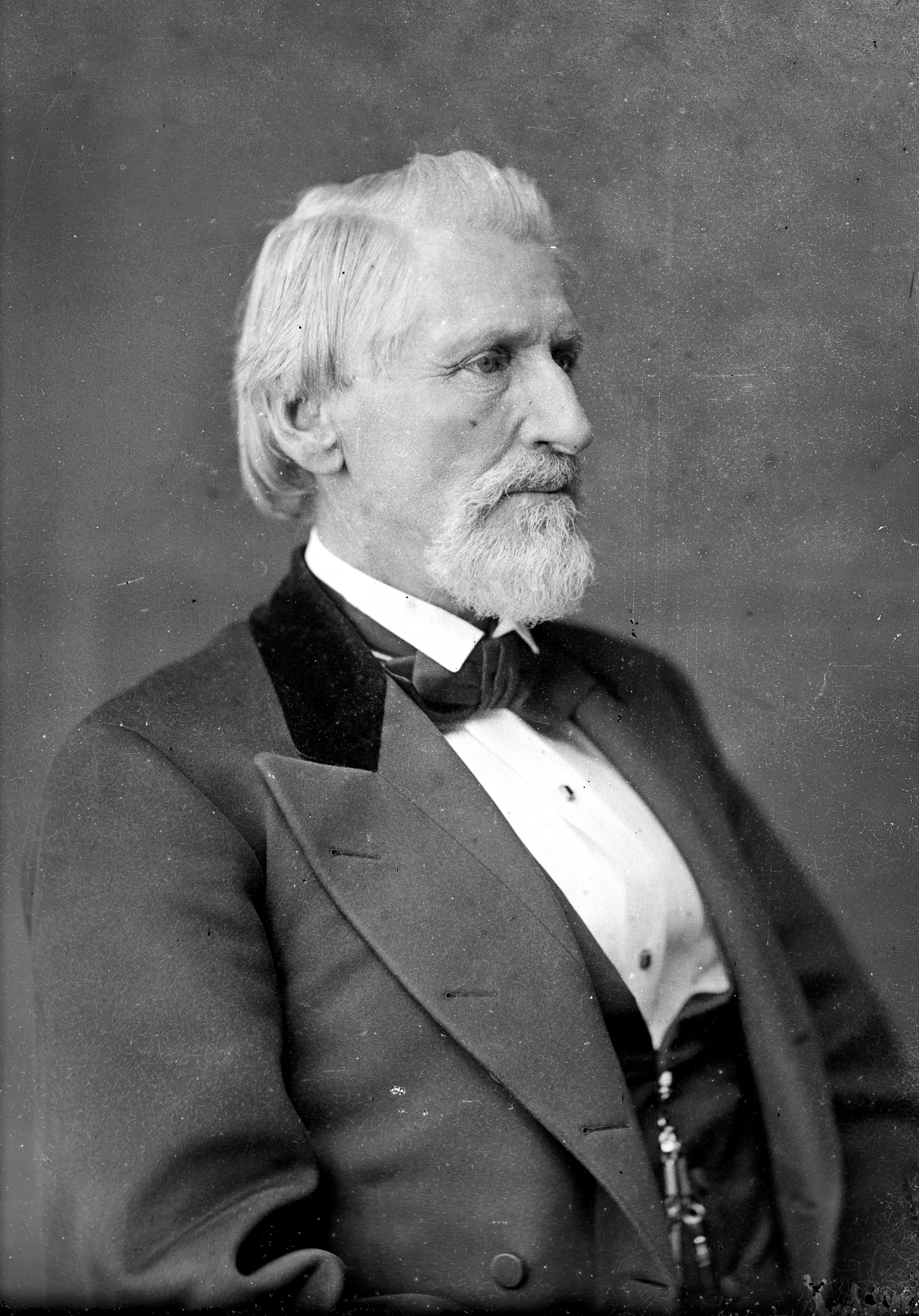
Historical · U.S. House · Mississippi · District 5
Otho Singleton
Former U.S. Representative · Mississippi District 5 · 1853–1887 · Democratic
Otho Singleton represented Mississippi's District 5 in the United States House of Representatives (1853–1887) for the Democratic party. The page below collects sourced biographical facts, term history, committee roles, and provenance for Singleton.
Bioguide ID: S000445
Key facts
- Full name
- Otho Singleton
- State
- Mississippi
- District
- District 5
- Party
- Democratic
- House service
- 1853–1887
- First House term
- 1853
- Status
- Left office
- Current term ends
- —
- Born
- 1814
- Bioguide ID
- S000445
- Committee assignments
- —
- Dataset version
- 1.20260606
Biographical narrative
835 words · sourced from the Wikipedia REST extract
Otho Singleton was a prominent political figure in the mid-19th century, serving as a U.S. Representative from Mississippi. A member of the Democratic Party, Singleton's political career spanned several tumultuous years in American history, including the Civil War. He was also a member of the Confederate Congress during the war. His legislative career in the U.S. House of Representatives began in 1853 and continued through multiple terms until 1887, marking him as a significant player in the political landscape of his time.
Early life and career
Otho Robards Singleton was born on October 14, 1814, near Nicholasville, Kentucky. He was the son of Lewis Singleton, a hemp manufacturer who operated a factory in the vicinity of Keene, Kentucky. Singleton's family had a history of public service; his grandfather, Louis Singleton, served as a sheriff in Jessamine County and was a state senator in Kentucky. This background likely influenced Singleton's eventual foray into politics.
Singleton's education included attendance at St. Joseph's College in Bardstown, Kentucky, followed by law studies at Transylvania University. He was admitted to the bar in 1838, which marked the beginning of his legal career. Shortly thereafter, he moved to Canton, Mississippi, where he began practicing law. His involvement in politics began at the state level; he served in the Mississippi House of Representatives in 1846 and 1847, followed by a tenure in the Mississippi State Senate from 1848 to 1854, representing Madison and Scott counties. This early political experience laid the groundwork for his future role in the U.S. Congress.
House tenure
Singleton's congressional career commenced when he was elected as a Democrat to the United States House of Representatives during the Thirty-third Congress, which lasted from March 4, 1853, to March 3, 1855. Although he faced challenges in securing re-election in 1854, he returned to Congress in 1856, winning elections for both the Thirty-fifth and Thirty-sixth Congresses. His service during this period extended from March 4, 1857, until January 12, 1861, when he withdrew from Congress following Mississippi's secession from the Union.
During the Civil War, Singleton enlisted in the Confederate Army, where he served as the captain of Company C in the 18th Mississippi Infantry Regiment. His military service was relatively brief, as he transitioned to a political role by being elected as a representative from Mississippi in the First Confederate Congress. In this capacity, he chaired the Committee on Indian Affairs and was re-elected to the Second Confederate Congress. However, his attendance at legislative sessions during this time was inconsistent, with the reasons for his absences remaining undocumented.
Following the conclusion of the Civil War and the subsequent restoration of the Union, Singleton returned to the U.S. House of Representatives. He was elected as a Democrat to the Forty-fourth Congress and continued to serve in the House for five additional terms, with his final term concluding on March 3, 1887. His return to Congress marked a significant period of rebuilding and re-establishing political norms in the post-war South.
Legislative focus and committees
Throughout his time in Congress, Singleton's legislative focus and committee assignments reflected the complex political landscape of the era. His early years in the House coincided with significant national debates surrounding issues such as states' rights, slavery, and the impending conflict of the Civil War. As a member of the Democratic Party, he aligned with the interests of his constituents in Mississippi, advocating for policies that resonated with the Southern perspective during a time of national division.
During his tenure in the Confederate Congress, Singleton's role as chair of the Committee on Indian Affairs indicated his involvement in issues related to Native American policy, which were particularly relevant in the context of westward expansion and the conflicts that arose from it. His experience in this area would have informed his later legislative priorities when he returned to the U.S. Congress.
In the post-war period, Singleton's legislative activities would have been influenced by the challenges of Reconstruction and the need to address the economic and social upheaval in the South. His multiple terms in Congress allowed him to navigate these complexities, contributing to discussions on rebuilding the Southern economy and addressing the rights of newly freed African Americans, although specific legislative achievements or positions taken by Singleton during this time are not detailed in the available records.
Singleton's career came to an end with his departure from Congress in 1887. After leaving office, he continued to reside in Washington, D.C., where he lived until his death on January 11, 1889. He was interred in Canton Cemetery in Canton, Mississippi, marking the end of a life dedicated to public service and political engagement.
In his personal life, Singleton was married, though his wife predeceased him. He had a son, Dr. Richard H. Singleton, who became a notable physician in Louisville, Kentucky, and was active in several medical societies across Indiana, Kentucky, and Mississippi. His daughter, Kate, married Junius M. Smith and settled in North Carolina, continuing the family's legacy of involvement in public and professional life.
Notable legislation
Sponsored and co-sponsored legislation for Otho Singleton is pending operator curation. The biographical narrative above carries the same provenance trail until per-bill rows are written.
Sources
- [1]https://en.wikipedia.org/wiki/Otho_R._SingletonWikipedia · retrieved 2026-06-06
Notable quotes
Sourced quotes for Otho Singleton are pending operator curation. Narrative-scope provenance remains attached below.
Sources
- [1]https://en.wikipedia.org/wiki/Otho_R._SingletonWikipedia · retrieved 2026-06-06
Key positions
Curated policy positions for Otho Singleton are pending operator review. The biographical narrative above carries the same provenance trail until per-topic positions are written.
Sources
- [1]https://en.wikipedia.org/wiki/Otho_R._SingletonWikipedia · retrieved 2026-06-06
Terms served
- 1853–1855U.S. House · Term 1 · Democratic
- 1857–1859U.S. House · Term 2 · Democratic
- 1859–1861U.S. House · Term 3 · Democratic
- 1875–1877U.S. House · Term 4 · Democratic
- 1877–1879U.S. House · Term 5 · Democratic
- 1879–1881U.S. House · Term 6 · Democratic
- 1881–1883U.S. House · Term 7 · Democratic
- 1883–1885U.S. House · Term 8 · Democratic
- 1885–1887U.S. House · Term 9 · Democratic
Sources & provenance
Every attributable claim above carries a per-section [N] marker that resolves to the corresponding URL below. Each entry records the upstream provider, the canonical URL, and the timestamp at which the source was retrieved by the ingest pipeline.
Key facts
- https://bioguide.congress.gov/search/bio/S000445bioguide · retrieved 2026-06-06
- https://www.govtrack.us/congress/members/409939govtrack · retrieved 2026-06-06
Biographical narrative
- https://en.wikipedia.org/wiki/Otho_R._Singletonwikipedia · retrieved 2026-06-06
Find your representative
Every U.S. state elects representatives by district. Browse Mississippi’s delegation, the full former-representative roster, or explore the role and term length.
Related on The Candidate
- Succeeded by Chapman AndersonLater holder of the Mississippi District 5 House seat · Democratic.Open
- Alan NunneleeFormer U.S. Representative · Mississippi District 1 · RepublicanOpen
- Benjamin NabersFormer U.S. Representative · Mississippi District 1 · UnionistOpen
- Christopher RankinFormer U.S. Representative · Mississippi District 1 · JacksonOpen
- Daniel WrightFormer U.S. Representative · Mississippi District 1 · DemocraticOpen
- Democratic PartyFederal candidates and office holders on the Democratic line.Open