
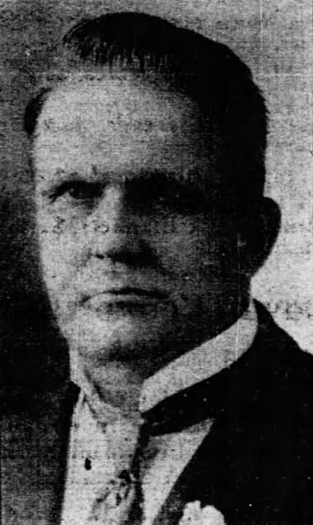
Historical · U.S. House · Mississippi · District 7
Frank McLain
Former U.S. Representative · Mississippi District 7 · 1897–1909 · Democratic
Frank McLain represented Mississippi's District 7 in the United States House of Representatives (1897–1909) for the Democratic party. The page below collects sourced biographical facts, term history, committee roles, and provenance for McLain.
Bioguide ID: M000533
Key facts
- Full name
- Frank McLain
- State
- Mississippi
- District
- District 7
- Party
- Democratic
- House service
- 1897–1909
- First House term
- 1897
- Status
- Left office
- Current term ends
- —
- Born
- 1852
- Bioguide ID
- M000533
- Committee assignments
- —
- Dataset version
- 1.20260606
Biographical narrative
944 words · sourced from the Wikipedia REST extract
Frank McLain was an American politician and lawyer who served as a U.S. Representative for Mississippi's 7th congressional district from 1898 to 1909. A member of the Democratic Party, McLain's political career spanned over a decade, during which he was elected to six consecutive terms in the House of Representatives. His contributions to Mississippi politics were rooted in a background of legal practice and local governance, reflecting a commitment to public service that began early in his life.
Early life and career
Frank Alexander McLain was born on January 29, 1852, near Gloster in Amite County, Mississippi. He was the son of Enoch Bateman McLain and Nancy Berryhill McLain. His father, Enoch, had a notable history as a member of Nathan Bedford Forrest's cavalry during the Civil War, which likely influenced Frank's early understanding of leadership and civic duty. Growing up in a region marked by its agricultural economy and the aftermath of the Civil War, McLain's formative years were shaped by the challenges and opportunities of the post-war South.
McLain received his early education in the public schools of Amite County, where he developed a foundation in learning that would serve him throughout his life. He furthered his education by attending the Woodlawn Institute in East Feliciana Parish, Louisiana, for a year, before enrolling at the University of Mississippi in Oxford. He graduated from the university in 1874, equipping himself with the knowledge and skills necessary for a career in law and public service.
After completing his education, McLain began his professional journey as a teacher, which allowed him to engage with the community and contribute to the education of the youth in his area. During this time, he also pursued a legal education, studying law in his spare moments. His dedication paid off when he was admitted to the bar in September 1879, marking the beginning of his legal career in Liberty, Mississippi, in 1880.
In November 1881, McLain's political career began when he was elected to represent Amite County in the Mississippi House of Representatives. His term lasted from 1882 to 1884, during which he gained valuable experience in legislative processes and governance. Following his service in the state legislature, he moved to Gloster, Mississippi, in 1885, where he continued his legal practice and became more involved in local affairs.
McLain's legal career advanced as he took on the role of district attorney for his judicial district, serving from 1883 until January 1, 1896. This position allowed him to gain a deeper understanding of the law and its application within the community. His commitment to public service was further demonstrated when he served as a member of the State Constitutional Convention in 1890, contributing to the shaping of Mississippi's legal framework.
House tenure
Frank McLain's tenure in the U.S. House of Representatives began when he was elected as a Democrat to fill the vacancy left by the death of William F. Love. He officially took office on December 12, 1898, and served in the Fifty-fifth Congress. His election marked the start of a significant period in his political career, as he was subsequently reelected to the Fifty-sixth Congress and the four succeeding Congresses, serving until March 3, 1909. Throughout his six terms in office, McLain was involved in various legislative initiatives and discussions that shaped the direction of national policy during a transformative era in American history.
During his time in Congress, McLain represented Mississippi's 7th congressional district, which encompassed a diverse constituency with varying interests and needs. His role as a representative required him to navigate complex political landscapes and advocate for the interests of his constituents at the federal level. McLain's legislative work was characterized by a commitment to addressing the concerns of his district, as well as broader issues affecting the state of Mississippi and the nation.
While specific details of his legislative achievements are not documented in the available records, it is evident that McLain's long tenure in the House reflects a level of trust and support from his constituents. His ability to secure reelection multiple times suggests that he was able to effectively communicate and respond to the needs of the people he represented.
Legislative focus and committees
Throughout his congressional career, Frank McLain was involved in various legislative matters that were pertinent to his constituents and the broader national agenda. Although specific bills and legislative initiatives he championed are not detailed in the available records, it is common for representatives during this period to focus on issues such as economic development, infrastructure improvements, and social policies that directly impacted their districts.
As a member of the Democratic Party, McLain would have aligned with the party's platform, which during the late 19th and early 20th centuries often included support for agrarian interests, civil rights, and economic reforms. This alignment would have influenced his legislative priorities and the committees on which he served. Representatives typically participated in committees that aligned with their interests and the needs of their constituents, allowing them to have a more significant impact on the legislative process.
After his congressional service, McLain continued to engage in public service as a commissioner of the Mississippi Supreme Court from 1910 to 1912. This role allowed him to contribute to the judicial system of Mississippi, further reflecting his commitment to the law and public service.
Frank McLain passed away on October 11, 1920, in Gloster, Mississippi. His contributions to Mississippi politics and law were recognized through his long-standing service in various capacities, and he was interred in the City Cemetery. His life and career exemplify the dedication of a public servant committed to the welfare of his community and the principles of democracy.
Notable legislation
Sponsored and co-sponsored legislation for Frank McLain is pending operator curation. The biographical narrative above carries the same provenance trail until per-bill rows are written.
Sources
- [1]https://en.wikipedia.org/wiki/Frank_A._McLainWikipedia · retrieved 2026-06-06
Notable quotes
Sourced quotes for Frank McLain are pending operator curation. Narrative-scope provenance remains attached below.
Sources
- [1]https://en.wikipedia.org/wiki/Frank_A._McLainWikipedia · retrieved 2026-06-06
Key positions
Curated policy positions for Frank McLain are pending operator review. The biographical narrative above carries the same provenance trail until per-topic positions are written.
Sources
- [1]https://en.wikipedia.org/wiki/Frank_A._McLainWikipedia · retrieved 2026-06-06
Terms served
- 1897–1899U.S. House · Term 1 · Democratic
- 1899–1901U.S. House · Term 2 · Democratic
- 1901–1903U.S. House · Term 3 · Democratic
- 1903–1905U.S. House · Term 4 · Democratic
- 1905–1907U.S. House · Term 5 · Democratic
- 1907–1909U.S. House · Term 6 · Democratic
Sources & provenance
Every attributable claim above carries a per-section [N] marker that resolves to the corresponding URL below. Each entry records the upstream provider, the canonical URL, and the timestamp at which the source was retrieved by the ingest pipeline.
Key facts
- https://bioguide.congress.gov/search/bio/M000533bioguide · retrieved 2026-06-06
- https://www.govtrack.us/congress/members/407525govtrack · retrieved 2026-06-06
Biographical narrative
- https://en.wikipedia.org/wiki/Frank_A._McLainwikipedia · retrieved 2026-06-06
Find your representative
Every U.S. state elects representatives by district. Browse Mississippi’s delegation, the full former-representative roster, or explore the role and term length.
Related on The Candidate
- Preceded by James SpencerEarlier holder of the Mississippi District 7 House seat · Democratic.Open
- Succeeded by William DicksonLater holder of the Mississippi District 7 House seat · Democratic.Open
- Alan NunneleeFormer U.S. Representative · Mississippi District 1 · RepublicanOpen
- Benjamin NabersFormer U.S. Representative · Mississippi District 1 · UnionistOpen
- Christopher RankinFormer U.S. Representative · Mississippi District 1 · JacksonOpen
- Daniel WrightFormer U.S. Representative · Mississippi District 1 · DemocraticOpen