
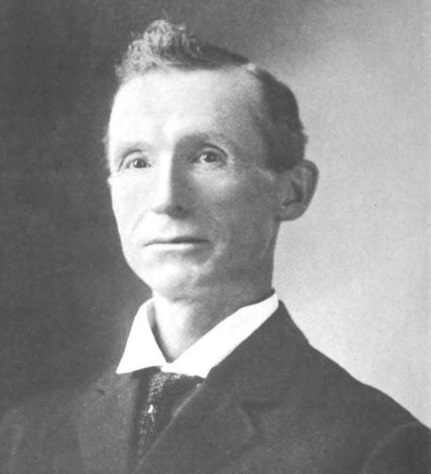
Historical · U.S. House · Montana · District 1
Charles Hartman
Former U.S. Representative · Montana District 1 · 1893–1899 · Silver Republican
Charles Hartman represented Montana's District 1 in the United States House of Representatives (1893–1899) for the Silver Republican party. The page below collects sourced biographical facts, term history, committee roles, and provenance for Hartman.
Bioguide ID: H000300
Key facts
- Full name
- Charles Hartman
- State
- Montana
- District
- District 1
- Party
- Silver Republican
- House service
- 1893–1899
- First House term
- 1893
- Status
- Left office
- Current term ends
- —
- Born
- 1861
- Bioguide ID
- H000300
- Committee assignments
- —
- Dataset version
- 1.20260606
Biographical narrative
977 words · sourced from the Wikipedia REST extract
Charles Hartman was a notable figure in American politics during the late 19th century, serving as a U.S. Representative from Montana. A member of the Silver Republican Party, he held office during a transformative period in U.S. history, contributing to the legislative process from 1893 until 1899. Hartman's career spanned various roles, including his early work in law, his involvement in state constitutional matters, and his later diplomatic service. His life reflects the dynamic political landscape of the time, marked by shifts in party affiliation and significant national events.
Early life and career
Charles Sampson Hartman was born on March 1, 1861, in Monticello, Indiana. He grew up in a region that was experiencing significant changes as the United States expanded westward. Hartman received his early education in public schools, which laid the foundation for his future academic pursuits. He furthered his education at Wabash College, located in Crawfordsville, Indiana, where he likely developed the skills and knowledge that would serve him in his later career.
In January 1882, Hartman relocated to Bozeman, Montana, a move that would prove pivotal in his life. At the time, Montana was undergoing rapid development, and Bozeman was emerging as a significant community within the state. Hartman pursued a legal education and was admitted to the bar in 1884, marking the beginning of his professional career in law. He established a legal practice in Bozeman, where he became an active member of the community.
Hartman’s legal career was complemented by his involvement in local governance. He served as the probate judge of Gallatin County from 1884 to 1886, a role that allowed him to gain valuable experience in the judicial system and public administration. His commitment to public service continued as he participated in the State Constitutional Convention in 1889, contributing to the foundational legal framework of Montana as it transitioned to statehood.
House tenure
Hartman's political career took a significant turn when he was elected to the U.S. House of Representatives. He was initially elected as a Republican to the Fifty-third Congress, which convened in 1893. His election marked the beginning of a three-term tenure in the House, during which he represented Montana's first congressional district. Hartman's service in Congress coincided with a period of considerable economic and social change in the United States, including the aftermath of the Panic of 1893, which had profound effects on the nation's economy.
During his time in the House, Hartman was re-elected to the Fifty-fourth Congress and subsequently to the Fifty-fifth Congress as a Silver Republican, a faction that emerged in response to the economic issues of the time, particularly those surrounding the monetary policy of gold versus silver. His tenure lasted from March 4, 1893, until March 3, 1899. Throughout these years, Hartman was involved in legislative discussions and decisions that would shape the future of Montana and the nation.
Despite his active role in Congress, Hartman chose not to seek renomination in 1898, concluding his time in the House after three terms. His decision to step back from federal politics allowed him to return to his legal practice, where he continued to contribute to his community and the state of Montana.
Legislative focus and committees
During his congressional tenure, Hartman was involved in various legislative matters that were pertinent to both his constituents and the broader national agenda. While specific details regarding the bills he sponsored or voted on are not documented, it is known that he participated in the legislative process during a time of significant economic challenges and political realignment. The issues of the day included debates over monetary policy, land use, and the rights of states versus the federal government, all of which were critical to the development of the American West.
As a member of the Republican Party and later as a Silver Republican, Hartman was part of a political movement that sought to address the economic hardships faced by many Americans during the 1890s. The Silver Republicans advocated for the free coinage of silver, believing it would help alleviate the economic struggles of farmers and working-class citizens. Hartman's alignment with this faction indicates his awareness of the economic realities affecting his constituents in Montana, a state with a significant agricultural and mining presence.
In addition to his legislative responsibilities, Hartman was active in party politics. He served as a delegate to the 1896 Republican National Convention, where he participated in the broader discussions shaping the party's platform and direction. His involvement in national politics reflected his commitment to the principles of the Republican Party and his desire to influence the legislative agenda at both the state and national levels.
Following his departure from Congress, Hartman continued to engage in public service and politics. He shifted his political affiliation to the Democratic Party in 1900 and served as a delegate to the 1900 Democratic National Convention. His later attempts to secure a congressional seat as a Democrat in 1910 were unsuccessful, but he remained active in legal and political circles.
In 1913, Hartman was appointed as Envoy Extraordinary and Minister Plenipotentiary to Ecuador, a diplomatic role that allowed him to represent U.S. interests abroad. He served in this capacity until May 14, 1922, when he returned to Bozeman. His diplomatic service further exemplified his commitment to public service and his ability to adapt to various roles throughout his career.
In the later years of his life, Hartman returned to practicing law and took on judicial responsibilities. In 1927, he was appointed as a judge of the twelfth judicial district of Montana, a position he held until his death on August 3, 1929, in Great Falls, Montana. Hartman’s contributions to law and politics in Montana left a lasting impact on the state, and he was interred in Riverside Cemetery in Fort Benton, Montana, marking the end of a diverse and impactful career in public service.
Notable legislation
Sponsored and co-sponsored legislation for Charles Hartman is pending operator curation. The biographical narrative above carries the same provenance trail until per-bill rows are written.
Sources
- [1]https://en.wikipedia.org/wiki/Charles_S._HartmanWikipedia · retrieved 2026-06-06
Notable quotes
Sourced quotes for Charles Hartman are pending operator curation. Narrative-scope provenance remains attached below.
Sources
- [1]https://en.wikipedia.org/wiki/Charles_S._HartmanWikipedia · retrieved 2026-06-06
Key positions
Curated policy positions for Charles Hartman are pending operator review. The biographical narrative above carries the same provenance trail until per-topic positions are written.
Sources
- [1]https://en.wikipedia.org/wiki/Charles_S._HartmanWikipedia · retrieved 2026-06-06
Terms served
- 1893–1895U.S. House · Term 1 · Republican
- 1895–1897U.S. House · Term 2 · Republican
- 1897–1899U.S. House · Term 3 · Silver Republican
Sources & provenance
Every attributable claim above carries a per-section [N] marker that resolves to the corresponding URL below. Each entry records the upstream provider, the canonical URL, and the timestamp at which the source was retrieved by the ingest pipeline.
Key facts
- https://bioguide.congress.gov/search/bio/H000300bioguide · retrieved 2026-06-06
- https://www.govtrack.us/congress/members/405173govtrack · retrieved 2026-06-06
Biographical narrative
- https://en.wikipedia.org/wiki/Charles_S._Hartmanwikipedia · retrieved 2026-06-06
Find your representative
Every U.S. state elects representatives by district. Browse Montana’s delegation, the full former-representative roster, or explore the role and term length.
Related on The Candidate
- Preceded by William DixonEarlier holder of the Montana District 1 House seat · Democratic.Open
- Succeeded by Albert CampbellLater holder of the Montana District 1 House seat · Democratic.Open
- Arnold OlsenFormer U.S. Representative · Montana District 1 · DemocraticOpen
- Caldwell EdwardsFormer U.S. Representative · Montana District 1 · PopulistOpen
- Charles PrayFormer U.S. Representative · Montana District 1 · RepublicanOpen
- Representatives from MontanaEvery former U.S. Representative who has represented Montana.Open