
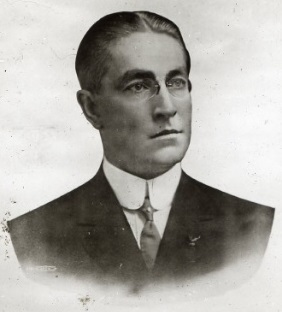
Historical · U.S. House · New Jersey · District 11
John Eagan
Former U.S. Representative · New Jersey District 11 · 1913–1925 · Democratic
John Eagan represented New Jersey's District 11 in the United States House of Representatives (1913–1925) for the Democratic party. The page below collects sourced biographical facts, term history, committee roles, and provenance for Eagan.
Bioguide ID: E000001
Key facts
- Full name
- John Eagan
- State
- New Jersey
- District
- District 11
- Party
- Democratic
- House service
- 1913–1925
- First House term
- 1913
- Status
- Left office
- Current term ends
- —
- Born
- 1872
- Bioguide ID
- E000001
- Committee assignments
- —
- Dataset version
- 1.20260606
Biographical narrative
860 words · sourced from the Wikipedia REST extract
John Eagan was an American politician who served as a Democratic U.S. Representative for New Jersey's 11th congressional district. His tenure in the House of Representatives spanned from 1913 to 1921 and again from 1923 to 1925. Eagan's political career was marked by his involvement in local business and education, reflecting a commitment to public service that extended beyond his time in Congress. He was born on January 22, 1872, in Hoboken, New Jersey, to Irish immigrant parents, and he spent much of his life in the state he represented.
Early life and career
John Eagan was born in Hoboken, New Jersey, in 1872. Growing up in a city with a significant immigrant population, Eagan's early experiences were shaped by the diverse cultural landscape of his hometown. He attended a variety of educational institutions, including public, parochial, and private schools, which provided him with a well-rounded foundation for his future endeavors.
In 1894, Eagan founded the Eagan Schools of Business, which had locations in Hoboken, Union Hill, Hackensack, and Brooklyn. This venture not only demonstrated his entrepreneurial spirit but also highlighted his commitment to education and vocational training. As president of the business schools, he played a significant role in shaping the educational landscape of the region, offering opportunities for many individuals seeking to improve their skills and advance their careers.
In addition to his work in education, Eagan was involved in the financial sector. He served as the first vice president of the Merchants & Manufacturers' Trust Company, a position that underscored his influence in local business circles. His early career also included a role as the collector of taxes for Union Township in Union County, New Jersey, from 1896 to 1899. This position allowed him to gain insights into public finance and governance, experiences that would later inform his political career.
House tenure
Eagan's political career began in earnest when he was elected as a Democrat to the Sixty-third Congress, which commenced on March 4, 1913. He successfully secured re-election to the three subsequent Congresses, serving until March 3, 1921. During his time in the House, Eagan was involved in various legislative activities and contributed to the discussions and decisions that shaped national policy during a period of significant change in the United States.
His tenure coincided with important historical events, including World War I and the social changes that followed. Eagan's role as a congressman allowed him to represent the interests of his constituents in New Jersey's 11th district, advocating for issues that were pertinent to the local community and the nation as a whole.
In 1920, Eagan sought re-election to the Sixty-seventh Congress but was unsuccessful. However, he returned to Congress for a second stint, being elected to the Sixty-eighth Congress, which lasted from March 4, 1923, to March 3, 1925. His ability to regain a seat in Congress after a brief hiatus reflects his continued relevance and support within his party and constituency. Nevertheless, he faced challenges in securing renomination in 1924, marking the end of his congressional career.
Eagan's political journey included participation as a delegate to the 1920 Democratic National Convention held in San Francisco, California. This involvement provided him with a platform to influence party policies and engage with national issues, further solidifying his role within the Democratic Party.
Legislative focus and committees
Throughout his time in the House of Representatives, John Eagan's legislative focus encompassed a range of issues relevant to his constituents and the broader national landscape. While specific details regarding the bills he sponsored or supported are not provided, it can be inferred that his background in business and education likely influenced his priorities in Congress. Eagan's experiences as an educator and businessman may have led him to advocate for policies that promoted economic development, educational opportunities, and community welfare.
Eagan's involvement in various committees during his congressional tenure would have allowed him to engage deeply with specific areas of legislation. Committees play a crucial role in shaping policy and conducting oversight, and Eagan's participation would have provided him with opportunities to influence key decisions affecting his district and the nation.
After his congressional service, Eagan returned to his business pursuits, demonstrating a commitment to local economic development. He continued to be active in public service, serving as a member and president of the Board of Education in Weehawken, New Jersey, from 1932 to 1940. This role allowed him to contribute to the educational system and advocate for the needs of students and educators in his community.
In 1940, Eagan was appointed as the collector of taxes and custodian of school moneys in Weehawken, further emphasizing his dedication to public service. He continued in this role until 1955, showcasing his long-term commitment to his community and local governance.
John Eagan passed away on June 13, 1956, in Paramus, New Jersey. His contributions to public service, both as a U.S. Representative and in local educational and financial roles, reflect a life dedicated to the betterment of his community and the representation of his constituents. He was laid to rest in Tillson, New York, leaving behind a legacy of civic engagement and public service that spanned several decades.
Notable legislation
Sponsored and co-sponsored legislation for John Eagan is pending operator curation. The biographical narrative above carries the same provenance trail until per-bill rows are written.
Sources
- [1]https://en.wikipedia.org/wiki/John_J._Eagan_(politician)Wikipedia · retrieved 2026-06-06
Notable quotes
Sourced quotes for John Eagan are pending operator curation. Narrative-scope provenance remains attached below.
Sources
- [1]https://en.wikipedia.org/wiki/John_J._Eagan_(politician)Wikipedia · retrieved 2026-06-06
Key positions
Curated policy positions for John Eagan are pending operator review. The biographical narrative above carries the same provenance trail until per-topic positions are written.
Sources
- [1]https://en.wikipedia.org/wiki/John_J._Eagan_(politician)Wikipedia · retrieved 2026-06-06
Terms served
- 1913–1915U.S. House · Term 1 · Democratic
- 1915–1917U.S. House · Term 2 · Democratic
- 1917–1919U.S. House · Term 3 · Democratic
- 1919–1921U.S. House · Term 4 · Democratic
- 1923–1925U.S. House · Term 5 · Democratic
Sources & provenance
Every attributable claim above carries a per-section [N] marker that resolves to the corresponding URL below. Each entry records the upstream provider, the canonical URL, and the timestamp at which the source was retrieved by the ingest pipeline.
Key facts
- https://bioguide.congress.gov/search/bio/E000001bioguide · retrieved 2026-06-06
- https://www.govtrack.us/congress/members/403697govtrack · retrieved 2026-06-06
Biographical narrative
- https://en.wikipedia.org/wiki/John_J._Eagan_(politician)wikipedia · retrieved 2026-06-06
Find your representative
Every U.S. state elects representatives by district. Browse New Jersey’s delegation, the full former-representative roster, or explore the role and term length.
Related on The Candidate
- Succeeded by Peter CavicchiaLater holder of the New Jersey District 11 House seat · Republican.Open
- Andrew HayFormer U.S. Representative · New Jersey District 1 · WhigOpen
- Charles WolvertonFormer U.S. Representative · New Jersey District 1 · RepublicanOpen
- Christopher BergenFormer U.S. Representative · New Jersey District 1 · RepublicanOpen
- Clement SinnicksonFormer U.S. Representative · New Jersey District 1 · RepublicanOpen
- Democratic PartyFederal candidates and office holders on the Democratic line.Open