
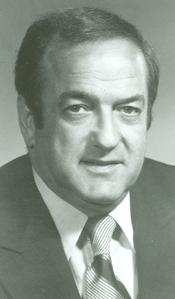
Historical · U.S. House · New Jersey · District 11
Joseph Minish
Former U.S. Representative · New Jersey District 11 · 1963–1985 · Democratic
Joseph Minish represented New Jersey's District 11 in the United States House of Representatives (1963–1985) for the Democratic party. The page below collects sourced biographical facts, term history, committee roles, and provenance for Minish.
Bioguide ID: M000796
Key facts
- Full name
- Joseph Minish
- State
- New Jersey
- District
- District 11
- Party
- Democratic
- House service
- 1963–1985
- First House term
- 1963
- Status
- Left office
- Current term ends
- —
- Born
- 1916
- Bioguide ID
- M000796
- Committee assignments
- —
- Dataset version
- 1.20260605
Biographical narrative
992 words · sourced from the Wikipedia REST extract
Joseph G. Minish was an American politician affiliated with the Democratic Party, who served as a U.S. Representative for New Jersey's 11th congressional district. His tenure in the House of Representatives spanned over two decades, beginning in 1963 and concluding in 1985. Minish was notable for his strong ties to organized labor and his role in various legislative committees, although he was characterized as a somewhat conservative Democrat by the standards of his state.
Early life and career
Joseph George Minish was born on September 1, 1916, in Throop, Pennsylvania. He was the son of George Joseph Minish, a coal miner, and Angeline Nardozzi Minish, both of whom had Italian heritage. His grandfather, Vincenzo "James" Minisci, immigrated to the United States from Italy in 1886, and his mother arrived in the country as an infant. Minish grew up in a family that included two brothers and three sisters, reflecting a close-knit household.
Minish completed his education at Dunmore High School, graduating in 1935. Following his high school years, he served in the United States Army from 1945 to 1946, a period that coincided with the aftermath of World War II. After his military service, Minish began a career in organized labor, which would shape his future political endeavors. He held significant positions in labor organizations, including serving as the executive secretary of the Essex-West Hudson Council, Congress of Industrial Organizations, from 1954 to 1960, and later as the executive director of the Essex-West Industrial Union Council, AFL-CIO, from 1960 to 1962. These roles provided him with a strong foundation in labor issues and community organization, which he would carry into his political career.
House tenure
Minish entered the political arena in 1962 when he was selected by Essex County Democratic leaders to run for the House seat vacated by seven-term incumbent Hugh Joseph Addonizio, who was pursuing the mayoralty of Newark. At the age of 46, Minish faced a politically competitive landscape, particularly during a mid-term election year for President John F. Kennedy. His congressional district encompassed a diverse demographic, including both low-income areas in Newark and affluent suburbs like South Orange and West Orange.
In the Democratic primary, Minish ran unopposed, which allowed him to focus on the general election against Republican candidate Frank A. Palmieri. Minish's campaign was bolstered by support from labor leaders and a platform that included advocating for federal aid for education, extending the Social Security Act to provide medical care for the elderly, and establishing a cabinet-level Department of Urban Affairs. He won the election decisively, securing a significant majority of the vote.
Throughout his 22 years in the House, Minish was re-elected multiple times, often with substantial margins. His electoral victories included defeating notable opponents such as William L. Stubbs, the first African American to receive a major party nomination for Congress in New Jersey, and other candidates from various professional backgrounds. His tenure was marked by a consistent ability to appeal to his constituents, which was reflected in his electoral success.
Minish's congressional career was characterized by his service on the House Banking, Finance and Urban Affairs Committee, where he held the position of Chairman of the Subcommittee on General Oversight. His work on this committee allowed him to engage with significant financial and urban development issues, although he was often described as having a low-key approach with limited legislative impact. Despite being a staunch supporter of organized labor and a loyal member of the Democratic Party, he held some conservative views that were not always aligned with the broader Democratic platform, particularly on issues such as civil liberties, the Vietnam War, and campaign finance reform.
In the early 1980s, a court-ordered redistricting of New Jersey's congressional districts significantly altered the demographics of Minish's constituency, placing him in a district that leaned heavily Republican. This change presented new challenges for his re-election campaign. In 1984, he chose to run in the newly configured 11th district, which included more Republican areas, particularly in Morris County. Ultimately, Minish lost the election to Republican Dean Gallo, attributing his defeat to the unfavorable redistricting and the influence of special interest groups that had opposed him throughout his career.
Legislative focus and committees
During his time in Congress, Minish was primarily known for his focus on issues related to finance and urban affairs, reflecting his background in labor and community organization. He served on the House Banking, Finance and Urban Affairs Committee, where he was involved in discussions and decisions that impacted economic policies and urban development initiatives. His role as Chairman of the Subcommittee on General Oversight allowed him to oversee various aspects of financial regulation and urban policy, although his effectiveness in enacting significant legislation has been described as limited.
Minish's political stance was often characterized as conservative for a Democrat in New Jersey. He received mixed ratings from civil liberties organizations and was known to support the Vietnam War, which was a contentious issue during his time in office. His opposition to campaign finance reform and legalized abortion further underscored his more conservative positions within the Democratic Party.
Despite his relatively low profile in terms of major legislative achievements, Minish was recognized for his strong constituent service and loyalty to the Democratic Party. He maintained a close connection with organized labor throughout his career, which influenced his political priorities and the support he garnered from labor unions. His advocacy for financial institutions and criticism of certain industries, such as defense contractors and natural gas producers, highlighted his engagement with economic issues that were pertinent to his constituents.
In summary, Joseph G. Minish's career as a U.S. Representative was marked by a long tenure characterized by strong ties to organized labor, a focus on financial and urban issues, and a conservative approach to certain social policies. His electoral success and service on key committees reflected his commitment to his constituents, even as he navigated the complexities of a changing political landscape in New Jersey.
Notable legislation
Sponsored and co-sponsored legislation for Joseph Minish is pending operator curation. The biographical narrative above carries the same provenance trail until per-bill rows are written.
Sources
- [1]https://en.wikipedia.org/wiki/Joseph_MinishWikipedia · retrieved 2026-06-05
Notable quotes
Sourced quotes for Joseph Minish are pending operator curation. Narrative-scope provenance remains attached below.
Sources
- [1]https://en.wikipedia.org/wiki/Joseph_MinishWikipedia · retrieved 2026-06-05
Key positions
Curated policy positions for Joseph Minish are pending operator review. The biographical narrative above carries the same provenance trail until per-topic positions are written.
Sources
- [1]https://en.wikipedia.org/wiki/Joseph_MinishWikipedia · retrieved 2026-06-05
Terms served
- 1963–1965U.S. House · Term 1 · Democratic
- 1965–1967U.S. House · Term 2 · Democratic
- 1967–1969U.S. House · Term 3 · Democratic
- 1969–1971U.S. House · Term 4 · Democratic
- 1971–1973U.S. House · Term 5 · Democratic
- 1973–1975U.S. House · Term 6 · Democratic
- 1975–1977U.S. House · Term 7 · Democratic
- 1977–1979U.S. House · Term 8 · Democratic
- 1979–1981U.S. House · Term 9 · Democratic
- 1981–1983U.S. House · Term 10 · Democratic
- 1983–1985U.S. House · Term 11 · Democratic
Sources & provenance
Every attributable claim above carries a per-section [N] marker that resolves to the corresponding URL below. Each entry records the upstream provider, the canonical URL, and the timestamp at which the source was retrieved by the ingest pipeline.
Key facts
- https://bioguide.congress.gov/search/bio/M000796bioguide · retrieved 2026-06-05
- https://www.govtrack.us/congress/members/407773govtrack · retrieved 2026-06-05
Biographical narrative
- https://en.wikipedia.org/wiki/Joseph_Minishwikipedia · retrieved 2026-06-05
Find your representative
Every U.S. state elects representatives by district. Browse New Jersey’s delegation, the full former-representative roster, or explore the role and term length.
Related on The Candidate
- Preceded by Hugh AddonizioEarlier holder of the New Jersey District 11 House seat · Democratic.Open
- Succeeded by Dean GalloLater holder of the New Jersey District 11 House seat · Republican.Open
- Andrew HayFormer U.S. Representative · New Jersey District 1 · WhigOpen
- Charles WolvertonFormer U.S. Representative · New Jersey District 1 · RepublicanOpen
- Christopher BergenFormer U.S. Representative · New Jersey District 1 · RepublicanOpen
- Clement SinnicksonFormer U.S. Representative · New Jersey District 1 · RepublicanOpen