
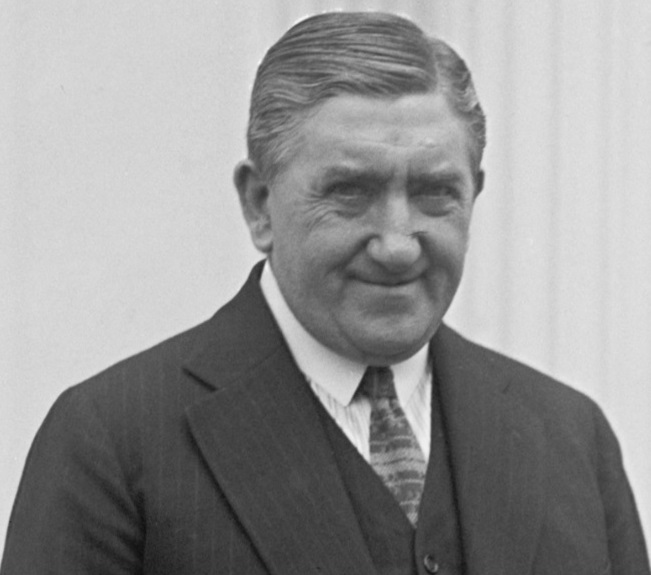
Historical · U.S. House · New Jersey · District 12
Charles O’Brien
Former U.S. Representative · New Jersey District 12 · 1921–1925 · Democratic
Charles O’Brien represented New Jersey's District 12 in the United States House of Representatives (1921–1925) for the Democratic party. The page below collects sourced biographical facts, term history, committee roles, and provenance for O’Brien.
Bioguide ID: O000008
Key facts
- Full name
- Charles O’Brien
- State
- New Jersey
- District
- District 12
- Party
- Democratic
- House service
- 1921–1925
- First House term
- 1921
- Status
- Left office
- Current term ends
- —
- Born
- 1879
- Bioguide ID
- O000008
- Committee assignments
- —
- Dataset version
- 1.20260606
Biographical narrative
958 words · sourced from the Wikipedia REST extract
Charles O’Brien was an American politician affiliated with the Democratic Party, who served as a U.S. Representative for New Jersey's 12th Congressional District from 1921 to 1925. His political career was marked by his involvement in local governance and his contributions to the legislative process during the early 20th century. O’Brien's background in law and public service laid the foundation for his legislative work, and he continued to influence his community even after his congressional tenure.
Early life and career
Charles Francis Xavier O’Brien was born on March 7, 1879, in Jersey City, New Jersey. His early education took place in the local public schools, where he began to develop the foundational skills that would later support his career in law and politics. O’Brien attended the Academy of St. Aloysius Grammar School, which provided him with a religious and moral education, and later pursued higher education at Saint Peter's College. He graduated from Fordham University, an institution known for its rigorous academic programs and Jesuit values, which likely influenced his commitment to public service.
After completing his undergraduate education, O’Brien studied law at the New York Law School. His legal education equipped him with the knowledge and skills necessary to navigate the complexities of the legal system. Upon being admitted to the bar, he began practicing law in Jersey City, where he established himself as a competent attorney. His legal career was complemented by his appointment as a judge of the second criminal court, a role that underscored his commitment to justice and the rule of law.
In addition to his judicial responsibilities, O’Brien served as the director of public safety for Jersey City from 1917 to 1921. This position involved overseeing various aspects of public safety, including law enforcement and emergency services, which further solidified his reputation as a dedicated public servant. His work in this role likely provided him with valuable insights into the challenges faced by urban communities, shaping his perspectives on governance and policy.
O’Brien's political aspirations were evident when he became a delegate to the 1920 Democratic National Convention. This experience allowed him to engage with national political leaders and participate in the broader dialogue about the direction of the Democratic Party. His involvement in the convention marked a significant step in his political career, setting the stage for his subsequent election to the U.S. House of Representatives.
House tenure
O’Brien was elected to the U.S. House of Representatives as a Democrat, representing New Jersey's 12th Congressional District. His congressional career began with the Sixty-seventh Congress, where he served from March 4, 1921, until March 3, 1925. During his time in office, O’Brien participated in the legislative process at a time when the nation was grappling with various social and economic issues, including the aftermath of World War I and the onset of the Roaring Twenties.
Throughout his two terms in Congress, O’Brien was involved in discussions and debates that reflected the priorities and concerns of his constituents. His legal background likely informed his approach to legislation, as he sought to address the needs of his district while navigating the complexities of federal governance. O’Brien's tenure coincided with a period of significant change in American society, and his contributions to the legislative process were part of the broader efforts to shape policies that would impact the lives of many.
After completing his second term in the House, O’Brien chose to voluntarily retire from Congress. His decision to step down was influenced by his desire to pursue other opportunities in public service. Following his congressional career, he accepted the position of registrar of records for Hudson County, New Jersey, a role he held from 1926 to 1936. This position allowed him to continue serving his community and contributing to local governance, further demonstrating his commitment to public service.
Legislative focus and committees
During his time in the House of Representatives, O’Brien's legislative focus encompassed a range of issues pertinent to his constituents and the nation. While specific details regarding the bills he sponsored or supported are not provided, it can be inferred that his background in law and public safety influenced his legislative priorities. O’Brien likely advocated for policies that promoted justice, community safety, and the welfare of his constituents.
As a member of Congress, O’Brien would have participated in various committees that aligned with his interests and expertise. These committees play a crucial role in shaping legislation, conducting hearings, and overseeing the implementation of federal laws. O’Brien's involvement in such committees would have allowed him to engage with fellow lawmakers, experts, and constituents, fostering collaboration and dialogue on pressing issues.
O’Brien's legislative work occurred during a transformative period in American history, characterized by rapid industrialization, urbanization, and social change. The challenges faced by the nation during this time, including economic disparities and social justice issues, likely influenced his approach to governance. His commitment to public service and his legal background positioned him to address these challenges effectively.
After concluding his congressional service in 1925, O’Brien continued to be active in public life. He returned to his legal career, working within the city law department of Jersey City until his death on November 14, 1940. His contributions to the legal and political landscape of New Jersey left a lasting impact on his community, and he was interred in Holy Name Cemetery, marking the end of a life dedicated to public service.
In summary, Charles O’Brien's career as a U.S. Representative and his subsequent roles in local government reflect his commitment to serving his community and addressing the needs of his constituents. His background in law and public safety provided a strong foundation for his legislative work, and his involvement in various aspects of governance illustrates the multifaceted nature of public service.
Notable legislation
Sponsored and co-sponsored legislation for Charles O’Brien is pending operator curation. The biographical narrative above carries the same provenance trail until per-bill rows are written.
Sources
- [1]https://en.wikipedia.org/wiki/Charles_F._X._O'BrienWikipedia · retrieved 2026-06-06
Notable quotes
Sourced quotes for Charles O’Brien are pending operator curation. Narrative-scope provenance remains attached below.
Sources
- [1]https://en.wikipedia.org/wiki/Charles_F._X._O'BrienWikipedia · retrieved 2026-06-06
Key positions
Curated policy positions for Charles O’Brien are pending operator review. The biographical narrative above carries the same provenance trail until per-topic positions are written.
Sources
- [1]https://en.wikipedia.org/wiki/Charles_F._X._O'BrienWikipedia · retrieved 2026-06-06
Terms served
- 1921–1923U.S. House · Term 1 · Democratic
- 1923–1925U.S. House · Term 2 · Democratic
Sources & provenance
Every attributable claim above carries a per-section [N] marker that resolves to the corresponding URL below. Each entry records the upstream provider, the canonical URL, and the timestamp at which the source was retrieved by the ingest pipeline.
Key facts
- https://bioguide.congress.gov/search/bio/O000008bioguide · retrieved 2026-06-06
- https://www.govtrack.us/congress/members/408259govtrack · retrieved 2026-06-06
Biographical narrative
- https://en.wikipedia.org/wiki/Charles_F._X._O'Brienwikipedia · retrieved 2026-06-06
Find your representative
Every U.S. state elects representatives by district. Browse New Jersey’s delegation, the full former-representative roster, or explore the role and term length.
Related on The Candidate
- Preceded by James HamillEarlier holder of the New Jersey District 12 House seat · Democratic.Open
- Succeeded by Frank Towey Jr.Later holder of the New Jersey District 12 House seat · Democratic.Open
- Andrew HayFormer U.S. Representative · New Jersey District 1 · WhigOpen
- Charles WolvertonFormer U.S. Representative · New Jersey District 1 · RepublicanOpen
- Christopher BergenFormer U.S. Representative · New Jersey District 1 · RepublicanOpen
- Clement SinnicksonFormer U.S. Representative · New Jersey District 1 · RepublicanOpen