
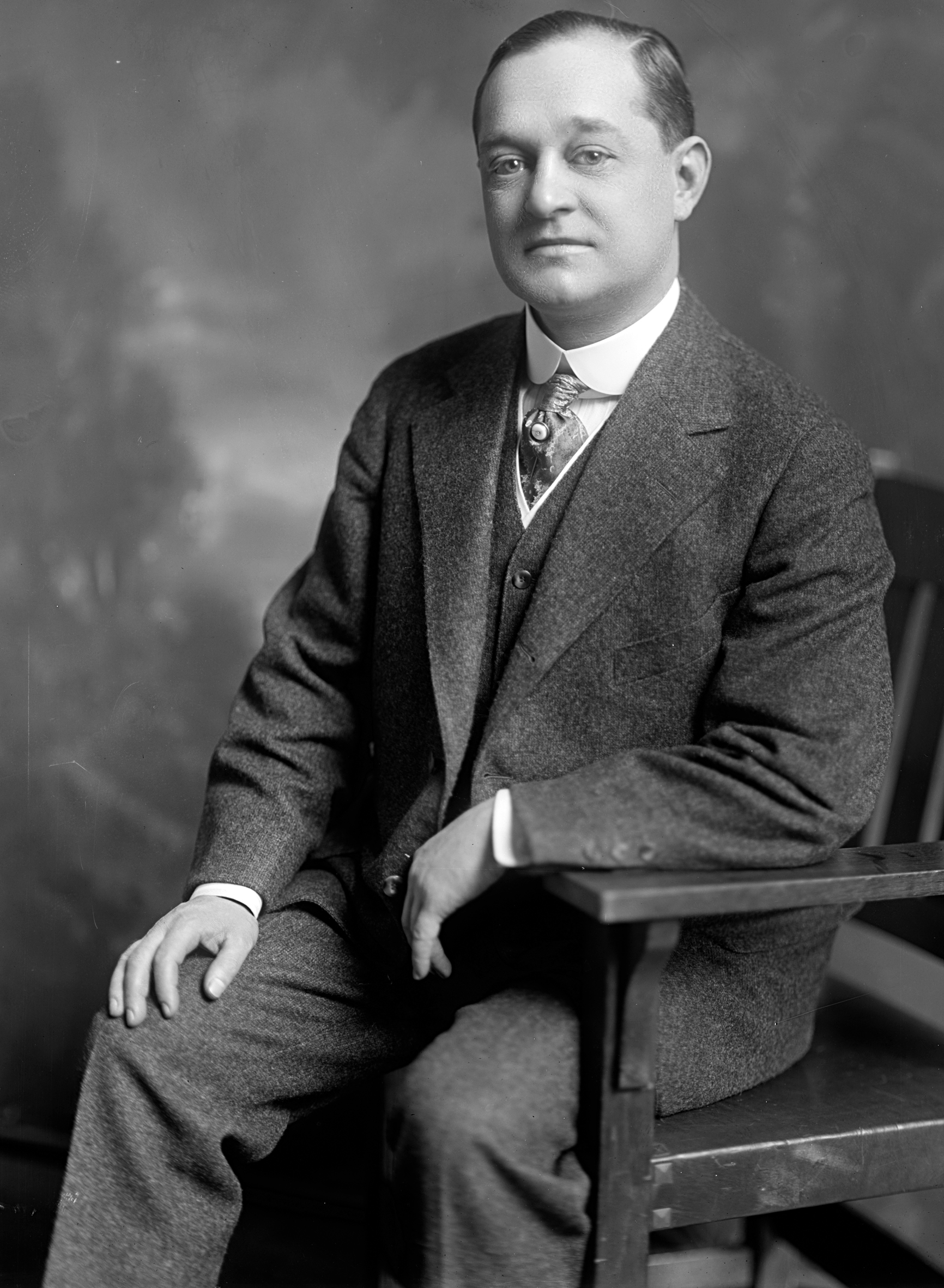
Historical · U.S. House · New Jersey · District 12
Frederick Lehlbach
Former U.S. Representative · New Jersey District 12 · 1915–1937 · Republican
Frederick Lehlbach represented New Jersey's District 12 in the United States House of Representatives (1915–1937) for the Republican party. The page below collects sourced biographical facts, term history, committee roles, and provenance for Lehlbach.
Bioguide ID: L000222
Key facts
- Full name
- Frederick Lehlbach
- State
- New Jersey
- District
- District 12
- Party
- Republican
- House service
- 1915–1937
- First House term
- 1915
- Status
- Left office
- Current term ends
- —
- Born
- 1876
- Bioguide ID
- L000222
- Committee assignments
- —
- Dataset version
- 1.20260605
Biographical narrative
954 words · sourced from the Wikipedia REST extract
Frederick Lehlbach was an American lawyer and politician who served as a U.S. Representative for New Jersey. A member of the Republican Party, he represented New Jersey's 10th congressional district from 1915 to 1933 and subsequently served New Jersey's 12th congressional district until the end of his congressional career in 1937. Over his lengthy political career, Lehlbach was involved in various legislative activities and held significant positions within congressional committees, particularly focusing on civil service reform.
Early life and career
Frederick Reimold Lehlbach was born on January 31, 1876, in New York City. He spent his early childhood in New York before moving to Newark, New Jersey, at the age of eight, where he continued his education and formative experiences. Lehlbach pursued higher education at Yale University, graduating in 1897. Following his graduation, he attended New York Law School, where he honed his legal skills and knowledge.
Lehlbach was admitted to the bar in February 1899, marking the beginning of his legal career. He initially practiced law in Newark, gaining valuable experience in the legal field while working in the office of the law firm Pitney & Hardin. His legal career was complemented by his involvement in public service. From 1900 to 1903, he served on Newark's Board of Education, where he contributed to the governance of local educational institutions.
In 1905, Lehlbach transitioned to the New Jersey State House of Assembly, where he served until 1905. His political career continued to evolve when he took on the role of clerk for the state board of equalization of taxes from April 3, 1905, until his resignation on April 14, 1908. Following this position, he was appointed as the assistant prosecutor of Essex County, a role he held until April 6, 1913. After resigning from this position, he returned to the practice of law, further solidifying his legal expertise and community standing.
House tenure
Lehlbach's political career took a significant turn when he decided to run for the U.S. House of Representatives in the 1914 elections. As a Republican candidate, he successfully defeated the incumbent Democrat Edward W. Townsend, securing 47.5% of the vote compared to Townsend's 42.4%. This victory marked the beginning of Lehlbach's long tenure in Congress, where he would serve for over two decades.
During his time in the House, Lehlbach was re-elected multiple times, demonstrating his ability to maintain support among his constituents. He faced various electoral challenges, including a particularly close race in 1918 against Democrat Dallas Flannagan, which he won by a narrow margin of 2.2%. His electoral success allowed him to serve in the 66th through the 71st United States Congress, during which he held significant positions on various committees.
Lehlbach's role in Congress included serving as the chairman of the Committee on Reform in the Civil Service during the 66th to 68th Congresses. This position allowed him to influence legislation related to civil service reform, a topic of considerable importance during his tenure. In 1924, he was also a delegate at the Republican National Convention, further solidifying his involvement in national politics.
In the later years of his congressional career, Lehlbach continued to focus on civil service issues, serving as the chairman of the Committee on Civil Service during the 69th to 71st Congresses. His leadership in these committees reflected his commitment to improving the efficiency and integrity of the federal workforce.
After serving 18 years as the representative for New Jersey's 10th congressional district, Lehlbach was moved to the 12th congressional district due to redistricting. He continued to serve in this capacity until the end of his congressional career. In the 1936 House election, he faced a challenging re-election campaign against Democrat Frank W. Towey, Jr. The election was closely contested, with Lehlbach capturing 49.6% of the vote, falling short against Towey's 49.9%. This loss marked the end of his tenure in the House of Representatives.
Legislative focus and committees
Throughout his congressional career, Frederick Lehlbach was known for his focus on civil service reform and governance issues. His leadership roles in various committees allowed him to shape policies that aimed to enhance the effectiveness and accountability of government operations. As chairman of the Committee on Reform in the Civil Service, he played a pivotal role in advocating for changes that would improve the functioning of the civil service system.
Lehlbach's involvement in civil service reform was particularly relevant during a time when the federal government was expanding its reach and responsibilities. His efforts in this area reflected a broader national conversation about the need for a professional and impartial civil service, free from political influence. This focus on reform was consistent with the Republican Party's platform during the early 20th century, which emphasized efficiency and good governance.
In addition to his work on civil service issues, Lehlbach's participation in the Republican National Convention in 1924 highlighted his engagement with party politics and national issues. His role as a delegate allowed him to contribute to the shaping of the party's platform and direction during a critical period in American history.
After leaving Congress, Lehlbach returned to his legal practice in Washington, D.C., where he continued to apply his legal expertise until his death. He passed away from a heart attack on August 4, 1937, at the age of 61. His contributions to public service and law were recognized by his community, and he was laid to rest in Fairmount Cemetery in Newark, New Jersey.
Frederick Lehlbach's career as a U.S. Representative and his commitment to civil service reform left a lasting impact on the political landscape of New Jersey and the nation. His dedication to public service and legal practice exemplified the roles that politicians can play in shaping governance and community well-being.
Notable legislation
Sponsored and co-sponsored legislation for Frederick Lehlbach is pending operator curation. The biographical narrative above carries the same provenance trail until per-bill rows are written.
Sources
- [1]https://en.wikipedia.org/wiki/Frederick_R._LehlbachWikipedia · retrieved 2026-06-05
Notable quotes
Sourced quotes for Frederick Lehlbach are pending operator curation. Narrative-scope provenance remains attached below.
Sources
- [1]https://en.wikipedia.org/wiki/Frederick_R._LehlbachWikipedia · retrieved 2026-06-05
Key positions
Curated policy positions for Frederick Lehlbach are pending operator review. The biographical narrative above carries the same provenance trail until per-topic positions are written.
Sources
- [1]https://en.wikipedia.org/wiki/Frederick_R._LehlbachWikipedia · retrieved 2026-06-05
Terms served
- 1915–1917U.S. House · Term 1 · Republican
- 1917–1919U.S. House · Term 2 · Republican
- 1919–1921U.S. House · Term 3 · Republican
- 1921–1923U.S. House · Term 4 · Republican
- 1923–1925U.S. House · Term 5 · Republican
- 1925–1927U.S. House · Term 6 · Republican
- 1927–1929U.S. House · Term 7 · Republican
- 1929–1931U.S. House · Term 8 · Republican
- 1931–1933U.S. House · Term 9 · Republican
- 1933–1935U.S. House · Term 10 · Republican
- 1935–1937U.S. House · Term 11 · Republican
Sources & provenance
Every attributable claim above carries a per-section [N] marker that resolves to the corresponding URL below. Each entry records the upstream provider, the canonical URL, and the timestamp at which the source was retrieved by the ingest pipeline.
Key facts
- https://bioguide.congress.gov/search/bio/L000222bioguide · retrieved 2026-06-05
- https://www.govtrack.us/congress/members/406726govtrack · retrieved 2026-06-05
Biographical narrative
- https://en.wikipedia.org/wiki/Frederick_R._Lehlbachwikipedia · retrieved 2026-06-05
Find your representative
Every U.S. state elects representatives by district. Browse New Jersey’s delegation, the full former-representative roster, or explore the role and term length.
Related on The Candidate
- Succeeded by Frank Towey Jr.Later holder of the New Jersey District 12 House seat · Democratic.Open
- Andrew HayFormer U.S. Representative · New Jersey District 1 · WhigOpen
- Charles WolvertonFormer U.S. Representative · New Jersey District 1 · RepublicanOpen
- Christopher BergenFormer U.S. Representative · New Jersey District 1 · RepublicanOpen
- Clement SinnicksonFormer U.S. Representative · New Jersey District 1 · RepublicanOpen
- Republican PartyFederal candidates and office holders on the Republican line.Open