
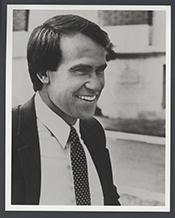
Historical · U.S. House · New Jersey · District 12
James Courter
Former U.S. Representative · New Jersey District 12 · 1979–1991 · Republican
James Courter represented New Jersey's District 12 in the United States House of Representatives (1979–1991) for the Republican party. The page below collects sourced biographical facts, term history, committee roles, and provenance for Courter.
Bioguide ID: C000809
Key facts
- Full name
- James Courter
- State
- New Jersey
- District
- District 12
- Party
- Republican
- House service
- 1979–1991
- First House term
- 1979
- Status
- Left office
- Current term ends
- —
- Born
- 1941
- Bioguide ID
- C000809
- Committee assignments
- —
- Dataset version
- 1.20260605
Biographical narrative
907 words · sourced from the Wikipedia REST extract
James Andrew Courter is a former American politician and attorney who served as a Republican member of the United States House of Representatives, representing parts of northwestern New Jersey from 1979 until 1991. Throughout his six terms in Congress, Courter became known for his conservative stance and was a prominent figure in New Jersey politics during his tenure. He also made an unsuccessful bid for the governorship of New Jersey in 1989. After leaving Congress, he continued to engage in public service as the chairman of the Base Closure and Realignment Commission.
Early life and career
Jim Courter was born on October 14, 1941, in Montclair, New Jersey. He completed his early education at Montclair Academy, graduating in 1959. Following high school, Courter pursued higher education at Colgate University, where he earned a Bachelor of Arts degree in 1963. His academic journey continued at Duke University School of Law, where he obtained his Juris Doctor degree in 1966.
After completing his legal education, Courter volunteered with the Peace Corps, serving in Venezuela, which provided him with international experience and insight into different cultures. Upon returning to the United States, he was admitted to the bar in Washington, D.C., in 1966 and later in New Jersey in 1971, marking the beginning of his legal career.
Courter's professional journey included various roles in the legal field. He served as an assistant corporation counsel for Washington, D.C., from 1969 to 1970, where he gained valuable experience in municipal law. Following this position, he worked for Union County Legal Services from 1970 to 1971, providing legal assistance to those in need. In 1972, he established a law firm in Hackettstown, New Jersey, which allowed him to serve the local community more directly.
In addition to his private practice, Courter held significant positions in public service. He was appointed as the first assistant prosecutor in Warren County, where he worked from 1973 to 1977. His commitment to legal aid led him to co-found Warren County Legal Services in 1975, further demonstrating his dedication to providing access to legal resources for underserved populations. He also served as an attorney for various municipalities in Warren and Sussex counties, solidifying his reputation as a knowledgeable and engaged legal professional in the region.
House tenure
Courter's political career began in earnest when he was elected to the U.S. House of Representatives in 1978, representing New Jersey's 13th congressional district. He took office in January 1979 and served in this capacity until January 1991. During his time in Congress, Courter was known for his conservative views and was often described as the most conservative member of New Jersey's congressional delegation. His political ideology aligned closely with the Republican Party's platform, which influenced his legislative priorities and voting record.
Throughout his six terms in the House, Courter participated in various legislative initiatives and contributed to discussions on a wide range of issues affecting his constituents and the nation. He was involved in shaping policies that aligned with his conservative principles, advocating for fiscal responsibility, limited government, and strong national defense. His tenure in Congress coincided with significant political and social changes in the United States, including the Reagan era, which emphasized conservative economic policies and a robust foreign policy.
In 1989, Courter sought to expand his political influence by running for governor of New Jersey. However, he faced a challenging electoral environment and ultimately lost the election to Democrat Jim Florio. Following this defeat, Courter chose not to seek re-election to Congress in 1990, concluding his 12-year tenure in the House.
Legislative focus and committees
During his time in the House of Representatives, Jim Courter was involved in various legislative committees that aligned with his interests and expertise. His focus on conservative principles guided his participation in discussions surrounding economic policy, national defense, and local governance. Courter's legal background contributed to his understanding of complex legislative issues, allowing him to engage effectively in committee work.
Courter's reputation as a conservative legislator was reflected in his voting patterns and public statements. He often championed measures that promoted fiscal conservatism and sought to limit government intervention in the economy. His commitment to national defense was also a significant aspect of his legislative agenda, as he supported policies aimed at strengthening the military and ensuring the security of the nation.
In addition to his legislative responsibilities, Courter's role as a member of Congress involved advocating for the interests of his constituents in northwestern New Jersey. He worked to address local concerns, including economic development, infrastructure improvements, and community services. His legal experience and understanding of municipal issues allowed him to navigate the complexities of federal policies that impacted local communities.
After leaving Congress, Courter continued to serve the public in a different capacity. From 1991 to 1993, he was appointed as the chairman of the Base Closure and Realignment Commission, a position that involved making recommendations regarding military base closures and realignments across the country. This role underscored his ongoing commitment to public service and his expertise in matters related to national defense and military infrastructure.
In summary, Jim Courter's career in the U.S. House of Representatives was marked by a strong conservative ideology and a dedication to serving the interests of his constituents. His legal background and experience in public service shaped his approach to governance, while his involvement in various committees and legislative initiatives reflected his commitment to the principles he championed throughout his political career.
Notable legislation
Sponsored and co-sponsored legislation for James Courter is pending operator curation. The biographical narrative above carries the same provenance trail until per-bill rows are written.
Sources
- [1]https://en.wikipedia.org/wiki/Jim_CourterWikipedia · retrieved 2026-06-05
Notable quotes
Sourced quotes for James Courter are pending operator curation. Narrative-scope provenance remains attached below.
Sources
- [1]https://en.wikipedia.org/wiki/Jim_CourterWikipedia · retrieved 2026-06-05
Key positions
Curated policy positions for James Courter are pending operator review. The biographical narrative above carries the same provenance trail until per-topic positions are written.
Sources
- [1]https://en.wikipedia.org/wiki/Jim_CourterWikipedia · retrieved 2026-06-05
Terms served
- 1979–1981U.S. House · Term 1 · Republican
- 1981–1983U.S. House · Term 2 · Republican
- 1983–1985U.S. House · Term 3 · Republican
- 1985–1987U.S. House · Term 4 · Republican
- 1987–1989U.S. House · Term 5 · Republican
- 1989–1991U.S. House · Term 6 · Republican
Sources & provenance
Every attributable claim above carries a per-section [N] marker that resolves to the corresponding URL below. Each entry records the upstream provider, the canonical URL, and the timestamp at which the source was retrieved by the ingest pipeline.
Key facts
- https://bioguide.congress.gov/search/bio/C000809bioguide · retrieved 2026-06-05
- https://www.govtrack.us/congress/members/402928govtrack · retrieved 2026-06-05
Biographical narrative
- https://en.wikipedia.org/wiki/Jim_Courterwikipedia · retrieved 2026-06-05
Find your representative
Every U.S. state elects representatives by district. Browse New Jersey’s delegation, the full former-representative roster, or explore the role and term length.
Related on The Candidate
- Preceded by Florence DwyerEarlier holder of the New Jersey District 12 House seat · Republican.Open
- Succeeded by Richard ZimmerLater holder of the New Jersey District 12 House seat · Republican.Open
- Andrew HayFormer U.S. Representative · New Jersey District 1 · WhigOpen
- Charles WolvertonFormer U.S. Representative · New Jersey District 1 · RepublicanOpen
- Christopher BergenFormer U.S. Representative · New Jersey District 1 · RepublicanOpen
- Clement SinnicksonFormer U.S. Representative · New Jersey District 1 · RepublicanOpen