
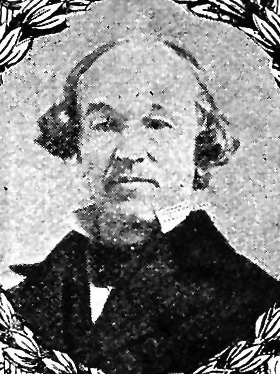
Historical · U.S. House · New Jersey · District 2
Charles Skelton
Former U.S. Representative · New Jersey District 2 · 1851–1855 · Democratic
Charles Skelton represented New Jersey's District 2 in the United States House of Representatives (1851–1855) for the Democratic party. The page below collects sourced biographical facts, term history, committee roles, and provenance for Skelton.
Bioguide ID: S000464
Key facts
- Full name
- Charles Skelton
- State
- New Jersey
- District
- District 2
- Party
- Democratic
- House service
- 1851–1855
- First House term
- 1851
- Status
- Left office
- Current term ends
- —
- Born
- 1806
- Bioguide ID
- S000464
- Committee assignments
- —
- Dataset version
- 1.20260606
Biographical narrative
895 words · sourced from the Wikipedia REST extract
Charles Skelton was an American politician affiliated with the Democratic Party, who served as a U.S. Representative for New Jersey's 2nd congressional district from 1851 to 1855. His political career was marked by his involvement in local governance and education, as well as his contributions to the legislative process during a period of significant national change. Born in 1806, Skelton's early life and career laid the foundation for his later political endeavors, reflecting a blend of mercantile pursuits and public service.
Early life and career
Charles Skelton was born on April 19, 1806, in Buckingham Township, located in Bucks County, Pennsylvania. His formative years were spent in a region rich in history and culture, which likely influenced his later pursuits in both education and politics. Around 1829, Skelton relocated to Trenton, New Jersey, where he began to immerse himself in the local community. He attended country schools and the Trenton Academy, which provided him with a foundational education that would serve him well in his future endeavors.
In the early stages of his career, Skelton engaged in mercantile activities, which involved the buying and selling of goods. This experience in commerce not only contributed to his understanding of economic matters but also helped him build connections within the community. In 1835, he moved to Philadelphia, where he pursued higher education in medicine. He graduated from Jefferson Medical College in 1838, marking a significant transition in his career as he began practicing medicine in the city. This medical training would have equipped him with valuable insights into public health and welfare, issues that would later be relevant in his political career.
After practicing medicine in Philadelphia for a few years, Skelton returned to Trenton in 1841. His commitment to education and public service became evident when he took on the role of superintendent of the Trenton Public Schools in 1848. This position highlighted his dedication to improving educational standards and access in his community, reflecting a broader trend during this period when education was increasingly recognized as a vital component of civic life.
House tenure
Skelton's political career took a significant turn when he was elected as a Democrat to the United States House of Representatives. His congressional tenure spanned two terms, from March 4, 1851, to March 3, 1855. During this time, he represented New Jersey's 2nd congressional district, a role that placed him at the heart of national legislative discussions during a tumultuous period in American history. The early 1850s were marked by debates over issues such as slavery, states' rights, and the expansion of the United States, which would ultimately lead to the Civil War.
As a member of the House, Skelton participated in the legislative process, contributing to discussions and decisions that would shape the future of the nation. His alignment with the Democratic Party positioned him within a political landscape that was often contentious, as the party grappled with internal divisions and external pressures related to the growing sectional tensions in the country. While specific details of his legislative actions and votes are not recorded in the available references, his service during this period would have involved navigating complex political dynamics and advocating for the interests of his constituents.
After completing his two terms in the House, Skelton's political career did not end. He continued to engage with local governance, serving as a member of the common council from 1873 to 1875. This role allowed him to remain active in public service and contribute to the governance of Trenton, reflecting his ongoing commitment to his community even after his congressional tenure.
Legislative focus and committees
While specific legislative initiatives or committee assignments during Skelton's time in Congress are not detailed in the available references, it is important to contextualize his role within the broader legislative framework of the time. The early 1850s were characterized by significant national debates, particularly surrounding the issues of slavery and territorial expansion. Skelton's background in medicine and education may have influenced his perspectives on public health, welfare, and education-related policies, which were increasingly becoming focal points in legislative discussions.
The Democratic Party, to which Skelton belonged, was often associated with the interests of agrarian and southern constituencies during this period. This alignment may have shaped his legislative priorities, as representatives sought to balance the interests of their districts with the national dialogue on contentious issues. Skelton's experience in local governance and education could have provided him with a unique vantage point on the needs and concerns of his constituents, allowing him to advocate effectively for policies that would benefit his district.
In the context of his later career, Skelton's involvement in the common council after his congressional service suggests a continued focus on local issues and governance. This transition from federal to local politics illustrates a common pathway for many politicians of the time, who often sought to maintain their influence and connection to their communities.
Charles Skelton passed away on May 20, 1879, in Trenton, New Jersey. His final resting place is in City Cemetery, located in Hamilton Square, New Jersey. His life and career reflect the complexities of American politics during a pivotal era, marked by both local engagement and national significance. Skelton's contributions to his community and his service in the U.S. House of Representatives underscore the interconnectedness of local and national governance in shaping the trajectory of American society.
Notable legislation
Sponsored and co-sponsored legislation for Charles Skelton is pending operator curation. The biographical narrative above carries the same provenance trail until per-bill rows are written.
Sources
- [1]https://en.wikipedia.org/wiki/Charles_SkeltonWikipedia · retrieved 2026-06-06
Notable quotes
Sourced quotes for Charles Skelton are pending operator curation. Narrative-scope provenance remains attached below.
Sources
- [1]https://en.wikipedia.org/wiki/Charles_SkeltonWikipedia · retrieved 2026-06-06
Key positions
Curated policy positions for Charles Skelton are pending operator review. The biographical narrative above carries the same provenance trail until per-topic positions are written.
Sources
- [1]https://en.wikipedia.org/wiki/Charles_SkeltonWikipedia · retrieved 2026-06-06
Terms served
- 1851–1853U.S. House · Term 1 · Democratic
- 1853–1855U.S. House · Term 2 · Democratic
Sources & provenance
Every attributable claim above carries a per-section [N] marker that resolves to the corresponding URL below. Each entry records the upstream provider, the canonical URL, and the timestamp at which the source was retrieved by the ingest pipeline.
Key facts
- https://bioguide.congress.gov/search/bio/S000464bioguide · retrieved 2026-06-06
- https://www.govtrack.us/congress/members/409955govtrack · retrieved 2026-06-06
Biographical narrative
- https://en.wikipedia.org/wiki/Charles_Skeltonwikipedia · retrieved 2026-06-06
Find your representative
Every U.S. state elects representatives by district. Browse New Jersey’s delegation, the full former-representative roster, or explore the role and term length.
Related on The Candidate
- Preceded by George SykesEarlier holder of the New Jersey District 2 House seat · Democratic.Open
- Succeeded by George RobbinsLater holder of the New Jersey District 2 House seat · Republican.Open
- Andrew HayFormer U.S. Representative · New Jersey District 1 · WhigOpen
- Charles WolvertonFormer U.S. Representative · New Jersey District 1 · RepublicanOpen
- Christopher BergenFormer U.S. Representative · New Jersey District 1 · RepublicanOpen
- Clement SinnicksonFormer U.S. Representative · New Jersey District 1 · RepublicanOpen