
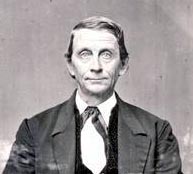
Historical · U.S. House · New Jersey · District 2
George Middleton
Former U.S. Representative · New Jersey District 2 · 1863–1865 · Democratic
George Middleton represented New Jersey's District 2 in the United States House of Representatives (1863–1865) for the Democratic party. The page below collects sourced biographical facts, term history, committee roles, and provenance for Middleton.
Bioguide ID: M000697
Key facts
- Full name
- George Middleton
- State
- New Jersey
- District
- District 2
- Party
- Democratic
- House service
- 1863–1865
- First House term
- 1863
- Status
- Left office
- Current term ends
- —
- Born
- 1800
- Bioguide ID
- M000697
- Committee assignments
- —
- Dataset version
- 1.20260606
Biographical narrative
928 words · sourced from the Wikipedia REST extract
George Middleton was an American politician affiliated with the Democratic Party who served as a U.S. Representative for New Jersey's 2nd congressional district from 1863 to 1865. His political career was marked by a commitment to local governance and community service, reflecting the values of his time. Middleton's tenure in Congress coincided with a period of significant national turmoil, as the United States was embroiled in the Civil War. After his congressional service, he returned to his roots in the tanning industry, where he had initially built his career. He passed away on December 31, 1888, in Allentown, New Jersey.
Early life and career
George Middleton was born on October 14, 1800, in Philadelphia, Pennsylvania. His early life was characterized by a typical upbringing for a young man of his era. He received his education in the public schools of Philadelphia, which provided him with a foundational knowledge that would serve him throughout his life. Following his education, Middleton transitioned into the workforce, where he became a tanner, a trade that was significant during the early 19th century due to the demand for leather goods.
Middleton's career as a tanner led him to relocate to Burlington, New Jersey, where he continued to develop his skills in the tanning industry. His work in Burlington laid the groundwork for his later endeavors in Allentown, New Jersey, where he ultimately settled. In Allentown, Middleton became an active member of the community, taking on various local offices that allowed him to engage in public service and contribute to the governance of his town. His involvement in local politics was a precursor to his later election to the U.S. Congress.
In addition to his local government roles, Middleton served in the New Jersey General Assembly in 1858 and 1859. This experience in state politics provided him with valuable insights into legislative processes and the needs of his constituents. His tenure in the General Assembly further solidified his reputation as a dedicated public servant and helped to establish his political career, setting the stage for his eventual election to the U.S. House of Representatives.
House tenure
George Middleton was elected to the U.S. House of Representatives as a member of the Democratic Party, representing New Jersey's 2nd congressional district. His congressional career began with his election to the Thirty-eighth Congress, where he served from March 4, 1863, to March 3, 1865. This period in American history was marked by the Civil War, a conflict that had profound implications for the nation. As a member of Congress during this tumultuous time, Middleton was part of the legislative body that faced the challenges of war, including issues related to military funding, civil rights, and the governance of states in rebellion.
During his time in Congress, Middleton participated in the legislative process, contributing to discussions and decisions that would shape the future of the United States. However, his congressional career was relatively brief, as he was not successful in his bid for reelection in 1864 to the Thirty-ninth Congress. The reasons for his defeat are not detailed in the available records, but it is not uncommon for incumbents to face challenges during election cycles, particularly in a period of national strife.
After concluding his term in the House, Middleton returned to his previous profession in the tanning industry. His decision to resume his business activities reflects a common trajectory for many politicians of the era, who often returned to their trades or businesses after serving in public office. Middleton's experience in Congress and his background in local governance likely informed his approach to business and community engagement in the years following his legislative service.
Legislative focus and committees
While specific details regarding George Middleton's legislative focus and committee assignments during his time in Congress are not extensively documented, it can be inferred that his background in local governance and the tanning industry influenced his priorities as a legislator. Members of Congress often draw upon their professional experiences and community needs when addressing legislative matters. Given the context of the Civil War, it is likely that Middleton was involved in discussions related to wartime policies, support for military efforts, and the implications of the conflict on his constituents in New Jersey.
The Civil War era was a critical time for the United States, with Congress grappling with issues such as military recruitment, funding for the war effort, and the broader implications of the conflict on civil liberties and state governance. As a representative from a state that was geographically and politically significant during the war, Middleton would have had the opportunity to engage with these pressing issues, advocating for the needs of his district while navigating the complexities of national legislation.
After leaving Congress, Middleton's return to the tanning industry suggests a continued commitment to his community and local economy. His involvement in local business likely allowed him to maintain connections with constituents and remain engaged in the issues affecting their lives. His death on December 31, 1888, in Allentown, New Jersey, marked the end of a life dedicated to public service and local commerce. Middleton was interred in Crosswicks Community Cemetery in Crosswicks, New Jersey, where he rests alongside other members of his community.
In summary, George Middleton's life and career reflect the journey of a local leader who transitioned into national politics during a pivotal moment in American history. His experiences in education, trade, and local governance shaped his approach to public service, and his tenure in Congress, although brief, was part of a larger narrative of a nation grappling with profound change.
Notable legislation
Sponsored and co-sponsored legislation for George Middleton is pending operator curation. The biographical narrative above carries the same provenance trail until per-bill rows are written.
Sources
- [1]https://en.wikipedia.org/wiki/George_Middleton_(American_politician)Wikipedia · retrieved 2026-06-06
Notable quotes
Sourced quotes for George Middleton are pending operator curation. Narrative-scope provenance remains attached below.
Sources
- [1]https://en.wikipedia.org/wiki/George_Middleton_(American_politician)Wikipedia · retrieved 2026-06-06
Key positions
Curated policy positions for George Middleton are pending operator review. The biographical narrative above carries the same provenance trail until per-topic positions are written.
Sources
- [1]https://en.wikipedia.org/wiki/George_Middleton_(American_politician)Wikipedia · retrieved 2026-06-06
Terms served
- 1863–1865U.S. House · Term 1 · Democratic
Sources & provenance
Every attributable claim above carries a per-section [N] marker that resolves to the corresponding URL below. Each entry records the upstream provider, the canonical URL, and the timestamp at which the source was retrieved by the ingest pipeline.
Key facts
- https://bioguide.congress.gov/search/bio/M000697bioguide · retrieved 2026-06-06
- https://www.govtrack.us/congress/members/407681govtrack · retrieved 2026-06-06
Biographical narrative
- https://en.wikipedia.org/wiki/George_Middleton_(American_politician)wikipedia · retrieved 2026-06-06
Find your representative
Every U.S. state elects representatives by district. Browse New Jersey’s delegation, the full former-representative roster, or explore the role and term length.
Related on The Candidate
- Preceded by John StrattonEarlier holder of the New Jersey District 2 House seat · Republican.Open
- Succeeded by Charles HaightLater holder of the New Jersey District 2 House seat · Democratic.Open
- Andrew HayFormer U.S. Representative · New Jersey District 1 · WhigOpen
- Charles WolvertonFormer U.S. Representative · New Jersey District 1 · RepublicanOpen
- Christopher BergenFormer U.S. Representative · New Jersey District 1 · RepublicanOpen
- Clement SinnicksonFormer U.S. Representative · New Jersey District 1 · RepublicanOpen