
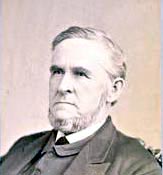
Historical · U.S. House · New Jersey · District 2
Samuel Dobbins
Former U.S. Representative · New Jersey District 2 · 1873–1877 · Republican
Samuel Dobbins represented New Jersey's District 2 in the United States House of Representatives (1873–1877) for the Republican party. The page below collects sourced biographical facts, term history, committee roles, and provenance for Dobbins.
Bioguide ID: D000383
Key facts
- Full name
- Samuel Dobbins
- State
- New Jersey
- District
- District 2
- Party
- Republican
- House service
- 1873–1877
- First House term
- 1873
- Status
- Left office
- Current term ends
- —
- Born
- 1814
- Bioguide ID
- D000383
- Committee assignments
- —
- Dataset version
- 1.20260606
Biographical narrative
949 words · sourced from the Wikipedia REST extract
Samuel Dobbins was a Republican politician who served as a U.S. Representative for New Jersey's 2nd congressional district from 1873 to 1877. His political career was marked by his involvement in local governance and his contributions to the Republican Party during a transformative period in American history. Dobbins's background in agriculture and his service in various public roles reflect his commitment to his community and the political landscape of New Jersey during the 19th century.
Early life and career
Samuel Atkinson Dobbins was born on April 14, 1814, near Vincentown in Southampton Township, New Jersey, which is located in Burlington County. Growing up in a rural environment, Dobbins received his education through a combination of private and public schooling. This foundational education would have equipped him with the skills necessary for his future endeavors in both agriculture and politics. Following his education, Dobbins engaged in agricultural pursuits, which were a significant aspect of life in New Jersey during the early 19th century.
In 1838, Dobbins moved to Mount Holly Township, New Jersey, where he continued to work in farming. This transition marked a significant step in his life, as Mount Holly would become a central location for his later political activities. His involvement in agriculture not only provided him with a livelihood but also connected him to the local community, which would later support his political aspirations.
Dobbins's political career began to take shape when he was elected as the Sheriff of Burlington County, serving from 1854 to 1857. This role was a prominent position within the county, allowing him to gain valuable experience in law enforcement and public administration. Following his tenure as sheriff, Dobbins continued his public service by becoming a member of the New Jersey General Assembly, where he served from 1859 to 1861. His time in the assembly further solidified his reputation as a dedicated public servant and provided him with insights into the legislative process.
In addition to his roles in law enforcement and the state assembly, Dobbins was also active in the Republican Party. He participated as a delegate to the 1864 Republican National Convention, a significant event that took place during the Civil War. His involvement in the convention highlighted his commitment to the party and its principles during a critical time in American history.
Dobbins's dedication to education is evident in his role as a trustee of the Pennington Seminary from 1866 until his death in 1886. His leadership as president of the board of trustees for a decade underscores his commitment to the educational development of the community. This position allowed him to influence the educational landscape in New Jersey, reflecting his belief in the importance of education for future generations.
House tenure
Samuel Dobbins's congressional career began when he was elected to the United States House of Representatives as a Republican. He served two terms in the Forty-third and Forty-fourth Congresses, with his first term commencing on March 4, 1873, and concluding on March 3, 1877. During his time in Congress, Dobbins represented New Jersey's 2nd congressional district, a role that placed him at the center of national legislative discussions and decisions.
As a member of the House, Dobbins participated in various legislative activities and contributed to the shaping of policies that affected both his constituents and the nation. His tenure coincided with a period of significant change in the United States, as the country was recovering from the Civil War and grappling with issues related to reconstruction, economic development, and social change. While specific details regarding the legislation he supported or opposed are not available, his role as a congressman would have involved addressing the pressing issues of the day.
Dobbins chose not to seek renomination in 1876, marking the end of his congressional career. This decision may have been influenced by various factors, including personal considerations or a desire to return to his agricultural roots. After leaving Congress, he resumed his agricultural pursuits in Mount Holly, where he continued to contribute to the local economy and community.
Legislative focus and committees
While specific information about the committees Dobbins served on during his congressional tenure is not provided, it is reasonable to infer that, as a representative from New Jersey, he would have been involved in discussions and decisions related to agriculture, local governance, and the economic development of his district. Given his background in farming and local administration, Dobbins likely brought valuable insights to legislative debates concerning agricultural policies and rural development.
Dobbins's legislative focus may have also included issues pertinent to the Republican Party during the 1870s, such as civil rights, economic recovery, and infrastructure development. The post-Civil War era was a time of significant transformation in American society, and representatives like Dobbins played a crucial role in shaping the policies that would guide the nation during this period.
His commitment to education, demonstrated through his long-term involvement with the Pennington Seminary, suggests that he may have supported initiatives aimed at improving educational opportunities for his constituents. Education was a vital issue during the 19th century, as the nation sought to build a more informed citizenry capable of participating in a democratic society.
In summary, Samuel Dobbins's career as a U.S. Representative for New Jersey's 2nd congressional district was characterized by his dedication to public service, agriculture, and education. His experiences in local governance and his involvement in the Republican Party positioned him as a significant figure in New Jersey's political landscape during a transformative era in American history. After his congressional tenure, he returned to his agricultural roots, continuing to contribute to his community until his death on May 26, 1886, in Mount Holly, where he was interred in Mount Holly Cemetery.
Notable legislation
Sponsored and co-sponsored legislation for Samuel Dobbins is pending operator curation. The biographical narrative above carries the same provenance trail until per-bill rows are written.
Sources
- [1]https://en.wikipedia.org/wiki/Samuel_A._DobbinsWikipedia · retrieved 2026-06-06
Notable quotes
Sourced quotes for Samuel Dobbins are pending operator curation. Narrative-scope provenance remains attached below.
Sources
- [1]https://en.wikipedia.org/wiki/Samuel_A._DobbinsWikipedia · retrieved 2026-06-06
Key positions
Curated policy positions for Samuel Dobbins are pending operator review. The biographical narrative above carries the same provenance trail until per-topic positions are written.
Sources
- [1]https://en.wikipedia.org/wiki/Samuel_A._DobbinsWikipedia · retrieved 2026-06-06
Terms served
- 1873–1875U.S. House · Term 1 · Republican
- 1875–1877U.S. House · Term 2 · Republican
Sources & provenance
Every attributable claim above carries a per-section [N] marker that resolves to the corresponding URL below. Each entry records the upstream provider, the canonical URL, and the timestamp at which the source was retrieved by the ingest pipeline.
Key facts
- https://bioguide.congress.gov/search/bio/D000383bioguide · retrieved 2026-06-06
- https://www.govtrack.us/congress/members/403499govtrack · retrieved 2026-06-06
Biographical narrative
- https://en.wikipedia.org/wiki/Samuel_A._Dobbinswikipedia · retrieved 2026-06-06
Find your representative
Every U.S. state elects representatives by district. Browse New Jersey’s delegation, the full former-representative roster, or explore the role and term length.
Related on The Candidate
- Preceded by Samuel ForkerEarlier holder of the New Jersey District 2 House seat · Democratic.Open
- Succeeded by John PughLater holder of the New Jersey District 2 House seat · Republican.Open
- Andrew HayFormer U.S. Representative · New Jersey District 1 · WhigOpen
- Charles WolvertonFormer U.S. Representative · New Jersey District 1 · RepublicanOpen
- Christopher BergenFormer U.S. Representative · New Jersey District 1 · RepublicanOpen
- Clement SinnicksonFormer U.S. Representative · New Jersey District 1 · RepublicanOpen