
Historical · U.S. House · New Jersey · District 3
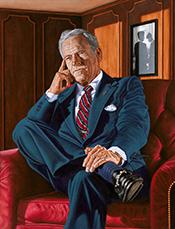
James Howard
Former U.S. Representative · New Jersey District 3 · 1965–1989 · Democratic
James Howard represented New Jersey's District 3 in the United States House of Representatives (1965–1989) for the Democratic party. The page below collects sourced biographical facts, term history, committee roles, and provenance for Howard.
Bioguide ID: H000840
Key facts
- Full name
- James Howard
- State
- New Jersey
- District
- District 3
- Party
- Democratic
- House service
- 1965–1989
- First House term
- 1965
- Status
- Left office
- Current term ends
- —
- Born
- 1927
- Bioguide ID
- H000840
- Committee assignments
- —
- Dataset version
- 1.20260605
Biographical narrative
917 words · sourced from the Wikipedia REST extract
James J. Howard was a prominent American educator and politician who served as a Democratic member of the United States House of Representatives, representing New Jersey's 3rd congressional district from 1965 until his death in 1988. Throughout his twelve terms in Congress, Howard was known for his advocacy on issues related to transportation safety and infrastructure, making significant contributions to legislation aimed at improving highway safety and regulating the trucking industry.
Early life and career
James John Howard was born on July 24, 1927, in Irvington, New Jersey. He completed his early education at St. Rose School in Belmar, graduating in 1941, and later attended Asbury Park High School, where he graduated in 1947. Howard pursued higher education at St. Bonaventure University, earning his degree in 1952. He furthered his academic qualifications by obtaining a Master of Education degree from Rutgers University-New Brunswick in 1958.
Before entering politics, Howard served in the United States Navy during World War II, specifically in the South Pacific from late 1944 until mid-1946. After his military service, he transitioned into education, working as a teacher and later as the acting principal in the Wall Township Public Schools from 1952 to 1964. His background in education and public service laid the foundation for his future political career, emphasizing his commitment to community and civic engagement.
House tenure
Howard was first elected to the House of Representatives in 1965, beginning a lengthy tenure that would span over two decades. He was re-elected to eleven consecutive terms, serving until his death on March 25, 1988. His time in Congress was marked by a focus on transportation issues, reflecting his background and interests.
One notable moment in Howard's congressional career occurred in 1967 when he raised concerns about the M16 rifle, which was being used by American troops in Vietnam. He brought attention to a letter from a Marine that claimed many fatalities during the Battle of Hill 881 were due to the rifle jamming. This issue sparked a public controversy and ultimately led to changes in the rifle's design and functionality by the end of that year.
In 1974, Howard introduced the concept of a nationwide 55-mile-per-hour speed limit, arguing that such a limit would conserve fuel and potentially reduce highway fatalities. His efforts contributed to Congress imposing this speed limit, which was enforced by threatening to withhold federal highway funds from states that did not comply. The legislation was based on the belief that a lower speed would lead to significant fuel savings and a reduction in traffic-related deaths, although later studies produced mixed results regarding its effectiveness in reducing fatalities.
Howard's commitment to highway safety extended beyond speed limits. He sponsored a range of legislation aimed at improving transportation safety, including the Howard-Barnes anti-drunk driving legislation in 1982, which sought to address the growing concern over drunk driving incidents. He also played a crucial role in the establishment of a uniform minimum drinking age of 21 in 1984, as well as the Child Restraint Law, which increased funding for child passenger safety programs. His legislative efforts included the National Driver's Register and the National Infrastructure Act, both of which aimed to enhance safety and efficiency within the transportation system.
During his time in Congress, Howard served as the chairman of the Committee on Public Works and Transportation from the Ninety-seventh through the One Hundredth Congresses. His leadership in this role allowed him to influence a variety of transportation-related policies and initiatives. At the time of his passing, he was engaged in a contentious debate regarding efforts by transportation-related businesses to push for truck deregulation, a move he opposed due to concerns over safety and regulatory oversight.
Legislative focus and committees
Throughout his congressional career, Howard's legislative focus was heavily centered on transportation and public safety. He was a staunch advocate for policies that aimed to improve the safety of highways and the regulation of the trucking industry. His work in Congress led to the introduction and passage of numerous bills that addressed these critical issues, reflecting his commitment to enhancing the safety of American roads.
In addition to his work on transportation safety, Howard was involved in various initiatives that aimed to improve infrastructure and promote responsible driving behaviors. His efforts in sponsoring legislation related to drunk driving and child passenger safety demonstrated his dedication to protecting the lives of citizens on the road.
Howard's contributions to transportation policy were recognized beyond his tenure in Congress. The James J. Howard Marine Sciences Laboratory, established in Sandy Hook, New Jersey, was named in his honor, reflecting his support for marine research and environmental stewardship. Additionally, the Governors Highway Safety Association established the James J. Howard Highway Safety Trailblazer Award to honor individuals who have made significant contributions to highway safety, further solidifying his legacy in this field.
After his death, Howard's influence continued to be felt in New Jersey. The James J. Howard Veterans Outpatient Clinic was established to provide essential services to local veterans, and the Asbury Park main train station and bus terminal was rebuilt and named the James J. Howard Transportation Center. Furthermore, Interstate 195 in New Jersey was designated as the James J. Howard Interstate Highway, recognizing his contributions to transportation infrastructure in the state.
James J. Howard's life and career exemplified a commitment to public service, education, and the safety of American citizens. His legislative achievements and advocacy for transportation safety have left a lasting impact on both his constituents and the broader national landscape.
Notable legislation
Sponsored and co-sponsored legislation for James Howard is pending operator curation. The biographical narrative above carries the same provenance trail until per-bill rows are written.
Sources
- [1]https://en.wikipedia.org/wiki/James_J._HowardWikipedia · retrieved 2026-06-05
Notable quotes
Sourced quotes for James Howard are pending operator curation. Narrative-scope provenance remains attached below.
Sources
- [1]https://en.wikipedia.org/wiki/James_J._HowardWikipedia · retrieved 2026-06-05
Key positions
Curated policy positions for James Howard are pending operator review. The biographical narrative above carries the same provenance trail until per-topic positions are written.
Sources
- [1]https://en.wikipedia.org/wiki/James_J._HowardWikipedia · retrieved 2026-06-05
Terms served
- 1965–1967U.S. House · Term 1 · Democratic
- 1967–1969U.S. House · Term 2 · Democratic
- 1969–1971U.S. House · Term 3 · Democratic
- 1971–1973U.S. House · Term 4 · Democratic
- 1973–1975U.S. House · Term 5 · Democratic
- 1975–1977U.S. House · Term 6 · Democratic
- 1977–1979U.S. House · Term 7 · Democratic
- 1979–1981U.S. House · Term 8 · Democratic
- 1981–1983U.S. House · Term 9 · Democratic
- 1983–1985U.S. House · Term 10 · Democratic
- 1985–1987U.S. House · Term 11 · Democratic
- 1987–1989U.S. House · Term 12 · Democratic
Sources & provenance
Every attributable claim above carries a per-section [N] marker that resolves to the corresponding URL below. Each entry records the upstream provider, the canonical URL, and the timestamp at which the source was retrieved by the ingest pipeline.
Key facts
- https://bioguide.congress.gov/search/bio/H000840bioguide · retrieved 2026-06-05
- https://www.govtrack.us/congress/members/405687govtrack · retrieved 2026-06-05
Biographical narrative
- https://en.wikipedia.org/wiki/James_J._Howardwikipedia · retrieved 2026-06-05
Find your representative
Every U.S. state elects representatives by district. Browse New Jersey’s delegation, the full former-representative roster, or explore the role and term length.
Related on The Candidate
- Preceded by James AuchinclossEarlier holder of the New Jersey District 3 House seat · Republican.Open
- Succeeded by John AdlerLater holder of the New Jersey District 3 House seat · Democratic.Open
- Andrew HayFormer U.S. Representative · New Jersey District 1 · WhigOpen
- Charles WolvertonFormer U.S. Representative · New Jersey District 1 · RepublicanOpen
- Christopher BergenFormer U.S. Representative · New Jersey District 1 · RepublicanOpen
- Clement SinnicksonFormer U.S. Representative · New Jersey District 1 · RepublicanOpen