
Historical · U.S. House · New Jersey · District 6
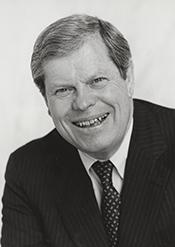
Bernard Dwyer
Former U.S. Representative · New Jersey District 6 · 1981–1993 · Democratic
Bernard Dwyer represented New Jersey's District 6 in the United States House of Representatives (1981–1993) for the Democratic party. The page below collects sourced biographical facts, term history, committee roles, and provenance for Dwyer.
Bioguide ID: D000586
Key facts
- Full name
- Bernard Dwyer
- State
- New Jersey
- District
- District 6
- Party
- Democratic
- House service
- 1981–1993
- First House term
- 1981
- Status
- Left office
- Current term ends
- —
- Born
- 1921
- Bioguide ID
- D000586
- Committee assignments
- —
- Dataset version
- 1.20260605
Biographical narrative
997 words · sourced from the Wikipedia REST extract
Bernard J. Dwyer was an American politician who served as a United States Representative for New Jersey's 6th congressional district from 1981 until 1993. A member of the Democratic Party, Dwyer had a lengthy political career that included roles at the local, state, and federal levels. He was known for his service on the House Committee on Appropriations, where he contributed to the legislative process during his six terms in Congress. Dwyer was also notable for being a survivor of the Japanese attack on Pearl Harbor, marking a significant chapter in his life that intertwined with his political journey.
Early life and career
Bernard James Dwyer was born on January 24, 1921, in Perth Amboy, New Jersey, to parents Daniel F. Dwyer and Alice Zehrer Dwyer. Growing up in a Roman Catholic family, Dwyer attended public schools in his hometown and graduated from Perth Amboy High School in 1938. Following high school, he enrolled at Rutgers University–Newark, although he did not complete a degree. His education was interrupted by World War II, during which he served in the United States Navy from 1940 to 1945. This military service would later play a role in shaping his identity and public service ethos.
After the war, Dwyer transitioned into a career as an insurance broker. His entry into politics began at the local level when he successfully ran for a seat on the Edison city council, where he served from 1958 until 1969. His tenure on the city council laid the groundwork for further political aspirations. In 1969, he was elected as the Mayor of Edison, New Jersey, serving a single term from 1970 to 1973. His experience in local governance provided him with insights into the needs and concerns of his constituents, which would inform his later work in the state legislature and Congress.
Following his mayoral term, Dwyer advanced to the New Jersey Senate, where he represented the 18th legislative district from 1974 to 1980. This role allowed him to engage with broader legislative issues affecting the state, further enhancing his political profile. His time in the state senate was marked by a commitment to addressing the needs of his district and advocating for policies that would benefit New Jersey residents.
House tenure
In 1980, Dwyer was elected to the United States House of Representatives, beginning his first term on January 3, 1981. Initially, he represented New Jersey's 15th congressional district. However, following the redistricting that occurred after the 1980 Census, he shifted to represent the 6th congressional district. Dwyer's congressional career spanned six terms, during which he became known for his dedication to his constituents and his work on various legislative initiatives.
Throughout his tenure in Congress, Dwyer was involved in numerous legislative activities and discussions, particularly as a member of the House Committee on Appropriations. This committee plays a critical role in determining federal spending and budget allocations, making Dwyer's position influential in shaping fiscal policy. His work on appropriations allowed him to advocate for funding that would benefit New Jersey and address the needs of his constituents.
Dwyer was the last member of Congress who had survived the attack on Pearl Harbor, a significant historical event that resonated with many Americans. His experiences during the war and subsequent political career provided him with a unique perspective on issues related to national security and veterans' affairs. Dwyer's military background often informed his legislative priorities, as he sought to support policies that benefited veterans and active service members.
In 1992, Dwyer chose not to seek reelection, marking the end of his congressional career. His decision to retire was influenced by the redistricting that occurred after the 1990 Census, which merged his district with that of fellow Democrat Frank Pallone. Dwyer's final term in office concluded on January 3, 1993, after which he transitioned away from active politics.
Legislative focus and committees
During his time in the House of Representatives, Dwyer focused on a variety of legislative issues, with a particular emphasis on appropriations and funding for various programs. His role on the House Committee on Appropriations was pivotal, as it allowed him to influence federal budget decisions and advocate for financial support for initiatives that were important to his constituents and the state of New Jersey.
Dwyer's legislative focus included a range of topics, such as education, healthcare, and infrastructure. He worked to secure funding for local projects and programs that would enhance the quality of life for residents in his district. His commitment to public service was evident in his efforts to address the pressing needs of his constituents, particularly in areas that directly impacted their daily lives.
In addition to his work on appropriations, Dwyer was involved in discussions surrounding veterans' affairs, leveraging his own experiences as a veteran to advocate for policies that supported those who had served in the military. His understanding of the challenges faced by veterans informed his legislative priorities and contributed to his reputation as a representative who cared deeply about the well-being of service members and their families.
Dwyer's congressional papers, which are preserved at the Rutgers University Libraries, Special Collections and University Archives in New Brunswick, New Jersey, provide insight into his legislative activities and the issues he prioritized during his time in office. These documents include office files and records that reflect his contributions to the House of Representatives and the broader legislative process.
Following his retirement from Congress, Dwyer remained a resident of Metuchen, New Jersey, where he continued to engage with his community. He passed away on October 31, 1998, at the John F. Kennedy Medical Center in Edison, New Jersey, due to a heart attack. Dwyer was laid to rest at St. Gertrude's Cemetery in Colonia, New Jersey, leaving behind a legacy of public service that spanned several decades and multiple levels of government. His contributions to New Jersey and the nation are remembered through his legislative work and the impact he had on the lives of those he represented.
Notable legislation
Sponsored and co-sponsored legislation for Bernard Dwyer is pending operator curation. The biographical narrative above carries the same provenance trail until per-bill rows are written.
Sources
- [1]https://en.wikipedia.org/wiki/Bernard_J._DwyerWikipedia · retrieved 2026-06-05
Notable quotes
Sourced quotes for Bernard Dwyer are pending operator curation. Narrative-scope provenance remains attached below.
Sources
- [1]https://en.wikipedia.org/wiki/Bernard_J._DwyerWikipedia · retrieved 2026-06-05
Key positions
Curated policy positions for Bernard Dwyer are pending operator review. The biographical narrative above carries the same provenance trail until per-topic positions are written.
Sources
- [1]https://en.wikipedia.org/wiki/Bernard_J._DwyerWikipedia · retrieved 2026-06-05
Terms served
- 1981–1983U.S. House · Term 1 · Democratic
- 1983–1985U.S. House · Term 2 · Democratic
- 1985–1987U.S. House · Term 3 · Democratic
- 1987–1989U.S. House · Term 4 · Democratic
- 1989–1991U.S. House · Term 5 · Democratic
- 1991–1993U.S. House · Term 6 · Democratic
Sources & provenance
Every attributable claim above carries a per-section [N] marker that resolves to the corresponding URL below. Each entry records the upstream provider, the canonical URL, and the timestamp at which the source was retrieved by the ingest pipeline.
Key facts
- https://bioguide.congress.gov/search/bio/D000586bioguide · retrieved 2026-06-05
- https://www.govtrack.us/congress/members/403689govtrack · retrieved 2026-06-05
Biographical narrative
- https://en.wikipedia.org/wiki/Bernard_J._Dwyerwikipedia · retrieved 2026-06-05
Find your representative
Every U.S. state elects representatives by district. Browse New Jersey’s delegation, the full former-representative roster, or explore the role and term length.
Related on The Candidate
- Preceded by William CahillEarlier holder of the New Jersey District 6 House seat · Republican.Open
- Andrew HayFormer U.S. Representative · New Jersey District 1 · WhigOpen
- Charles WolvertonFormer U.S. Representative · New Jersey District 1 · RepublicanOpen
- Christopher BergenFormer U.S. Representative · New Jersey District 1 · RepublicanOpen
- Clement SinnicksonFormer U.S. Representative · New Jersey District 1 · RepublicanOpen
- Democratic PartyFederal candidates and office holders on the Democratic line.Open