
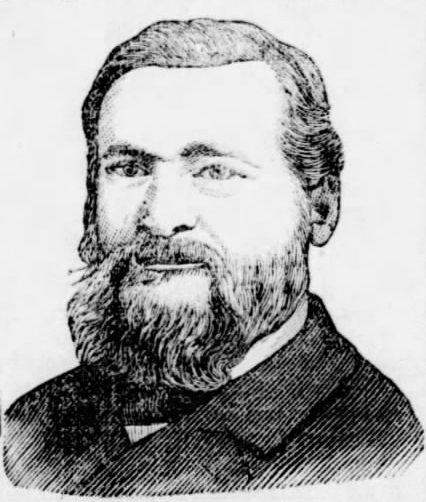
Historical · U.S. House · New Jersey · District 6
Herman Lehlbach
Former U.S. Representative · New Jersey District 6 · 1885–1891 · Republican
Herman Lehlbach represented New Jersey's District 6 in the United States House of Representatives (1885–1891) for the Republican party. The page below collects sourced biographical facts, term history, committee roles, and provenance for Lehlbach.
Bioguide ID: L000223
Key facts
- Full name
- Herman Lehlbach
- State
- New Jersey
- District
- District 6
- Party
- Republican
- House service
- 1885–1891
- First House term
- 1885
- Status
- Left office
- Current term ends
- —
- Born
- 1845
- Bioguide ID
- L000223
- Committee assignments
- —
- Dataset version
- 1.20260606
Biographical narrative
894 words · sourced from the Wikipedia REST extract
Herman Lehlbach was an American politician and civil engineer who served as a Republican U.S. Representative for New Jersey's 6th congressional district from 1885 to 1891. His tenure in the House of Representatives was marked by his involvement in significant legislative matters, particularly concerning immigration laws during a period of heightened anti-Chinese sentiment in the United States. After leaving Congress, he continued his career in civil engineering and held the position of Sheriff of Essex County, New Jersey.
Early life and career
Herman Lehlbach was born on July 3, 1845, in Heiligkreuzsteinach, located in the Grand Duchy of Baden, which was part of the German Confederation at the time. In 1851, when he was just six years old, Lehlbach and his family immigrated to the United States, settling in Newark, New Jersey. His early education took place in public schools, where he gained foundational knowledge that would later support his professional endeavors.
Lehlbach pursued a career in civil engineering, a field that would define much of his professional life. His skills in this area allowed him to contribute to various projects and developments in Newark and the surrounding regions. In addition to his engineering career, he served as the sheriff of Essex County, New Jersey, for three years, which provided him with valuable experience in public service and law enforcement. His political career began to take shape when he was elected to the New Jersey General Assembly, where he served from 1884 to 1886. This role marked his entry into the political arena, setting the stage for his future endeavors at the national level.
House tenure
Herman Lehlbach was elected to the United States House of Representatives as a member of the Republican Party, beginning his first term on March 4, 1885. He was re-elected for two additional terms, serving in the Forty-ninth, Fiftieth, and Fifty-first Congresses. His time in office lasted until March 3, 1891. During his congressional tenure, Lehlbach was involved in various legislative activities and discussions that shaped the political landscape of the time.
One notable aspect of his congressional service was his participation in a committee that investigated federal immigration laws. This committee's work was particularly relevant during a period marked by significant anti-Chinese sentiment in the United States, following the passage of the Chinese Exclusion Act of 1882. In the years leading up to his departure from Congress, Lehlbach and his fellow committee members undertook a comprehensive fact-finding mission, traveling across the country by train for six weeks to gather information and testimonies regarding the Chinese population in America.
The findings of this investigation culminated in a report authored primarily by Lehlbach, which was released on March 2, 1891. The report indicated that while the Chinese population was decreasing, it was not declining as rapidly as desired by some segments of society. It recommended increased enforcement of immigration laws and expressed the prevailing sentiment that the Chinese should be excluded from entering the United States. This report contributed to the ongoing discourse surrounding immigration policy and influenced subsequent legislation, including the strengthening of the Chinese Exclusion Act through the Geary Act of 1892.
Despite his active role in Congress, Lehlbach chose not to seek re-nomination in 1890, marking the end of his legislative career. In 1891, he ran for the position of mayor of Newark but was unsuccessful in his bid against Joseph Haynes. Following the election, he petitioned for a recount, but his request was denied, further concluding his political aspirations at that time.
Legislative focus and committees
Throughout his congressional career, Herman Lehlbach's legislative focus was significantly shaped by the pressing issues of immigration and the societal attitudes towards the Chinese population in the United States. His involvement in the congressional committee investigating immigration laws highlighted his commitment to addressing the complexities of this issue during a time of national debate and division.
The report he authored after the committee's investigation reflected the prevailing attitudes of the era, emphasizing the need for stricter immigration controls and the exclusion of Chinese immigrants. This stance was indicative of the broader societal sentiments that characterized the late 19th century, where immigration was a contentious topic, and the Chinese Exclusion Act was a focal point of legislative action.
In addition to his work on immigration, Lehlbach's experience as a civil engineer likely informed his perspectives on infrastructure and public works, although specific legislative initiatives in these areas during his tenure are not detailed in available records. His background in civil engineering may have provided him with insights into the importance of infrastructure development and its impact on local communities, particularly in his home state of New Jersey.
After concluding his time in Congress, Lehlbach returned to his profession as a civil engineer in Newark, where he continued to apply his expertise in various projects. He also resumed public service as Sheriff of Essex County from 1893 to 1896, further demonstrating his ongoing commitment to civic engagement and community leadership.
Herman Lehlbach passed away on January 11, 1904, in Newark, New Jersey, due to kidney problems. He was interred in Fairmount Cemetery in Newark, leaving behind a legacy as a public servant who navigated the complexities of immigration policy during a pivotal time in American history. His contributions to both civil engineering and politics reflect the multifaceted nature of his career and the historical context in which he operated.
Notable legislation
Sponsored and co-sponsored legislation for Herman Lehlbach is pending operator curation. The biographical narrative above carries the same provenance trail until per-bill rows are written.
Sources
- [1]https://en.wikipedia.org/wiki/Herman_LehlbachWikipedia · retrieved 2026-06-06
Notable quotes
Sourced quotes for Herman Lehlbach are pending operator curation. Narrative-scope provenance remains attached below.
Sources
- [1]https://en.wikipedia.org/wiki/Herman_LehlbachWikipedia · retrieved 2026-06-06
Key positions
Curated policy positions for Herman Lehlbach are pending operator review. The biographical narrative above carries the same provenance trail until per-topic positions are written.
Sources
- [1]https://en.wikipedia.org/wiki/Herman_LehlbachWikipedia · retrieved 2026-06-06
Terms served
- 1885–1887U.S. House · Term 1 · Republican
- 1887–1889U.S. House · Term 2 · Republican
- 1889–1891U.S. House · Term 3 · Republican
Sources & provenance
Every attributable claim above carries a per-section [N] marker that resolves to the corresponding URL below. Each entry records the upstream provider, the canonical URL, and the timestamp at which the source was retrieved by the ingest pipeline.
Key facts
- https://bioguide.congress.gov/search/bio/L000223bioguide · retrieved 2026-06-06
- https://www.govtrack.us/congress/members/406727govtrack · retrieved 2026-06-06
Biographical narrative
- https://en.wikipedia.org/wiki/Herman_Lehlbachwikipedia · retrieved 2026-06-06
Find your representative
Every U.S. state elects representatives by district. Browse New Jersey’s delegation, the full former-representative roster, or explore the role and term length.
Related on The Candidate
- Preceded by William FiedlerEarlier holder of the New Jersey District 6 House seat · Democratic.Open
- Succeeded by Thomas EnglishLater holder of the New Jersey District 6 House seat · Democratic.Open
- Andrew HayFormer U.S. Representative · New Jersey District 1 · WhigOpen
- Charles WolvertonFormer U.S. Representative · New Jersey District 1 · RepublicanOpen
- Christopher BergenFormer U.S. Representative · New Jersey District 1 · RepublicanOpen
- Clement SinnicksonFormer U.S. Representative · New Jersey District 1 · RepublicanOpen