
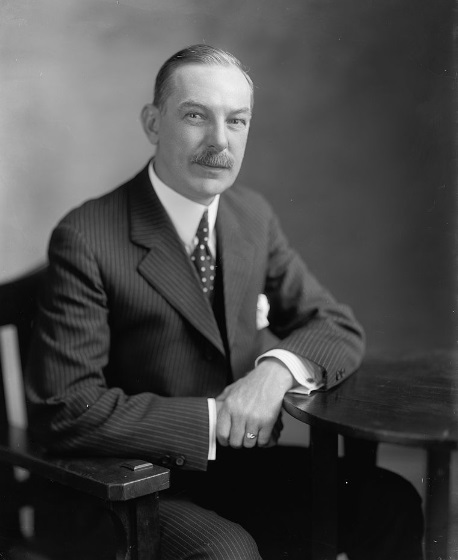
Historical · U.S. House · New Jersey · District 7
Amos Radcliffe
Former U.S. Representative · New Jersey District 7 · 1919–1923 · Republican
Amos Radcliffe represented New Jersey's District 7 in the United States House of Representatives (1919–1923) for the Republican party. The page below collects sourced biographical facts, term history, committee roles, and provenance for Radcliffe.
Bioguide ID: R000005
Key facts
- Full name
- Amos Radcliffe
- State
- New Jersey
- District
- District 7
- Party
- Republican
- House service
- 1919–1923
- First House term
- 1919
- Status
- Left office
- Current term ends
- —
- Born
- 1870
- Bioguide ID
- R000005
- Committee assignments
- —
- Dataset version
- 1.20260606
Biographical narrative
943 words · sourced from the Wikipedia REST extract
Amos Radcliffe was an American politician who served as a U.S. Representative for New Jersey's 7th congressional district. A member of the Republican Party, Radcliffe's congressional career spanned two terms from March 4, 1919, to March 3, 1923. His political journey was marked by a blend of local governance and business acumen, reflecting his deep roots in the Paterson community and his commitment to public service.
Early life and career
Amos Henry Radcliffe was born on January 16, 1870, in Paterson, New Jersey. He grew up in a city known for its industrial prowess and diverse immigrant population, which likely influenced his perspectives and aspirations. Radcliffe received his early education in the Paterson Public Schools, where he laid the foundation for his future endeavors. Following his schooling, he attended the New York Trade School, which equipped him with practical skills that would serve him well in his later career.
In addition to his academic pursuits, Radcliffe served in the New Jersey National Guard from 1888 to 1893, achieving the rank of sergeant. This experience not only instilled in him a sense of discipline and leadership but also connected him to the broader community of veterans and service members in New Jersey.
Radcliffe's professional life began in the trades, where he became a blacksmith and an ornamental and structural ironworker. His work in this field was significant, as it placed him at the intersection of labor and industry during a time of rapid industrialization in the United States. In 1896, he joined his father's firm, James Radcliffe & Sons Co., which specialized in structural iron manufacturing. His involvement in the family business marked a pivotal point in his career, and by 1907, he had risen to the position of secretary of the company, demonstrating his capabilities in management and operations.
Radcliffe's political career began to take shape in the early 1900s. He was elected to the New Jersey General Assembly, serving from 1907 to 1912. This role allowed him to gain valuable legislative experience and establish connections within the Republican Party. His political involvement continued as he served as a delegate to the Republican State conventions in 1910, 1911, and 1912, further solidifying his standing within the party.
In addition to his legislative work, Radcliffe held several key positions in local government. He served as sheriff of Passaic County from 1912 to 1915, where he was responsible for law enforcement and public safety in the region. His commitment to public service extended to environmental conservation, as he was appointed as the fish and game commissioner from 1914 to 1919. This role underscored his dedication to preserving New Jersey's natural resources.
Radcliffe's tenure as mayor of Paterson from 1916 to 1919 marked a significant chapter in his political career. As mayor, he was involved in various local initiatives and governance issues, addressing the needs of his constituents during a transformative period in the city’s history. His leadership during this time likely contributed to his subsequent election to the U.S. House of Representatives.
House tenure
Amos Radcliffe was elected as a Republican to the Sixty-sixth and Sixty-seventh Congresses, serving from March 4, 1919, until March 3, 1923. His election to the House of Representatives came during a time of significant national change, as the United States was emerging from World War I and grappling with the social and economic challenges that followed. Radcliffe's legislative career was characterized by his focus on issues pertinent to his constituents in New Jersey, as well as broader national concerns.
During his time in Congress, Radcliffe participated in various legislative discussions and initiatives, contributing to the shaping of policies that affected both his district and the nation. His experience in local government and business informed his approach to governance, allowing him to advocate for the interests of his constituents effectively. However, his congressional career was relatively brief, as he faced challenges in securing re-election in 1922 when he ran for a seat in the Sixty-eighth Congress but was unsuccessful.
Legislative focus and committees
While specific details regarding the bills Radcliffe supported or the committees he served on during his time in Congress are not provided, it is evident that his background in local governance and business likely influenced his legislative priorities. As a representative from New Jersey, he would have been involved in discussions related to industrial development, labor issues, and economic recovery in the post-war context. His experience as a business leader and his understanding of the needs of working-class constituents may have guided his focus on policies that promoted economic growth and stability.
After concluding his congressional service, Radcliffe returned to his business interests, taking on an active role in the Radcliffe & Sons Company, where he served as treasurer until his passing. His continued involvement in the family business reflects his commitment to the economic vitality of his community. Additionally, he was a founder and former president of the Franklin Trust Company in Paterson, further demonstrating his influence in local financial affairs.
In 1925, Radcliffe was appointed to the Board of Standards and Appeals in Paterson, a role that allowed him to contribute to the governance of the city even after his congressional tenure. His engagement in various civic activities and organizations throughout his life showcased his dedication to public service and community development.
Amos Radcliffe passed away on December 29, 1950, in Balesville, New Jersey. He was interred in Cedar Lawn Cemetery in Paterson, leaving behind a legacy of public service and community involvement. His life and career reflect the complexities of early 20th-century American politics, as well as the challenges and opportunities faced by local leaders during a transformative period in U.S. history.
Notable legislation
Sponsored and co-sponsored legislation for Amos Radcliffe is pending operator curation. The biographical narrative above carries the same provenance trail until per-bill rows are written.
Sources
- [1]https://en.wikipedia.org/wiki/Amos_H._RadcliffeWikipedia · retrieved 2026-06-06
Notable quotes
Sourced quotes for Amos Radcliffe are pending operator curation. Narrative-scope provenance remains attached below.
Sources
- [1]https://en.wikipedia.org/wiki/Amos_H._RadcliffeWikipedia · retrieved 2026-06-06
Key positions
Curated policy positions for Amos Radcliffe are pending operator review. The biographical narrative above carries the same provenance trail until per-topic positions are written.
Sources
- [1]https://en.wikipedia.org/wiki/Amos_H._RadcliffeWikipedia · retrieved 2026-06-06
Terms served
- 1919–1921U.S. House · Term 1 · Republican
- 1921–1923U.S. House · Term 2 · Republican
Sources & provenance
Every attributable claim above carries a per-section [N] marker that resolves to the corresponding URL below. Each entry records the upstream provider, the canonical URL, and the timestamp at which the source was retrieved by the ingest pipeline.
Key facts
- https://bioguide.congress.gov/search/bio/R000005bioguide · retrieved 2026-06-06
- https://www.govtrack.us/congress/members/408988govtrack · retrieved 2026-06-06
Biographical narrative
- https://en.wikipedia.org/wiki/Amos_H._Radcliffewikipedia · retrieved 2026-06-06
Find your representative
Every U.S. state elects representatives by district. Browse New Jersey’s delegation, the full former-representative roster, or explore the role and term length.
Related on The Candidate
- Preceded by Dow DrukkerEarlier holder of the New Jersey District 7 House seat · Republican.Open
- Succeeded by John ThomasLater holder of the New Jersey District 7 House seat · Republican.Open
- Andrew HayFormer U.S. Representative · New Jersey District 1 · WhigOpen
- Charles WolvertonFormer U.S. Representative · New Jersey District 1 · RepublicanOpen
- Christopher BergenFormer U.S. Representative · New Jersey District 1 · RepublicanOpen
- Clement SinnicksonFormer U.S. Representative · New Jersey District 1 · RepublicanOpen