
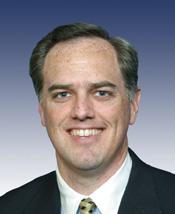
Historical · U.S. House · New Jersey · District 7
Mike Ferguson
Former U.S. Representative · New Jersey District 7 · 2001–2009 · Republican
Mike Ferguson represented New Jersey's District 7 in the United States House of Representatives (2001–2009) for the Republican party. The page below collects sourced biographical facts, term history, committee roles, and provenance for Ferguson.
Bioguide ID: F000443
Key facts
- Full name
- Mike Ferguson
- State
- New Jersey
- District
- District 7
- Party
- Republican
- House service
- 2001–2009
- First House term
- 2001
- Status
- Left office
- Current term ends
- —
- Born
- 1970
- Bioguide ID
- F000443
- Committee assignments
- —
- Dataset version
- 1.20260605
Biographical narrative
966 words · sourced from the Wikipedia REST extract
Michael A. Ferguson is a former American politician who served as a member of the United States House of Representatives, representing New Jersey's 7th congressional district from 2001 until 2009. A member of the Republican Party, Ferguson was known for his moderate voting record and focus on healthcare and life sciences during his time in Congress. After leaving office, he transitioned into a career in government affairs and corporate leadership, currently serving as executive vice president at AT&T.
Early life and career
Michael A. Ferguson was born on June 22, 1970, in Ridgewood, New Jersey. He is the son of Thomas Ferguson, who held the position of chairman and CEO at CommonHealth USA, a company specializing in healthcare marketing and communications. Ferguson's educational background includes attendance at the Delbarton School, a private preparatory school, and the University of Notre Dame, where he earned his undergraduate degree. He later pursued a Master of Public Administration (MPA) from Georgetown University.
Before entering politics, Ferguson worked as a teacher at a private school and also held a part-time position as an instructor at a community college. His early career experiences in education provided him with a foundation in public service and community engagement. Ferguson's initial foray into politics came in 1998 when he ran as the Republican nominee for New Jersey's 6th congressional district, although he was unsuccessful in that election against the Democratic incumbent, Frank Pallone.
In 1999, Ferguson shifted his focus to the 7th congressional district, which was considered more favorable for Republican candidates. This district was open due to the retirement of incumbent Bob Franks, who was running for the United States Senate. Ferguson successfully navigated the Republican primary, defeating notable candidates such as Thomas Kean Jr. and future West Virginia Governor Patrick Morrisey. He then faced a competitive general election against Democratic candidate Maryanne Connelly, the former mayor of Fanwood. Ferguson won the election with a narrow margin, receiving approximately 50% of the vote, which made him the youngest member of the New Jersey Congressional delegation at the age of 30.
House tenure
Ferguson's congressional career began with his election to the House of Representatives in 2001, where he served four consecutive terms until his departure in 2009. During his initial term, he was appointed to several key committees, including the House Financial Services Committee, the Transportation and Infrastructure Committee, and the Small Business Committee. Ferguson was actively involved in addressing significant issues such as corporate accountability, particularly in the wake of high-profile scandals involving companies like Enron and WorldCom. He was a co-sponsor of the Sarbanes-Oxley Act of 2002, which aimed to enhance corporate governance and financial disclosures.
In addition to his work on corporate accountability, Ferguson played a role in the House-Senate conference committee that developed the first terrorism risk insurance law following the September 11 attacks. This legislation was crucial for stabilizing the insurance market in the aftermath of the attacks.
In his second term, Ferguson joined the House Energy and Commerce Committee, where he took on the role of Vice Chairman of the Health Subcommittee. He also served on the Telecommunications and Internet Subcommittee and the Oversight and Investigations Subcommittee. His work on the Energy and Commerce Committee positioned him as a key Republican voice on healthcare issues, particularly those affecting the life sciences sector, which was significant to his constituents. Ferguson was instrumental in the passage of the Medicare Part D prescription drug benefit, which expanded prescription drug coverage for seniors.
Throughout his tenure, Ferguson faced electoral challenges from Democratic opponents. He successfully defeated Tim Carden in 2002 and Steve Brozak in 2004 by substantial margins. However, his 2006 reelection campaign was notably competitive against Democratic state legislator Linda Stender. Stender's campaign sought to portray Ferguson as out of touch with the district's moderate voters, particularly by linking him to the unpopular policies of President George W. Bush. Despite these challenges, Ferguson managed to secure reelection, winning by a narrow margin of just over 3,000 votes.
In November 2007, Ferguson announced that he would not seek reelection in 2008, citing a desire to spend more time with his family. He was succeeded by fellow Republican Leonard Lance, a state senator.
Legislative focus and committees
During his time in Congress, Ferguson's legislative focus was primarily on healthcare, corporate accountability, and issues affecting small businesses. His moderate voting record was reflective of the political landscape in New Jersey, where Republican representatives often adopt a centrist approach. Ferguson was recognized for his advocacy on social issues, particularly his strong anti-abortion stance, which earned him a perfect rating from the National Right to Life Committee.
Ferguson's legislative accomplishments included the sponsorship of the Lifespan Respite Care Act in 2005, which aimed to provide support for families caring for sick or elderly relatives. This legislation authorized significant funding for states to develop respite care services, reflecting Ferguson's commitment to addressing the needs of caregivers and families. The bill was signed into law by President George W. Bush in December 2006.
Throughout his congressional career, Ferguson received several awards recognizing his contributions to public service, including the Outstanding Legislator of the Year award from the New Jersey Veterans of Foreign Wars in 2005, the Legislator of the Year Award from the National Visiting Nurses Association in 2006, and the Congressional Award from the Leukemia & Lymphoma Society in 2007.
Ferguson's time in Congress was marked by his active participation in various committees and his ability to navigate complex legislative issues. His focus on healthcare and life sciences, combined with his moderate approach, allowed him to build a reputation as a pragmatic legislator committed to serving the interests of his constituents. After leaving Congress, Ferguson transitioned to a successful career in government affairs and corporate leadership, continuing his engagement in public policy and advocacy.
Notable legislation
Sponsored and co-sponsored legislation for Mike Ferguson is pending operator curation. The biographical narrative above carries the same provenance trail until per-bill rows are written.
Sources
- [1]https://en.wikipedia.org/wiki/Mike_Ferguson_(politician)Wikipedia · retrieved 2026-06-05
Notable quotes
Sourced quotes for Mike Ferguson are pending operator curation. Narrative-scope provenance remains attached below.
Sources
- [1]https://en.wikipedia.org/wiki/Mike_Ferguson_(politician)Wikipedia · retrieved 2026-06-05
Key positions
Curated policy positions for Mike Ferguson are pending operator review. The biographical narrative above carries the same provenance trail until per-topic positions are written.
Sources
- [1]https://en.wikipedia.org/wiki/Mike_Ferguson_(politician)Wikipedia · retrieved 2026-06-05
Terms served
- 2001–2003U.S. House · Term 1 · Republican
- 2003–2005U.S. House · Term 2 · Republican
- 2005–2007U.S. House · Term 3 · Republican
- 2007–2009U.S. House · Term 4 · Republican
Sources & provenance
Every attributable claim above carries a per-section [N] marker that resolves to the corresponding URL below. Each entry records the upstream provider, the canonical URL, and the timestamp at which the source was retrieved by the ingest pipeline.
Key facts
- https://bioguide.congress.gov/search/bio/F000443bioguide · retrieved 2026-06-05
- http://www.house.gov/fergusonhouse.gov · retrieved 2026-06-05
Biographical narrative
- https://en.wikipedia.org/wiki/Mike_Ferguson_(politician)wikipedia · retrieved 2026-06-05
Find your representative
Every U.S. state elects representatives by district. Browse New Jersey’s delegation, the full former-representative roster, or explore the role and term length.
Related on The Candidate
- Preceded by Bob FranksEarlier holder of the New Jersey District 7 House seat · Republican.Open
- Succeeded by Leonard LanceLater holder of the New Jersey District 7 House seat · Republican.Open
- Andrew HayFormer U.S. Representative · New Jersey District 1 · WhigOpen
- Charles WolvertonFormer U.S. Representative · New Jersey District 1 · RepublicanOpen
- Christopher BergenFormer U.S. Representative · New Jersey District 1 · RepublicanOpen
- Clement SinnicksonFormer U.S. Representative · New Jersey District 1 · RepublicanOpen