
Historical · U.S. House · New Jersey · District 8
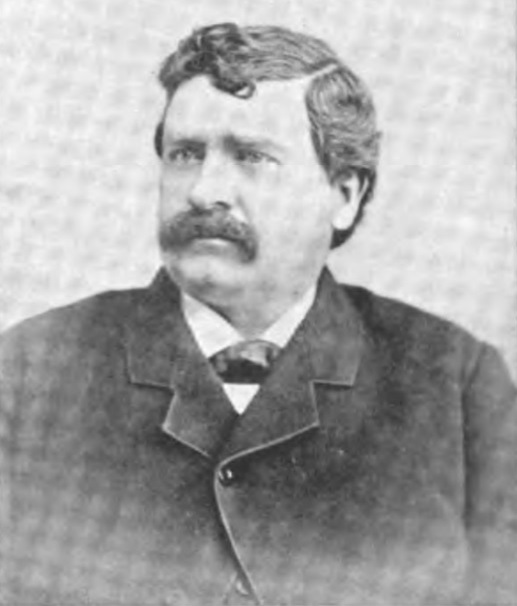
John Dunn
Former U.S. Representative · New Jersey District 8 · 1893–1895 · Democratic
John Dunn represented New Jersey's District 8 in the United States House of Representatives (1893–1895) for the Democratic party. The page below collects sourced biographical facts, term history, committee roles, and provenance for Dunn.
Bioguide ID: D000550
Key facts
- Full name
- John Dunn
- State
- New Jersey
- District
- District 8
- Party
- Democratic
- House service
- 1893–1895
- First House term
- 1893
- Status
- Left office
- Current term ends
- —
- Born
- 1838
- Bioguide ID
- D000550
- Committee assignments
- —
- Dataset version
- 1.20260606
Biographical narrative
981 words · sourced from the Wikipedia REST extract
John Dunn was a U.S. Representative from New Jersey, serving in the House of Representatives during the early 1890s. A member of the Democratic Party, Dunn represented New Jersey's 8th congressional district from 1893 until 1895. His political career was preceded by a diverse background that included local governance and a legal career. Dunn's life reflects the experiences of many immigrants in the United States during the 19th century, as he transitioned from a newcomer to a political figure in his adopted country.
Early life and career
John Dunn was born on June 4, 1838, in County Tipperary, Ireland, which was then part of the United Kingdom. His early life in Ireland was marked by the socio-political challenges of the time, which likely influenced his later decision to emigrate. In 1845, Dunn immigrated to the United States with his father, who settled in New Jersey. This move came during a period of significant Irish immigration to the U.S., driven by factors such as the Great Famine and the search for better economic opportunities.
Upon arriving in New Jersey, Dunn's education was primarily conducted at home, where he completed his elementary studies. The self-directed nature of his early education was not uncommon for children of immigrants, who often had to balance schooling with family responsibilities and work. In 1862, Dunn began his business career, which would serve as a foundation for his later ventures into public service and law.
Dunn's political career began at the local level. In 1878, he was elected to the board of aldermen in Elizabeth, New Jersey, a position that allowed him to engage directly with the governance of his community. His involvement in local politics continued as he served in the New Jersey General Assembly from 1879 to 1882. During this time, he was elected as the speaker of the house in 1882, a role that underscored his growing influence and leadership within the state legislature.
In addition to his political responsibilities, Dunn pursued a legal career. He studied law and was admitted to the bar in 1882, which enabled him to practice law in Elizabeth, New Jersey. This dual career in law and politics was typical of many politicians of the era, as legal training was often seen as a valuable asset for public service. Dunn's legal practice would later provide him with the skills and insights necessary for his role in Congress.
Dunn's commitment to public service was further demonstrated by his election to the city council of Elizabeth, where he continued to contribute to local governance. His experiences in various political roles equipped him with a comprehensive understanding of the legislative process and the needs of his constituents.
House tenure
Dunn's tenure in the U.S. House of Representatives began when he was elected as a Democrat to the Fifty-third Congress, representing the newly established 8th congressional district of New Jersey. His term lasted from March 4, 1893, to March 3, 1895. The establishment of the 8th congressional district was part of a broader reorganization of congressional districts, reflecting changes in population and political representation in New Jersey.
During his time in Congress, Dunn participated in the legislative process at a time when the nation was grappling with various social and economic issues. The early 1890s were marked by significant events, including economic downturns and labor unrest, which shaped the political landscape. As a member of the House, Dunn would have been involved in discussions and debates surrounding these pressing issues, although specific details of his legislative activities are not extensively documented.
Despite his efforts, Dunn was unsuccessful in his bid for reelection in 1894 to the Fifty-fourth Congress. This defeat marked the end of his formal political career at the federal level. The reasons for his electoral loss could be attributed to various factors, including the political climate of the time, voter sentiment, and the dynamics of local and national politics. After leaving office, Dunn returned to his legal practice, where he continued to contribute to his community and utilize the skills he had developed during his time in public service.
Legislative focus and committees
While specific details regarding Dunn's legislative focus and committee assignments during his time in Congress are not provided, it is important to contextualize his role within the broader legislative environment of the 1890s. As a member of the Democratic Party, Dunn would have aligned with the party's platform, which often emphasized issues such as labor rights, economic reform, and social justice. The Democratic Party during this period was also concerned with the impacts of industrialization and urbanization on American society.
Dunn's background in law and local governance likely informed his perspectives on various legislative matters. His experiences in the New Jersey General Assembly and as a city council member would have provided him with insights into the needs and concerns of his constituents, which he would have carried into his work in Congress. The late 19th century was a time of significant change in the United States, with rapid industrial growth and increasing urbanization leading to new social challenges. Legislators like Dunn were tasked with addressing these issues while balancing the interests of their constituents and the broader national agenda.
After his congressional term, Dunn's return to legal practice marked a continuation of his commitment to public service, albeit in a different capacity. He remained active in his community until his death on February 22, 1907, in Elizabeth, New Jersey. Dunn was interred in Mount Olivet Cemetery in Newark, New Jersey, where he rests alongside many others who contributed to the rich tapestry of American history.
In summary, John Dunn's life and career reflect the journey of an immigrant who rose to prominence in American politics during a transformative period. His experiences in local governance, law, and the U.S. House of Representatives illustrate the interconnectedness of these roles and their impact on the communities he served.
Notable legislation
Sponsored and co-sponsored legislation for John Dunn is pending operator curation. The biographical narrative above carries the same provenance trail until per-bill rows are written.
Sources
- [1]https://en.wikipedia.org/wiki/John_T._DunnWikipedia · retrieved 2026-06-06
Notable quotes
Sourced quotes for John Dunn are pending operator curation. Narrative-scope provenance remains attached below.
Sources
- [1]https://en.wikipedia.org/wiki/John_T._DunnWikipedia · retrieved 2026-06-06
Key positions
Curated policy positions for John Dunn are pending operator review. The biographical narrative above carries the same provenance trail until per-topic positions are written.
Sources
- [1]https://en.wikipedia.org/wiki/John_T._DunnWikipedia · retrieved 2026-06-06
Terms served
- 1893–1895U.S. House · Term 1 · Democratic
Sources & provenance
Every attributable claim above carries a per-section [N] marker that resolves to the corresponding URL below. Each entry records the upstream provider, the canonical URL, and the timestamp at which the source was retrieved by the ingest pipeline.
Key facts
- https://bioguide.congress.gov/search/bio/D000550bioguide · retrieved 2026-06-06
- https://www.govtrack.us/congress/members/403657govtrack · retrieved 2026-06-06
Biographical narrative
- https://en.wikipedia.org/wiki/John_T._Dunnwikipedia · retrieved 2026-06-06
Find your representative
Every U.S. state elects representatives by district. Browse New Jersey’s delegation, the full former-representative roster, or explore the role and term length.
Related on The Candidate
- Succeeded by William WileyLater holder of the New Jersey District 8 House seat · Republican.Open
- Andrew HayFormer U.S. Representative · New Jersey District 1 · WhigOpen
- Charles WolvertonFormer U.S. Representative · New Jersey District 1 · RepublicanOpen
- Christopher BergenFormer U.S. Representative · New Jersey District 1 · RepublicanOpen
- Clement SinnicksonFormer U.S. Representative · New Jersey District 1 · RepublicanOpen
- Democratic PartyFederal candidates and office holders on the Democratic line.Open