
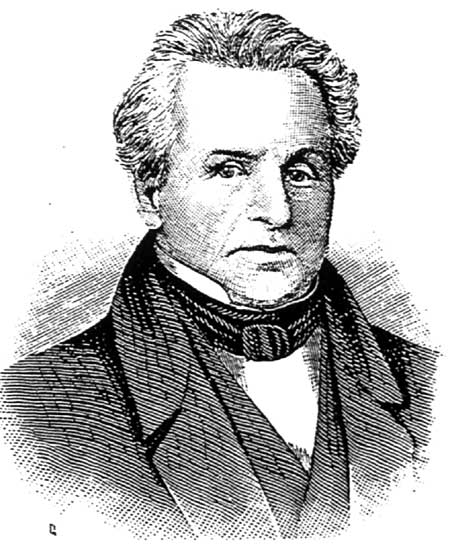
Historical · U.S. House · New Jersey · At-Large
Samuel Fowler
Former U.S. Representative · New Jersey At-Large · 1833–1837 · Jackson
Samuel Fowler represented New Jersey's At-Large in the United States House of Representatives (1833–1837) for the Jackson party. The page below collects sourced biographical facts, term history, committee roles, and provenance for Fowler.
Bioguide ID: F000327
Key facts
- Full name
- Samuel Fowler
- State
- New Jersey
- District
- At-Large
- Party
- Jackson
- House service
- 1833–1837
- First House term
- 1833
- Status
- Left office
- Current term ends
- —
- Born
- 1779
- Bioguide ID
- F000327
- Committee assignments
- —
- Dataset version
- 1.20260606
Biographical narrative
843 words · sourced from the Wikipedia REST extract
Samuel Fowler was a medical doctor, mineralogist, and politician who served as a U.S. Representative for New Jersey. A member of the Jacksonian Democratic Party, he held office in the United States House of Representatives during the early 1830s. In addition to his political career, Fowler was known for his contributions to the mining industry in northwestern New Jersey, particularly through his ownership of zinc and iron mines. His legacy includes a notable family connection to American military history and politics.
Early life and career
Samuel Fowler was born on October 30, 1779, in Newburgh, New York. He pursued his education at the Montgomery Academy, which provided him with a foundational knowledge that would serve him in his future endeavors. Following his studies, he graduated from Pennsylvania Medical College, marking the beginning of his career in medicine.
Fowler began practicing medicine in 1800 at the young age of 21 in Hamburg, New Jersey. His medical career laid the groundwork for his later involvement in local politics and community development. In 1810, he relocated to what is now known as Franklin, New Jersey. It is generally accepted that Fowler played a significant role in naming the town, although the exact inspiration behind the name remains uncertain. It is speculated that he may have named it in honor of either Benjamin Franklin or his son, William Franklin.
Fowler's move to Franklin coincided with the discovery of zinc ore in the area, prompting him to invest in the development of local mining operations. His ownership of zinc and iron mines, as well as an iron works, positioned him as a prominent figure in the mineral industry. His work in this field contributed to his reputation as a mineralogist, and he is credited with discovering several varieties of rare minerals, particularly various ores of zinc. This expertise not only enhanced his standing in the community but also likely influenced his later political career.
House tenure
Fowler's political career began to take shape in the late 1820s when he became a member of the New Jersey Legislative Council, which was a precursor to the New Jersey Senate. His involvement in local governance provided him with valuable experience and connections that would aid him in his subsequent election to the U.S. House of Representatives.
In 1833, Fowler was elected as a Jacksonian Democrat to the United States House of Representatives, where he served in the Twenty-third and Twenty-fourth Congresses until March 3, 1837. His tenure in Congress was marked by the political dynamics of the era, during which the Jacksonian Democrats were influential in shaping national policies. While specific details regarding his legislative actions and the bills he supported during his time in office are not documented, Fowler's role as a representative was significant in the context of New Jersey's interests and the broader national landscape.
Fowler's time in the House coincided with a period of growth and change in the United States, as the nation grappled with issues such as economic development, territorial expansion, and social reform. His background in medicine and mining likely informed his perspectives on various legislative matters, although the specifics of his contributions remain less well-documented.
Legislative focus and committees
During his time in the House of Representatives, Samuel Fowler's legislative focus and committee assignments are not extensively detailed in available records. However, it can be inferred that his professional background as a physician and mineralogist may have influenced his interests in health and industry-related issues. The Jacksonian Democratic Party, to which he belonged, was known for advocating for the rights of the common man and promoting economic opportunities, which may have aligned with Fowler's own experiences in medicine and mining.
Fowler's dual expertise in both the medical field and the mining industry positioned him uniquely among his peers. His contributions to the development of local resources in New Jersey, particularly through his work in the mineral sector, likely informed his perspectives on economic policies and labor issues during his congressional tenure.
After serving two terms in the House, Fowler's congressional career came to an end on March 3, 1837. The reasons for his departure from Congress are not specified, but it is common for representatives to conclude their service for various personal, political, or electoral reasons.
Following his time in office, Fowler returned to his community in Franklin, New Jersey, where he continued to be involved in local affairs. His legacy extends beyond his political career; he was the father of Colonel Samuel Fowler, who served in the 15th New Jersey Volunteer Infantry Regiment during the American Civil War. Additionally, Fowler was the grandfather of another Samuel Fowler, who later served in the House of Representatives from 1889 to 1893.
Samuel Fowler passed away on February 20, 1844, in Franklin, New Jersey. He was laid to rest in the North Church Cemetery located in Hardyston Township, New Jersey. His life and career reflect a blend of medical practice, mineral exploration, and public service, marking him as a notable figure in the history of New Jersey and the United States Congress.
Notable legislation
Sponsored and co-sponsored legislation for Samuel Fowler is pending operator curation. The biographical narrative above carries the same provenance trail until per-bill rows are written.
Sources
- [1]https://en.wikipedia.org/wiki/Samuel_Fowler_(1779%E2%80%931844)Wikipedia · retrieved 2026-06-06
Notable quotes
Sourced quotes for Samuel Fowler are pending operator curation. Narrative-scope provenance remains attached below.
Sources
- [1]https://en.wikipedia.org/wiki/Samuel_Fowler_(1779%E2%80%931844)Wikipedia · retrieved 2026-06-06
Key positions
Curated policy positions for Samuel Fowler are pending operator review. The biographical narrative above carries the same provenance trail until per-topic positions are written.
Sources
- [1]https://en.wikipedia.org/wiki/Samuel_Fowler_(1779%E2%80%931844)Wikipedia · retrieved 2026-06-06
Terms served
- 1833–1835U.S. House · Term 1 · Jackson
- 1835–1837U.S. House · Term 2 · Jackson
Sources & provenance
Every attributable claim above carries a per-section [N] marker that resolves to the corresponding URL below. Each entry records the upstream provider, the canonical URL, and the timestamp at which the source was retrieved by the ingest pipeline.
Key facts
- https://bioguide.congress.gov/search/bio/F000327bioguide · retrieved 2026-06-06
- https://www.govtrack.us/congress/members/404275govtrack · retrieved 2026-06-06
Biographical narrative
- https://en.wikipedia.org/wiki/Samuel_Fowler_(1779%E2%80%931844)wikipedia · retrieved 2026-06-06
Find your representative
Every U.S. state elects representatives by district. Browse New Jersey’s delegation, the full former-representative roster, or explore the role and term length.
Related on The Candidate
- Preceded by Isaac SouthardEarlier holder of the New Jersey At-Large House seat · Anti Jacksonian.Open
- Succeeded by Charles StrattonLater holder of the New Jersey At-Large House seat · Whig.Open
- Andrew HayFormer U.S. Representative · New Jersey District 1 · WhigOpen
- Charles WolvertonFormer U.S. Representative · New Jersey District 1 · RepublicanOpen
- Christopher BergenFormer U.S. Representative · New Jersey District 1 · RepublicanOpen
- Clement SinnicksonFormer U.S. Representative · New Jersey District 1 · RepublicanOpen