
Historical · U.S. House · New Mexico · District 1
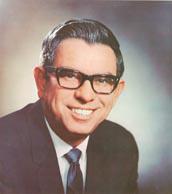
Manuel Luján Jr.
Former U.S. Representative · New Mexico District 1 · 1969–1989 · Republican
Manuel Luján Jr. represented New Mexico's District 1 in the United States House of Representatives (1969–1989) for the Republican party. The page below collects sourced biographical facts, term history, committee roles, and provenance for Jr..
Bioguide ID: L000506
Key facts
- Full name
- Manuel Luján Jr.
- State
- New Mexico
- District
- District 1
- Party
- Republican
- House service
- 1969–1989
- First House term
- 1969
- Status
- Left office
- Current term ends
- —
- Born
- 1928
- Bioguide ID
- L000506
- Committee assignments
- —
- Dataset version
- 1.20260605
Biographical narrative
881 words · sourced from the Wikipedia REST extract
Manuel Lujan Jr. was an American politician who served as a U.S. Representative for New Mexico's 1st congressional district from 1969 to 1989. A member of the Republican Party, Lujan was known for his focus on issues pertinent to the western United States, including Indian affairs and energy policy. After his tenure in the House, he was appointed as the Secretary of the Interior under President George H. W. Bush, serving from 1989 to 1993. Lujan's political career spanned over two decades, during which he became a prominent figure in both state and national politics.
Early life and career
Manuel Archibald Lujan Jr. was born on May 12, 1928, in San Ildefonso Pueblo, New Mexico. He was the son of Manuel A. Lujan Sr. and Lorenzita (née Romero) Lujan. His father held the position of Mayor of Santa Fe and had previously run for governor and congress, which likely influenced Lujan's own political aspirations. Lujan received his education in Catholic schools in Santa Fe before attending Saint Mary's College of California in 1946. He later graduated from St. Michael's College in Santa Fe in 1950.
Following his graduation, Lujan joined the family business, the Manuel Lujan Agencies, an insurance company established by his father in 1925. This company became a significant player in the insurance and risk management sector in New Mexico, achieving recognition as one of the most profitable Hispanic-owned businesses in the state by 2002. Lujan's early career in the insurance industry provided him with a foundation in business and management, which would later inform his political career.
Lujan's initial foray into politics occurred in 1964 when he ran for the New Mexico State Senate, although this campaign was unsuccessful. However, his political ambitions did not wane, and in 1967, he played a role in founding the Republican National Hispanic Assembly, an organization aimed at increasing Hispanic representation within the Republican Party. Lujan's persistence paid off in 1968 when he successfully defeated the incumbent Representative Thomas G. Morris, marking the beginning of his long tenure in Congress.
House tenure
Manuel Lujan Jr. was first elected to the U.S. House of Representatives in 1968, beginning a congressional career that would last for two decades. He was re-elected multiple times throughout the 1970s, establishing himself as a low-key and approachable member of Congress. During this period, Lujan focused on legislative issues that resonated with the priorities of western states, including Indian affairs, the expansion of nuclear power, and the development of federal lands for commercial and recreational use. His commitment to these issues was further underscored by his membership in the Congressional Hispanic Caucus, which he joined in 1978, becoming the first Hispanic Republican to do so.
The 1980s presented new challenges for Lujan, particularly as he faced a strong electoral challenge from Democrat Bill Richardson in 1980. The subsequent reapportionment of congressional districts in New Mexico significantly altered the demographics of Lujan's constituency. The new 1st congressional district became more urban and compact, primarily encompassing a large portion of Albuquerque. In response to these changes, Lujan transitioned from being the ranking Republican on the House Interior and Insular Affairs Committee to the ranking Republican on the House Science, Space and Technology Committee, reflecting the shifting priorities of his district.
Throughout his congressional career, Lujan was a delegate to every Republican National Convention from 1972 to 2004. His involvement in these conventions included serving as a featured speaker at the 1980 convention, where he addressed delegates during the nomination process for the vice presidential candidate.
Legislative focus and committees
During his time in the House, Lujan's legislative focus was primarily aligned with the interests of his constituents and the broader western U.S. region. His work often centered on issues related to Indian affairs, energy policy, and the management of federal lands. Lujan's approach to legislation was characterized by a pragmatic style, which allowed him to navigate complex political landscapes effectively.
In the 1980s, Lujan's prominence in Congress grew, particularly as he became involved in discussions surrounding energy policy and environmental regulation. His tenure as a congressman was marked by a commitment to balancing development interests with environmental concerns, a challenge that would continue into his later role as Secretary of the Interior. Lujan's voting record on environmental issues, however, drew criticism from some conservation groups, which noted his relatively low ratings from organizations such as the League of Conservation Voters.
In addition to his legislative responsibilities, Lujan's role as a representative included participation in various committees that shaped national policy. His leadership positions within these committees allowed him to influence significant legislation affecting energy, science, and technology. Lujan's expertise in these areas was recognized by his colleagues, and he played a key role in addressing the needs and concerns of his constituents.
Following his departure from the House in 1989, Lujan was appointed by President George H. W. Bush as Secretary of the Interior, a position he held until 1993. His time in this role continued to reflect his longstanding interests in natural resource management and Indian affairs, as he sought to navigate the complexities of federal policy in these areas. Lujan's career in public service left a lasting impact on both New Mexico and national politics, underscoring his commitment to the issues he championed throughout his life.
Notable legislation
Sponsored and co-sponsored legislation for Manuel Luján Jr. is pending operator curation. The biographical narrative above carries the same provenance trail until per-bill rows are written.
Sources
- [1]https://en.wikipedia.org/wiki/Manuel_Lujan_Jr.Wikipedia · retrieved 2026-06-05
Notable quotes
Sourced quotes for Manuel Luján Jr. are pending operator curation. Narrative-scope provenance remains attached below.
Sources
- [1]https://en.wikipedia.org/wiki/Manuel_Lujan_Jr.Wikipedia · retrieved 2026-06-05
Key positions
Curated policy positions for Manuel Luján Jr. are pending operator review. The biographical narrative above carries the same provenance trail until per-topic positions are written.
Sources
- [1]https://en.wikipedia.org/wiki/Manuel_Lujan_Jr.Wikipedia · retrieved 2026-06-05
Terms served
- 1969–1971U.S. House · Term 1 · Republican
- 1971–1973U.S. House · Term 2 · Republican
- 1973–1975U.S. House · Term 3 · Republican
- 1975–1977U.S. House · Term 4 · Republican
- 1977–1979U.S. House · Term 5 · Republican
- 1979–1981U.S. House · Term 6 · Republican
- 1981–1983U.S. House · Term 7 · Republican
- 1983–1985U.S. House · Term 8 · Republican
- 1985–1987U.S. House · Term 9 · Republican
- 1987–1989U.S. House · Term 10 · Republican
Sources & provenance
Every attributable claim above carries a per-section [N] marker that resolves to the corresponding URL below. Each entry records the upstream provider, the canonical URL, and the timestamp at which the source was retrieved by the ingest pipeline.
Key facts
- https://bioguide.congress.gov/search/bio/L000506bioguide · retrieved 2026-06-05
- https://www.govtrack.us/congress/members/406992govtrack · retrieved 2026-06-05
Biographical narrative
- https://en.wikipedia.org/wiki/Manuel_Lujan_Jr.wikipedia · retrieved 2026-06-05
Find your representative
Every U.S. state elects representatives by district. Browse New Mexico’s delegation, the full former-representative roster, or explore the role and term length.
Related on The Candidate
- Preceded by Albert SimmsEarlier holder of the New Mexico District 1 House seat · Republican.Open
- Succeeded by Steven SchiffLater holder of the New Mexico District 1 House seat · Republican.Open
- Benigno HernándezFormer U.S. Representative · New Mexico District 1 · RepublicanOpen
- Debra HaalandFormer U.S. Representative · New Mexico District 1 · DemocraticOpen
- Harvey FergussonFormer U.S. Representative · New Mexico District 1 · DemocraticOpen
- Republican PartyFederal candidates and office holders on the Republican line.Open