
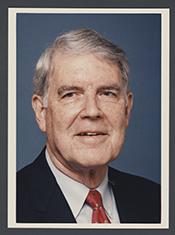
Historical · U.S. House · New Mexico · District 2
Joseph Skeen
Former U.S. Representative · New Mexico District 2 · 1981–2003 · Republican
Joseph Skeen represented New Mexico's District 2 in the United States House of Representatives (1981–2003) for the Republican party. The page below collects sourced biographical facts, term history, committee roles, and provenance for Skeen.
Bioguide ID: S000463
Key facts
- Full name
- Joseph Skeen
- State
- New Mexico
- District
- District 2
- Party
- Republican
- House service
- 1981–2003
- First House term
- 1981
- Status
- Left office
- Current term ends
- —
- Born
- 1927
- Bioguide ID
- S000463
- Committee assignments
- —
- Dataset version
- 1.20260605
Biographical narrative
880 words · sourced from the Wikipedia REST extract
Joseph Richard Skeen was an American politician who served as a U.S. Representative for New Mexico's 2nd congressional district from 1981 until 2003. A member of the Republican Party, Skeen was known for his conservative stance on various issues and was recognized for his efforts to bring federal projects to his district. Over the course of his eleven terms in Congress, he faced a range of electoral challenges and was noted for his ability to navigate the political landscape of New Mexico, particularly during a time of shifting party dynamics.
Early life and career
Joe Skeen was born on June 30, 1927, in Roswell, New Mexico. His early years were spent in New Mexico until his family relocated to Seattle, Washington, during his teenage years. Skeen's life took a significant turn when he enlisted in the United States Navy during the final year of World War II. After completing his military service, he returned to New Mexico and pursued higher education, graduating from Texas A&M University located in College Station, Texas. This educational background provided him with a foundation that would later support his political career.
Skeen's early professional life included various roles that contributed to his understanding of both local and national issues. His experiences in the military and education likely shaped his perspectives on governance and public service. Before entering politics, he was involved in business, which provided him with insights into the economic challenges and opportunities facing his constituents in New Mexico.
House tenure
Skeen's political career in the U.S. House of Representatives began with his election in 1980. He entered the race following the unexpected death of incumbent Democratic Congressman Harold Runnels, who had been a five-term representative. The Democratic Party faced a unique situation as they were able to replace Runnels on the ballot, while the Republican Party had not nominated a candidate prior to Runnels' passing. In a strategic move, Skeen emerged as a write-in candidate, rallying support from the Republican base and capitalizing on the division within the Democratic ranks. He won the election with a plurality of the votes, marking a significant achievement as he became one of only three individuals in U.S. history to be elected to Congress as a write-in candidate.
During his eleven terms in office, Skeen developed a reputation as a conservative legislator. His voting record reflected traditional Republican values, and he was an advocate for various initiatives that aimed to benefit his constituents. Skeen's tenure was characterized by a focus on securing federal funding for projects in New Mexico, which helped to enhance infrastructure and support local economies. Despite his conservative leanings, he was able to navigate the complexities of a diverse political landscape, which included facing competitive races for reelection, particularly in the 1990s.
Skeen's electoral journey included periods of relative ease, such as unopposed bids for reelection in 1988 and 1990. However, he also faced significant challenges from Democratic opponents during other election cycles. His ability to maintain a seat in Congress for over two decades is indicative of his political acumen and the support he garnered from his constituents. In 1997, Skeen publicly announced that he had been diagnosed with Parkinson's disease, a condition that would ultimately influence his decision to retire from Congress. He announced his retirement in 2002, concluding his service at the end of his 11th term in January 2003.
Legislative focus and committees
Throughout his time in the House, Joe Skeen was involved in a range of legislative activities that reflected his priorities and the needs of his district. His conservative voting record aligned with the broader Republican agenda, and he often supported measures that promoted economic growth, national security, and traditional values. Skeen's focus on securing federal funding for projects in New Mexico was a hallmark of his legislative approach, as he sought to address local concerns and improve the quality of life for his constituents.
Skeen's committee assignments during his tenure allowed him to influence key areas of policy. While specific committee memberships are not detailed, it is common for members of Congress to serve on committees that align with their interests and the needs of their districts. These committees play a crucial role in shaping legislation and overseeing various aspects of government operations. Skeen's involvement in such committees would have provided him with a platform to advocate for the interests of New Mexico, particularly in areas related to economic development and infrastructure.
In addition to his legislative work, Skeen's support for various federal projects contributed to his standing in the community. His efforts to bring resources to New Mexico were recognized by constituents across party lines, and he was regarded as a dedicated public servant. His legacy includes not only his legislative achievements but also the impact of his work on local communities.
Joe Skeen passed away on December 7, 2003, shortly after his retirement from Congress. At the time of his death, he was remembered for his contributions to New Mexico and his commitment to public service. His legacy continues to be honored in various ways, including the naming of locations such as the Joe Skeen Campground at Bluewater Lake State Park and the Skeen Library at New Mexico Tech, which serve as reminders of his impact on the state and its residents.
Notable legislation
Sponsored and co-sponsored legislation for Joseph Skeen is pending operator curation. The biographical narrative above carries the same provenance trail until per-bill rows are written.
Sources
- [1]https://en.wikipedia.org/wiki/Joe_SkeenWikipedia · retrieved 2026-06-05
Notable quotes
Sourced quotes for Joseph Skeen are pending operator curation. Narrative-scope provenance remains attached below.
Sources
- [1]https://en.wikipedia.org/wiki/Joe_SkeenWikipedia · retrieved 2026-06-05
Key positions
Curated policy positions for Joseph Skeen are pending operator review. The biographical narrative above carries the same provenance trail until per-topic positions are written.
Sources
- [1]https://en.wikipedia.org/wiki/Joe_SkeenWikipedia · retrieved 2026-06-05
Terms served
- 1981–1983U.S. House · Term 1 · Republican
- 1983–1985U.S. House · Term 2 · Republican
- 1985–1987U.S. House · Term 3 · Republican
- 1987–1989U.S. House · Term 4 · Republican
- 1989–1991U.S. House · Term 5 · Republican
- 1991–1993U.S. House · Term 6 · Republican
- 1993–1995U.S. House · Term 7 · Republican
- 1995–1997U.S. House · Term 8 · Republican
- 1997–1999U.S. House · Term 9 · Republican
- 1999–2001U.S. House · Term 10 · Republican
- 2001–2003U.S. House · Term 11 · Republican
Sources & provenance
Every attributable claim above carries a per-section [N] marker that resolves to the corresponding URL below. Each entry records the upstream provider, the canonical URL, and the timestamp at which the source was retrieved by the ingest pipeline.
Key facts
- https://bioguide.congress.gov/search/bio/S000463bioguide · retrieved 2026-06-05
- https://www.govtrack.us/congress/members/400534govtrack · retrieved 2026-06-05
Biographical narrative
- https://en.wikipedia.org/wiki/Joe_Skeenwikipedia · retrieved 2026-06-05
Find your representative
Every U.S. state elects representatives by district. Browse New Mexico’s delegation, the full former-representative roster, or explore the role and term length.
Related on The Candidate
- Preceded by Harold RunnelsEarlier holder of the New Mexico District 2 House seat · Democratic.Open
- Succeeded by Steve PearceLater holder of the New Mexico District 2 House seat · Republican.Open
- Albert SimmsFormer U.S. Representative · New Mexico District 1 · RepublicanOpen
- Benigno HernándezFormer U.S. Representative · New Mexico District 1 · RepublicanOpen
- Debra HaalandFormer U.S. Representative · New Mexico District 1 · DemocraticOpen
- Harvey FergussonFormer U.S. Representative · New Mexico District 1 · DemocraticOpen