
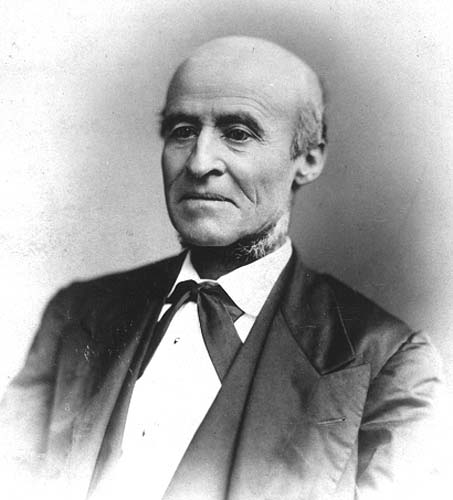
Historical · U.S. House · New Mexico · At-Large
José Gallegos
Former U.S. Representative · New Mexico At-Large · 1853–1873 · Democratic
José Gallegos represented New Mexico's At-Large in the United States House of Representatives (1853–1873) for the Democratic party. The page below collects sourced biographical facts, term history, committee roles, and provenance for Gallegos.
Bioguide ID: G000022
Key facts
- Full name
- José Gallegos
- State
- New Mexico
- District
- At-Large
- Party
- Democratic
- House service
- 1853–1873
- First House term
- 1853
- Status
- Left office
- Current term ends
- —
- Born
- 1815
- Bioguide ID
- G000022
- Committee assignments
- —
- Dataset version
- 1.20260606
Biographical narrative
867 words · sourced from the Wikipedia REST extract
José Gallegos was a prominent figure in the early political landscape of the United States, serving as a U.S. Representative for the at-large district of New Mexico. A member of the Democratic Party, Gallegos's congressional career spanned three terms, during which he contributed to the representation of New Mexico's interests in the federal government. His tenure in the House of Representatives began in 1853 and concluded in 1873, marking him as one of the early political leaders from the territory. Born in 1815, Gallegos's life and career were deeply intertwined with the historical developments of New Mexico, particularly during its transition from a territory to a state.
Early life and career
José Manuel Gallegos was born on October 30, 1815, in Abiquiú, located in what is now Rio Arriba County, New Mexico. His early education took place in parochial schools, where he laid the foundation for his future endeavors. Gallegos pursued higher education in theology at the Jesuit-run College of Durango in Mexico, where he graduated in 1840. Following his graduation, he was ordained as a Roman Catholic priest, a role that would influence his later political career and community involvement.
In the mid-19th century, Gallegos became actively engaged in the political life of the region. He served as a member of the legislative assembly of the territory of Santa Fe de Nuevo México from 1843 to 1846, a period marked by significant political changes as the territory transitioned from Mexican to American governance following the Mexican-American War. His political involvement continued when he became a member of the first territorial council of the newly established Territory of New Mexico in 1851, where he played a role in shaping the early legislative framework of the territory.
House tenure
Gallegos's congressional career began when he was elected as a Democrat to the Thirty-third U.S. Congress, serving from March 4, 1853, to March 3, 1855. His election marked a significant moment for New Mexico, as he became one of the first representatives from the territory to serve in the U.S. House of Representatives. His initial term was characterized by the challenges of representing a newly acquired territory with a diverse population and distinct needs.
After his first term, Gallegos was re-elected but served only a brief period from March 4, 1855, until July 23, 1856. His second term was cut short when Miguel Antonio Otero successfully contested his election, resulting in Gallegos's departure from Congress. Despite this setback, he remained active in local politics, serving in the territorial house of representatives from 1860 to 1862, during which time he held the position of speaker.
In 1862, Gallegos faced a significant personal challenge when he was captured by Texas Confederate troops during the Civil War. This experience as a prisoner of war highlighted the tumultuous political and military landscape of the time. Following the war, he returned to public service, being appointed as Treasurer of the New Mexico Territory in 1865 and 1866. He also served as Superintendent of Indian Affairs in New Mexico in 1868, further demonstrating his commitment to the region's governance and the welfare of its diverse communities.
Gallegos's final congressional term came when he was elected to the Forty-second U.S. Congress, serving from March 4, 1871, to March 3, 1873. During this period, he faced the challenge of conducting his duties without proficiency in English, which led him to request a translator on the House floor. This request was denied, reflecting the complexities of language and representation in Congress at the time. His tenure concluded with an unsuccessful bid for re-election in 1872, marking the end of his direct involvement in federal legislative affairs.
Legislative focus and committees
Throughout his time in Congress, José Gallegos's legislative focus was shaped by the unique needs and interests of New Mexico, a territory that was still navigating its identity and relationship with the federal government. His background as a priest and his experiences in local governance likely influenced his perspectives on various issues, including education, land rights, and the welfare of Indigenous populations.
While specific details regarding the legislation he sponsored or supported are not extensively documented, Gallegos's roles in the territorial assembly and as a member of Congress suggest that he was involved in discussions pertinent to the development of New Mexico's infrastructure and governance. His experience as a speaker in the territorial house of representatives would have provided him with insights into legislative processes and the importance of advocacy for his constituents.
Gallegos's later roles, including his position as Superintendent of Indian Affairs, indicate a commitment to addressing the challenges faced by Native American communities in New Mexico. This role would have required navigating complex relationships between the federal government and Indigenous populations, highlighting the multifaceted nature of his public service.
After his congressional career, Gallegos continued to reside in Santa Fe, where he passed away on April 21, 1875. He was interred in the Catholic Cemetery in Santa Fe, leaving behind a legacy as one of the early political leaders from New Mexico. His contributions to the governance of the territory and his representation in Congress reflect the broader historical narrative of the American West during a period of significant change and development.
Notable legislation
Sponsored and co-sponsored legislation for José Gallegos is pending operator curation. The biographical narrative above carries the same provenance trail until per-bill rows are written.
Sources
- [1]https://en.wikipedia.org/wiki/Jos%C3%A9_Manuel_GallegosWikipedia · retrieved 2026-06-06
Notable quotes
Sourced quotes for José Gallegos are pending operator curation. Narrative-scope provenance remains attached below.
Sources
- [1]https://en.wikipedia.org/wiki/Jos%C3%A9_Manuel_GallegosWikipedia · retrieved 2026-06-06
Key positions
Curated policy positions for José Gallegos are pending operator review. The biographical narrative above carries the same provenance trail until per-topic positions are written.
Sources
- [1]https://en.wikipedia.org/wiki/Jos%C3%A9_Manuel_GallegosWikipedia · retrieved 2026-06-06
Terms served
- 1853–1855U.S. House · Term 1 · Democratic
- 1855–1857U.S. House · Term 2 · Democratic
- 1871–1873U.S. House · Term 3 · Democratic
Sources & provenance
Every attributable claim above carries a per-section [N] marker that resolves to the corresponding URL below. Each entry records the upstream provider, the canonical URL, and the timestamp at which the source was retrieved by the ingest pipeline.
Key facts
- https://bioguide.congress.gov/search/bio/G000022bioguide · retrieved 2026-06-06
- https://www.govtrack.us/congress/members/404398govtrack · retrieved 2026-06-06
Biographical narrative
- https://en.wikipedia.org/wiki/Jos%C3%A9_Manuel_Gallegoswikipedia · retrieved 2026-06-06
Find your representative
Every U.S. state elects representatives by district. Browse New Mexico’s delegation, the full former-representative roster, or explore the role and term length.
Related on The Candidate
- Preceded by Richard WeightmanEarlier holder of the New Mexico At-Large House seat · Democratic.Open
- Succeeded by Trinidad RomeroLater holder of the New Mexico At-Large House seat · Republican.Open
- Albert SimmsFormer U.S. Representative · New Mexico District 1 · RepublicanOpen
- Benigno HernándezFormer U.S. Representative · New Mexico District 1 · RepublicanOpen
- Debra HaalandFormer U.S. Representative · New Mexico District 1 · DemocraticOpen
- Harvey FergussonFormer U.S. Representative · New Mexico District 1 · DemocraticOpen